
The Great Migration Videos
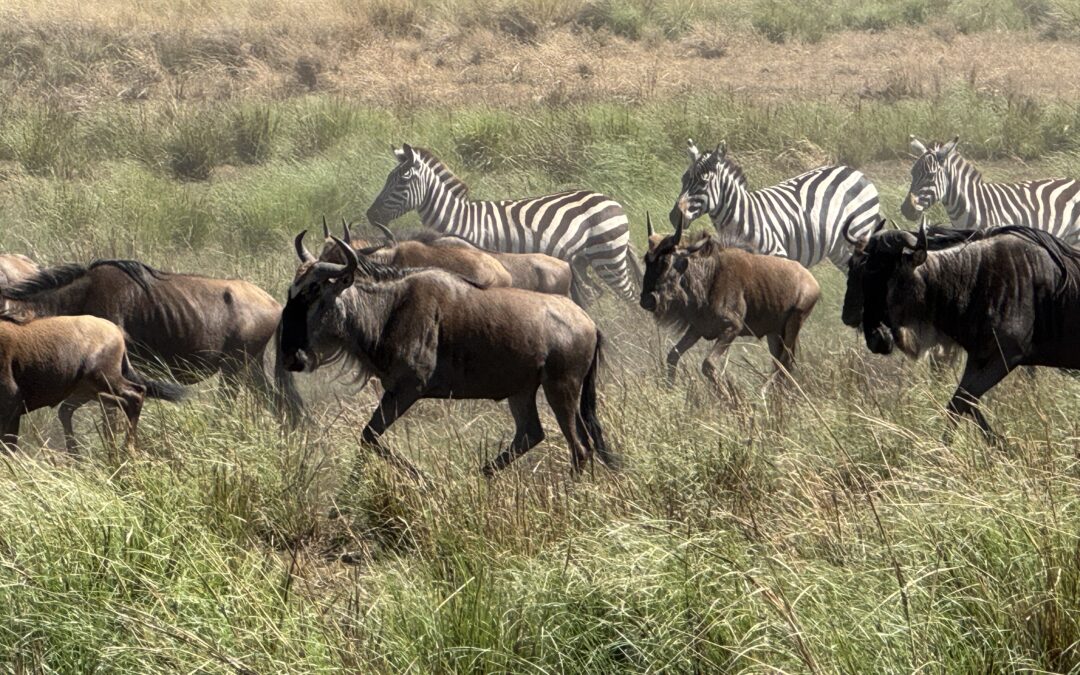
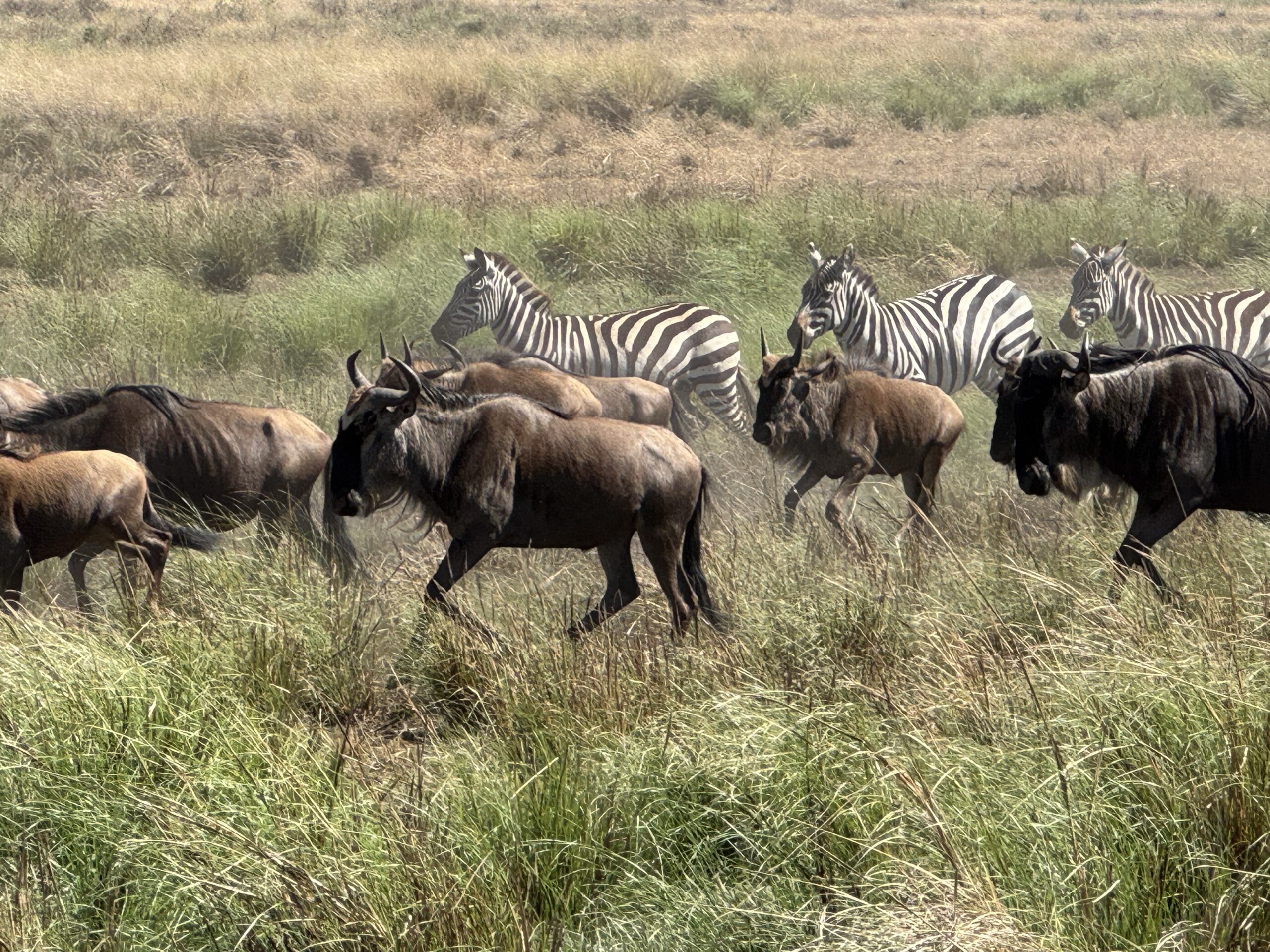
Each year, nearly two million animals — including as many as 1.3 million wildebeest, over 200,000 zebra, and hundreds of thousands of gazelles — undertake one of nature’s most spectacular journeys across the Serengeti-Mara ecosystem. Known simply as the Great Migration, this roughly 500-mile circular trek isn’t governed by a fixed calendar but by rainfall: the herds follow the growth of fresh grass, moving in a continuous loop between Tanzania and Kenya.
The cycle typically begins in the southern Serengeti between January and April, when the plains fill with newborn calves during calving season. From there, the herds push northward through the Western Corridor, arriving in Kenya’s Maasai Mara by July or August — this leg includes the crossings of the Grumeti and Mara Rivers, where crocodiles wait — probably the most famous images associated with the migration. After grazing through the Mara in the dry months, the animals begin their return south, following the onset of seasonal rains, before the cycle starts again. Because the migration is driven entirely by weather and grass rather than a set schedule, its exact timing shifts from year to year.
For travelers, that unpredictability is part of the allure: witnessing it firsthand means catching one of the most awe-inspiring wildlife spectacles on the planet.
Here are three videos we took from the Maasai Mara National Park, Kenya, as the herds are pushing south to return to Tanzania’s Serengeti. We finally got enough WIFI bandwidth to get them uploaded. Enjoy!
WOW!