
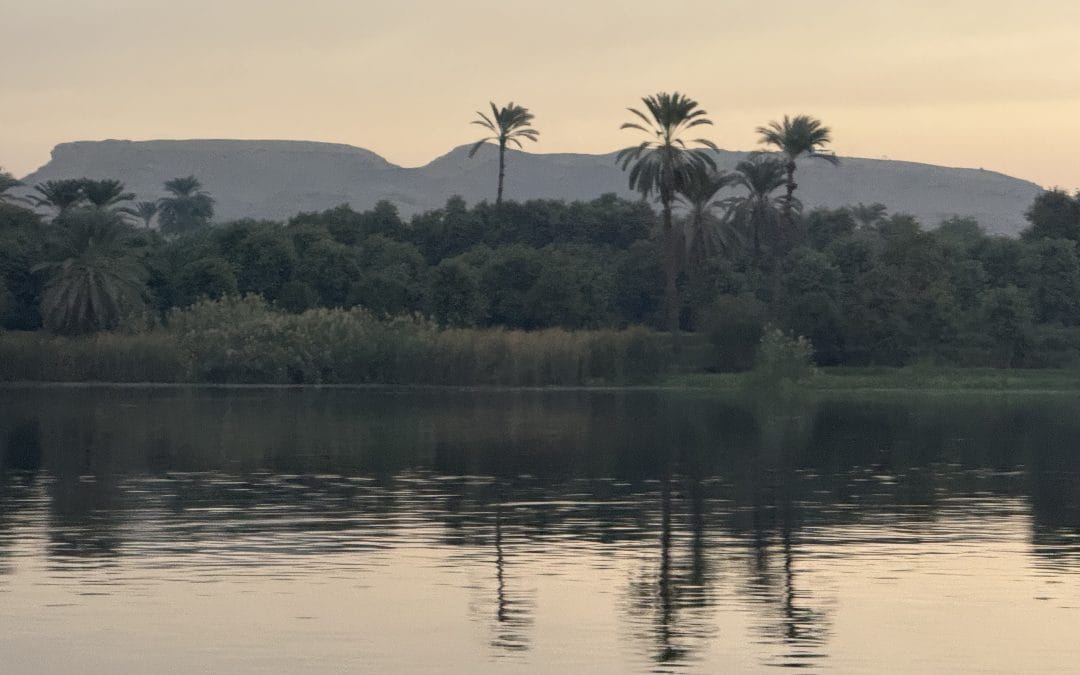

The Nile River
We’ve had a wonderful sailing on the Nile and wanted to share some information about this remarkable river. The Nile is north flowing, and while it is often contested by the Amazon River, the Nile River is often considered the longest river in the world.
The Nile has two major tributaries; the White Nile (originating at Lake Victoria in Uganda), and the Blue Nile (originating at Lake Tana in Ethiopia). All told the Nile is 4,130 miles long and the drainage basin covers eleven countries: the Democratic Republic of the Congo, Tanzania, Burundi, Rwanda, Uganda, Kenya, Ethiopia, Eritrea, South Sudan, Sudan, and Egypt.
The Greek historian Herodotus wrote that “Egypt was the gift of the Nile”. An unending source of sustenance, it played a crucial role in the development of Egyptian civilization. The Nile was used to transport goods and people for millennia and because the river overflowed its banks annually and deposited new layers of silt, the surrounding land is very fertile making it rich for farming.
It is said that 95% (104 million) of the population of Egypt lives along the Nile. While we cruised the Nile, there was a deep sense of the importance to all the small villages along which rely on that fertile ground for farming, fishing and ranching.
Our captain was very astute moving our ship along the Nile, which is only 15 – 25 ft deep. He did so by knowledge alone, as the bridge had no sonar and there were minimal marking devices in the water. The Nile used to be much wider in many places; we saw that at several temples which would originally have been on the bank of the Nile, but now were a couple miles from the river. But since the damning of the Nile, especially at the High Damn, the Nile’s banks have receded and there is minimal seasonal flooding.
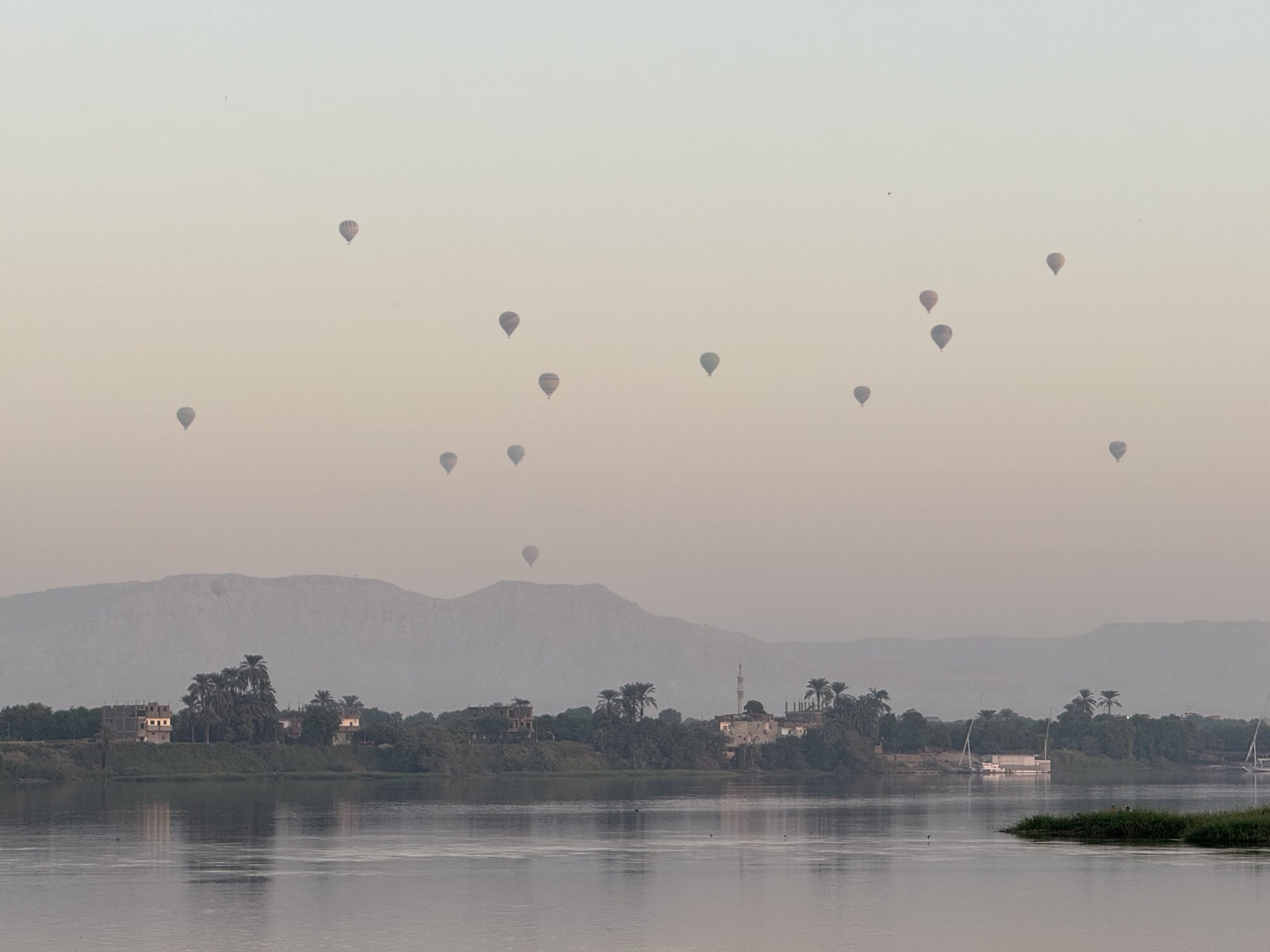
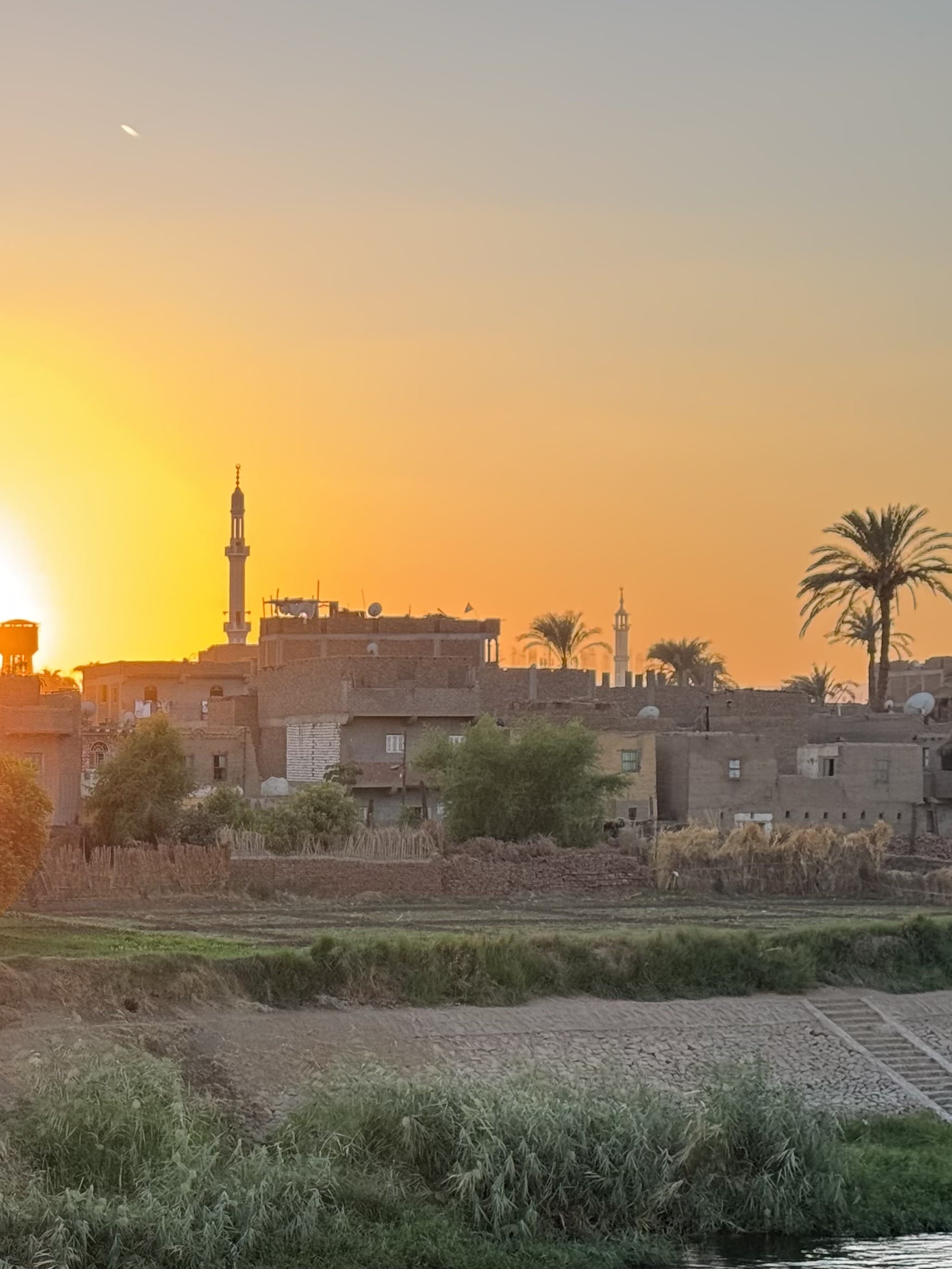
The scenic cruising were our most enjoyable moments on the ship. Listening to the joyful children calling from the banks, watching the farmers and fishermen, seeing the villagers’ wave to us from every small town that we passed, and catching beautiful sunsets.



What do they grow there ?