


Ha Long Bay, Vietnam
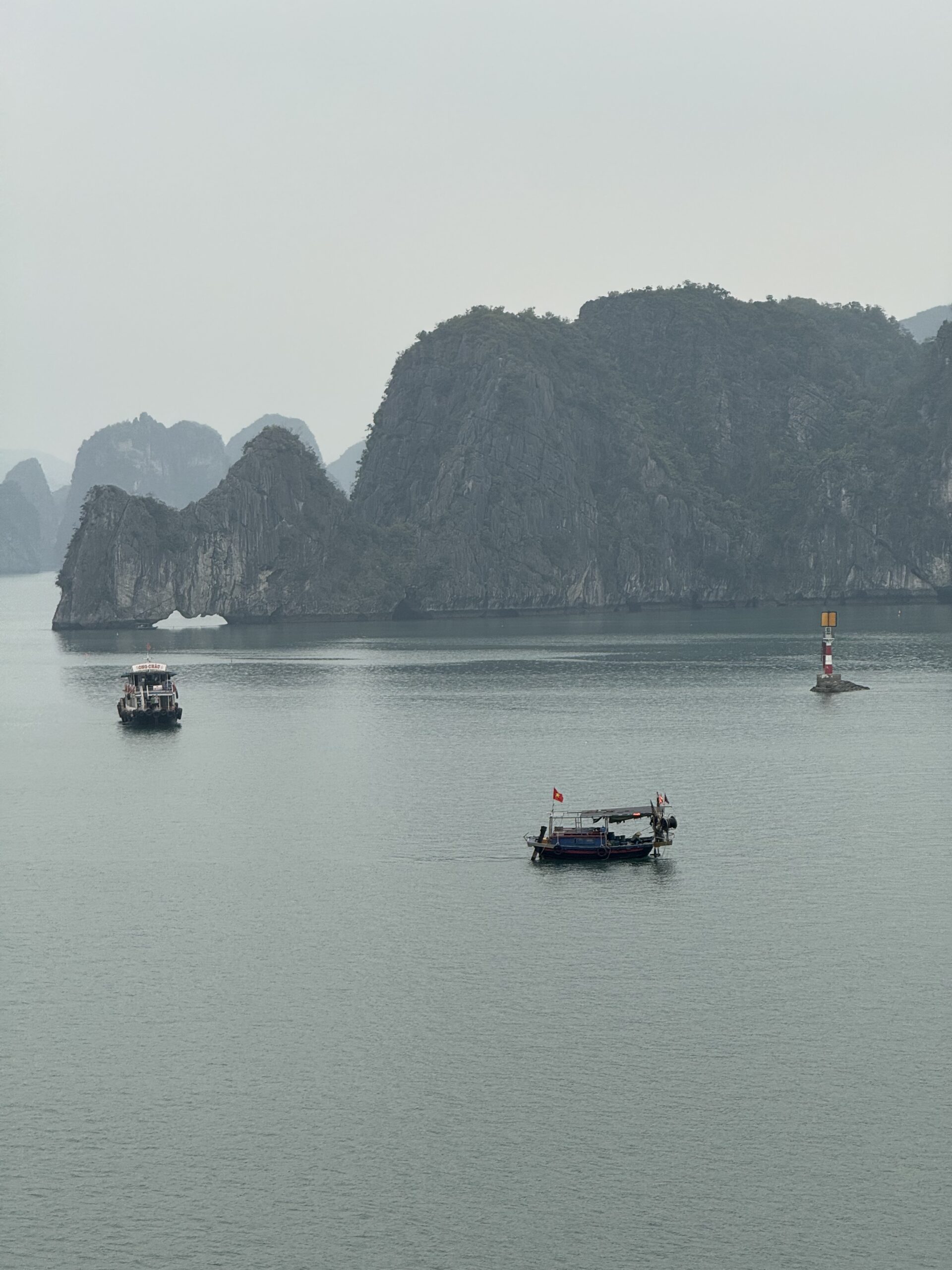
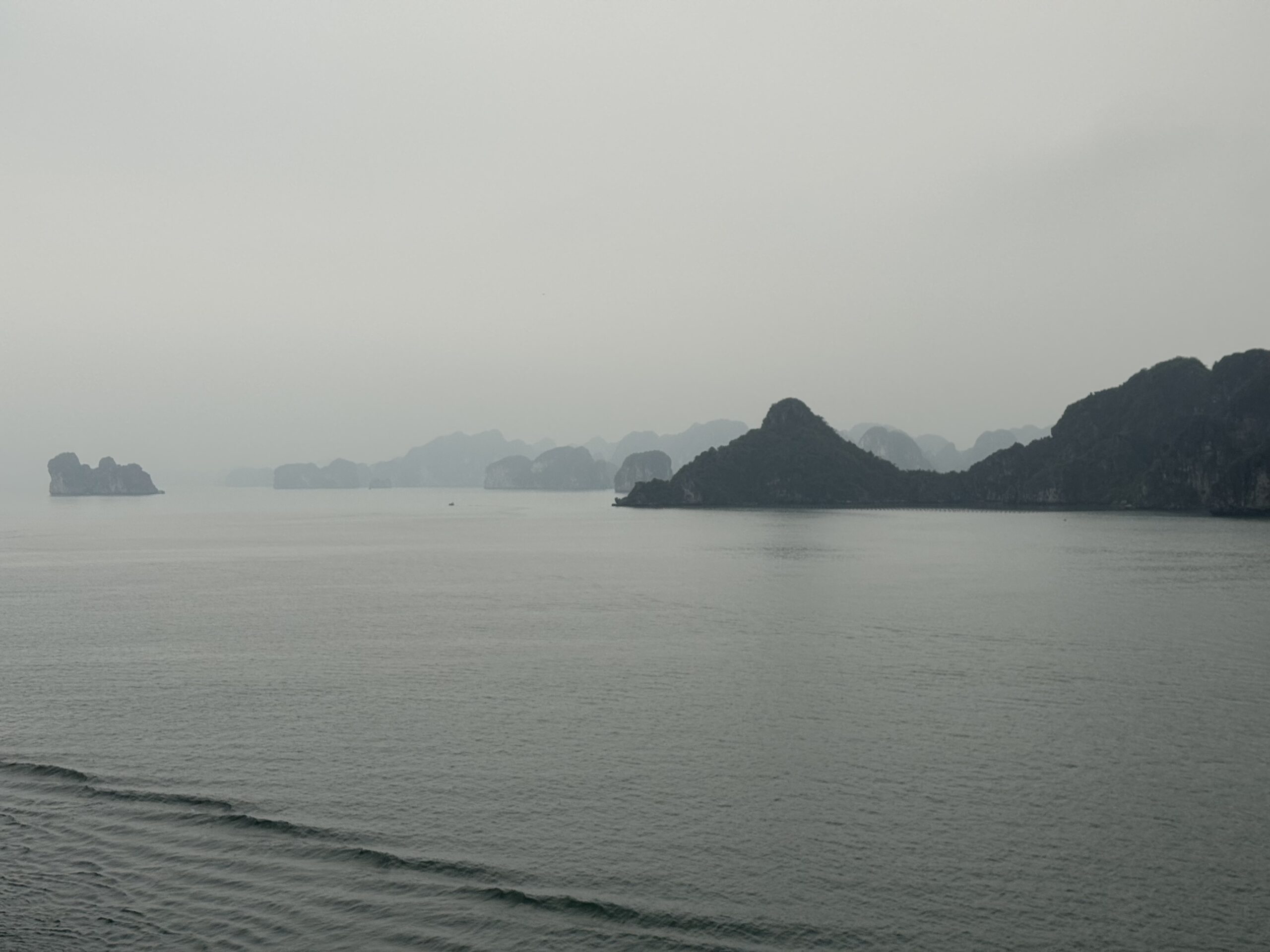
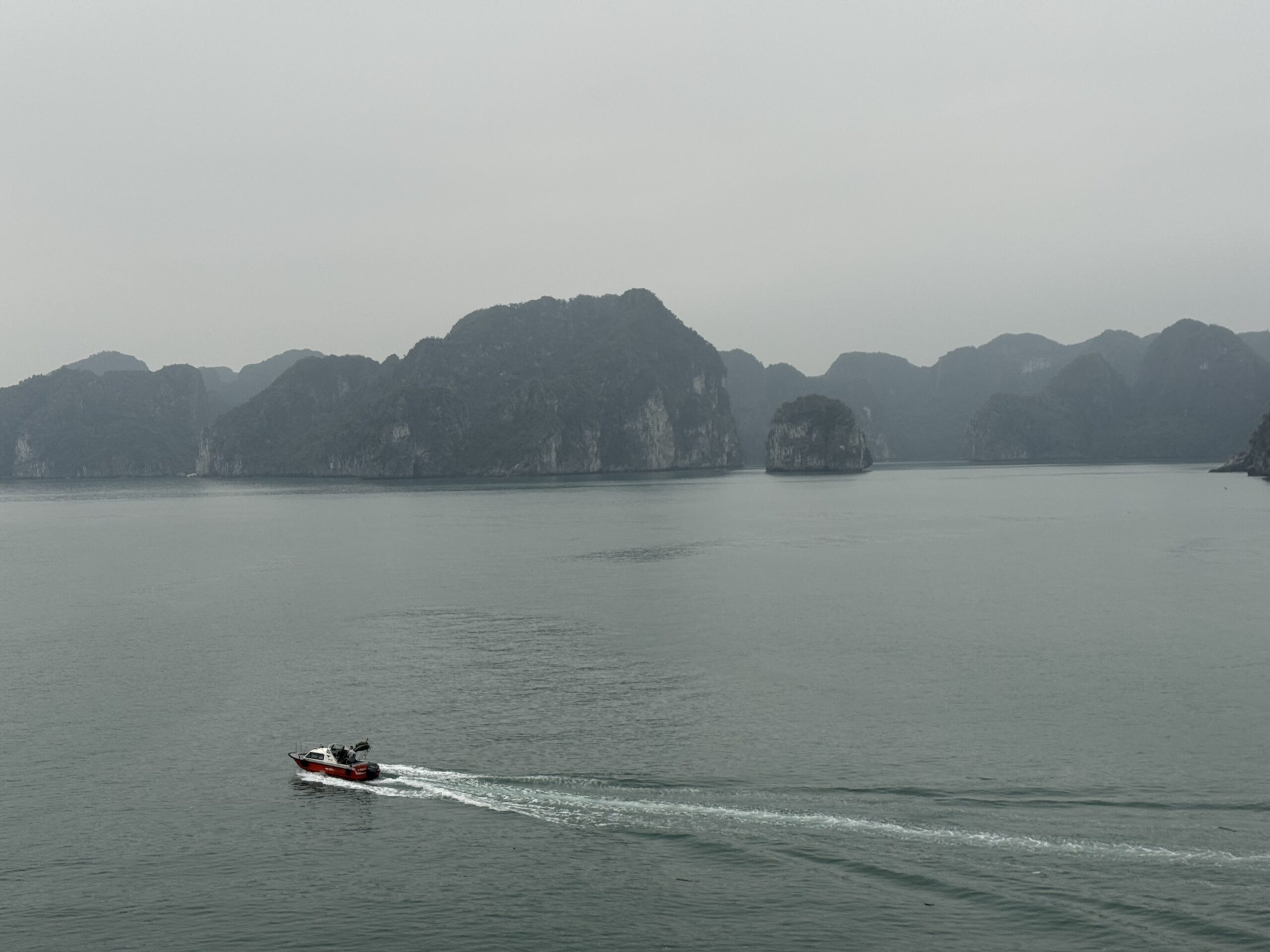
Our ship stayed in the Cai Lan port overnight, and we departed shortly after 7am today, for scenic cruising of Ha Long Bay. Considered one of the seven natural wonders of the world, and a UNESCO World Heritage Site, Halong Bay is remarkable for its haunting beauty and diverse biosystems, including a tropical evergreen biosystem and a seashore biosystem. Hạ Long Bay is home to 14 endemic floral species and 60 endemic faunal species.
Hạ Long Bay has an area of around 1,553 km2 (600 sq mi), including 1,969 islets, most of which are limestone. The core of the bay has an area of 334 km2 (129 sq mi) with a high density of 775 islets. The limestone in this bay has gone through 500 million years of formation in different conditions and environments.
A community of around 1,600 people live on Hạ Long Bay in four fishing villages: Cua Van, Ba Hang, Cong Tau and Vong Vieng. They live on floating houses and are sustained through fishing and marine aquaculture (cultivating marine biota), plying the shallow waters for 200 species of fish and 450 different kinds of mollusks. Of the 1,969 islands in Hạ Long, only approximately 40 are inhabited.
Pearl farming in Ha Long Bay is a traditional industry, primarily centered in sheltered areas like Tung Sau and Vung Vieng, where oysters are cultivated for 1–5 years to produce seawater pearls.
It took about two hours to make our way through the bay and we enjoyed every minute of it from our balcony. The weather was a little misty, but it created a dramatic and moody setting. We spent the rest of the day catching up on paperwork for upcoming ports and tours, and just laying low as we are both enduring the “cruise crud” of cough and chest congestion.
Tomorrow: Chan May, Vietnam








Looks Loch Ness-ish. Beautiful!
You were right by where my dad lives in Nha Trang!