
Funchal, Madeira
Madeira is an archipelago of four islands lying 540 miles west of Casablanca and the African continent. Settled by the Portuguese in 1492, Madeira has since remained a part of Portugal though today it is considered a politically autonomous state with 250,000 inhabitants.
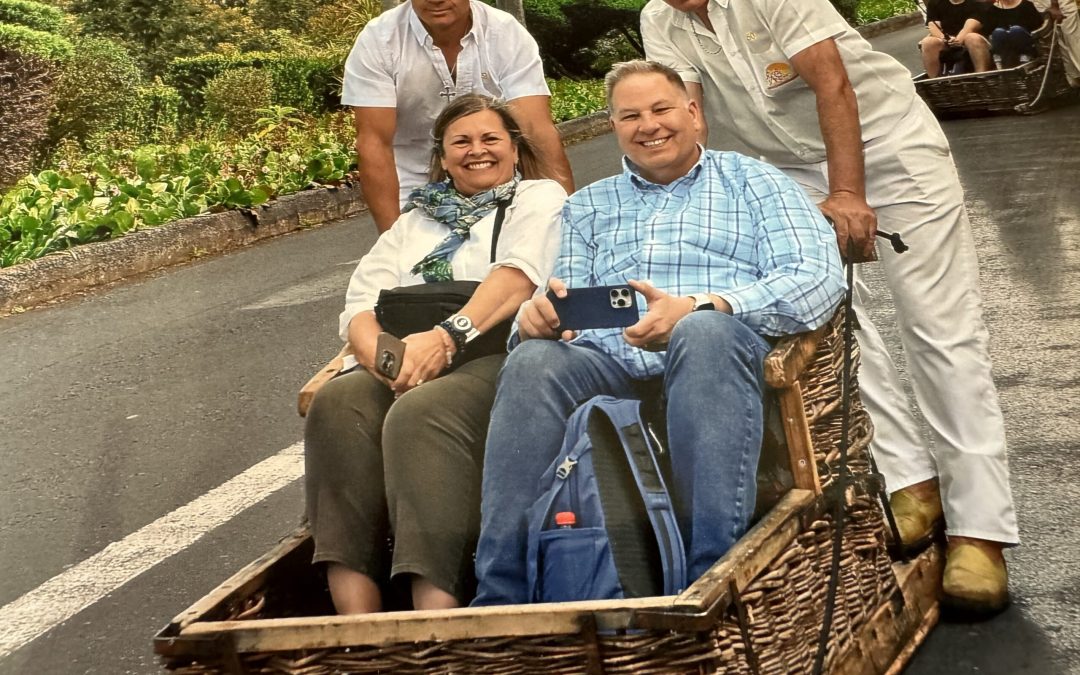
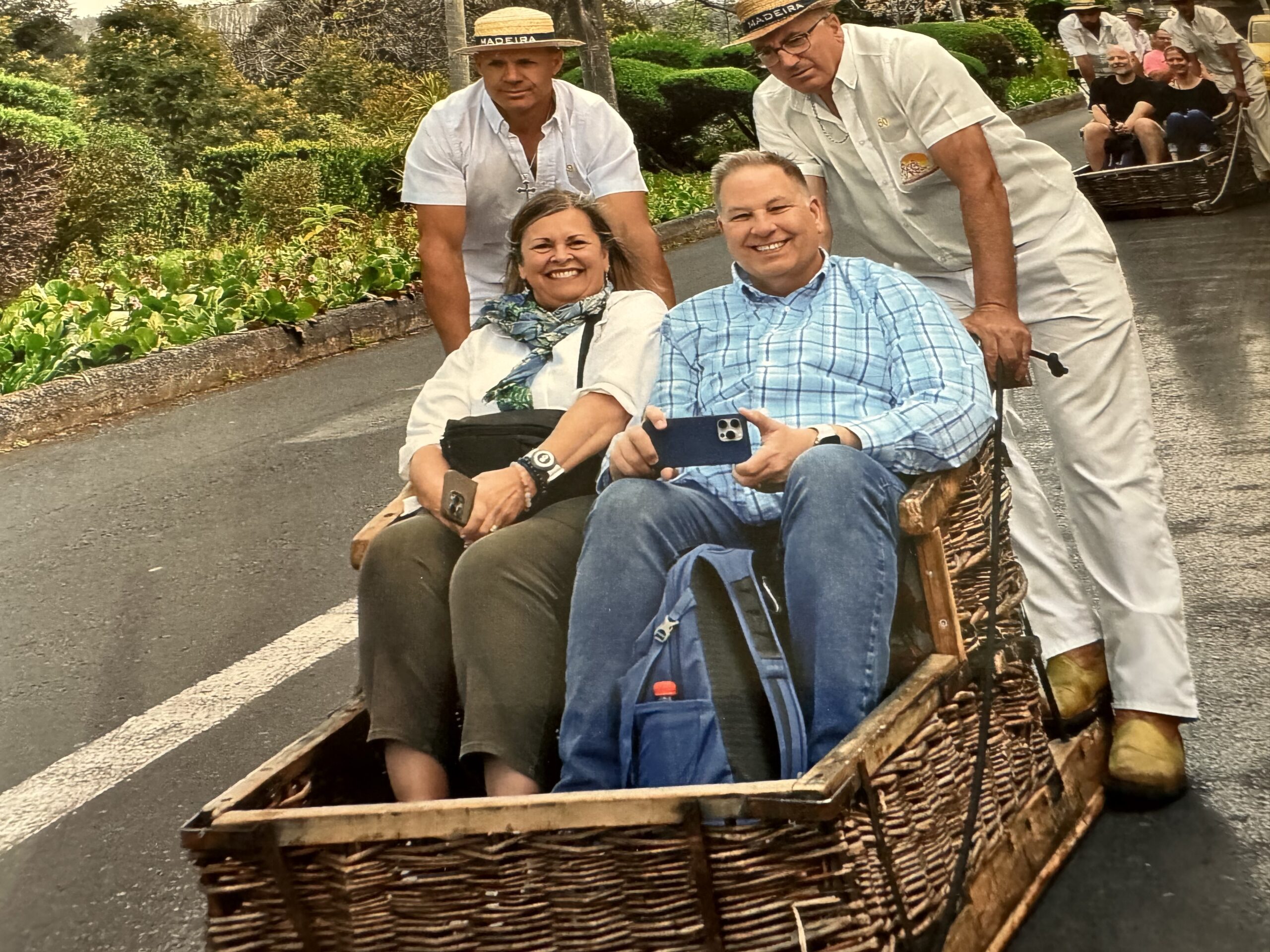
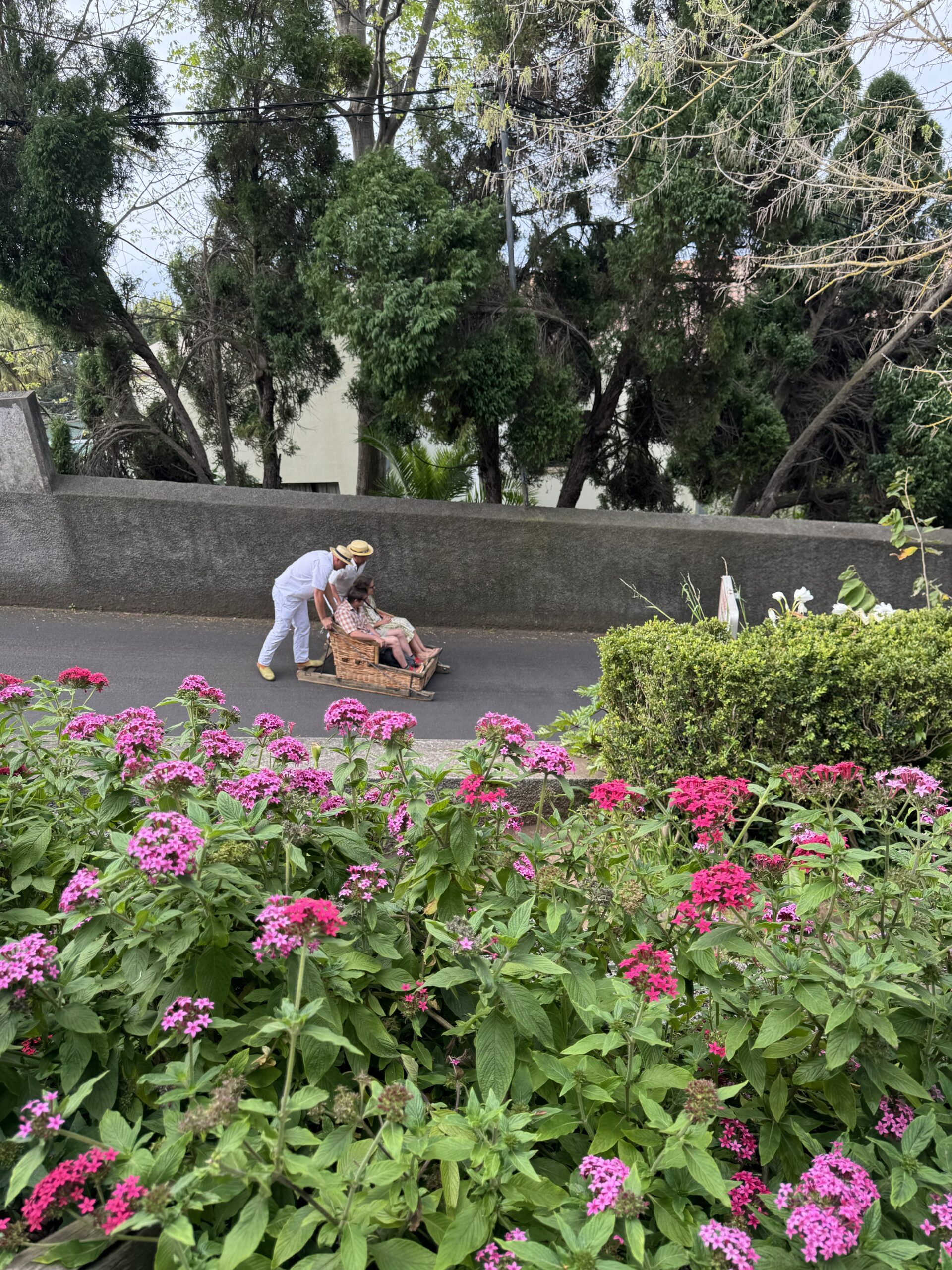
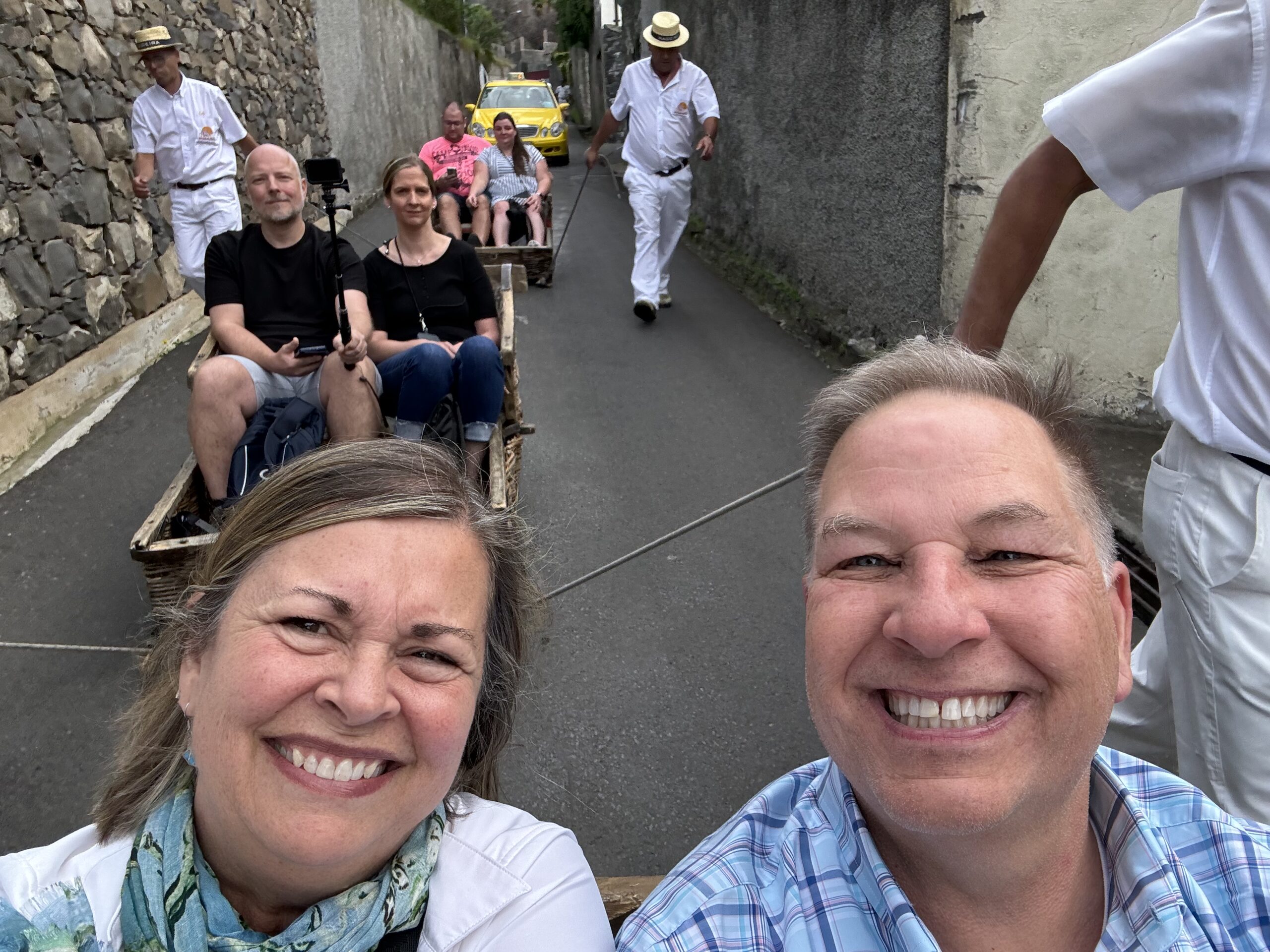
This was our first visit to Madeira and we learned that the traditional tourist activity is experiencing the Monte Toboggan. We asked our Tours by Locals guide Nico if we could add that to our itinerary and he gladly agreed. We arrived early yet there was already a long line. However, once the toboggans got going, the line moved quickly and we were ready for our trip down. The toboggans are two person baskets, mounted on wooden runners, that are driven by men called Carreiros, dressed in white and wearing straw hats. They also use rubber-soled shoes that allow them to brake the carts. Invented in 1850 to provide transportation for people in the area, they were pulled by oxen then. The ride lasts about 10 minutes and covers about 1260 ft in elevation change. There were only a couple of times when I wondered whether we were going to make the turn ok, but these Carreiros are pros. It was a fun experience and it started the day perfectly.
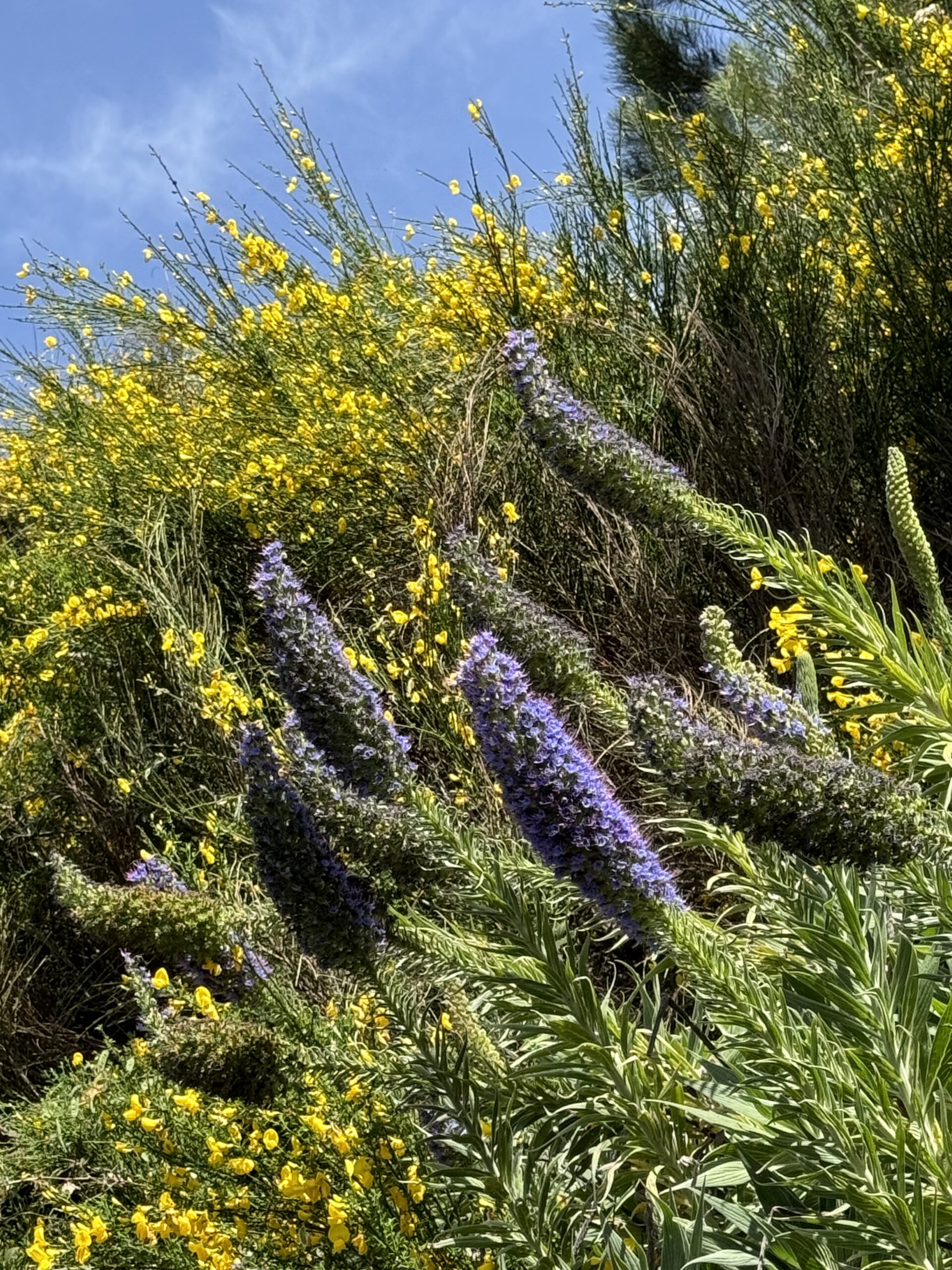
After the toboggan run, we headed up to the highest point you can drive on the island. As with Tenerife Island in the Canary archipelago, from sea level to 6000 ft happens very quickly. The climb was very enjoyable as we passed the different levels of elevation and saw the different types of trees and plants. Once we got to the last 2000 ft, the predominant plants were the Madeira Broom, and the Echium candicans, or “Pride of Maderia”. We were a little early for full bloom season but there were enough of them in bloom to imagine what it would look like in June. Blueberries, oregano and fennel were also in abundance. We stopped at several viewpoints, including Pico du Areerio, where we enjoyed a coffee.
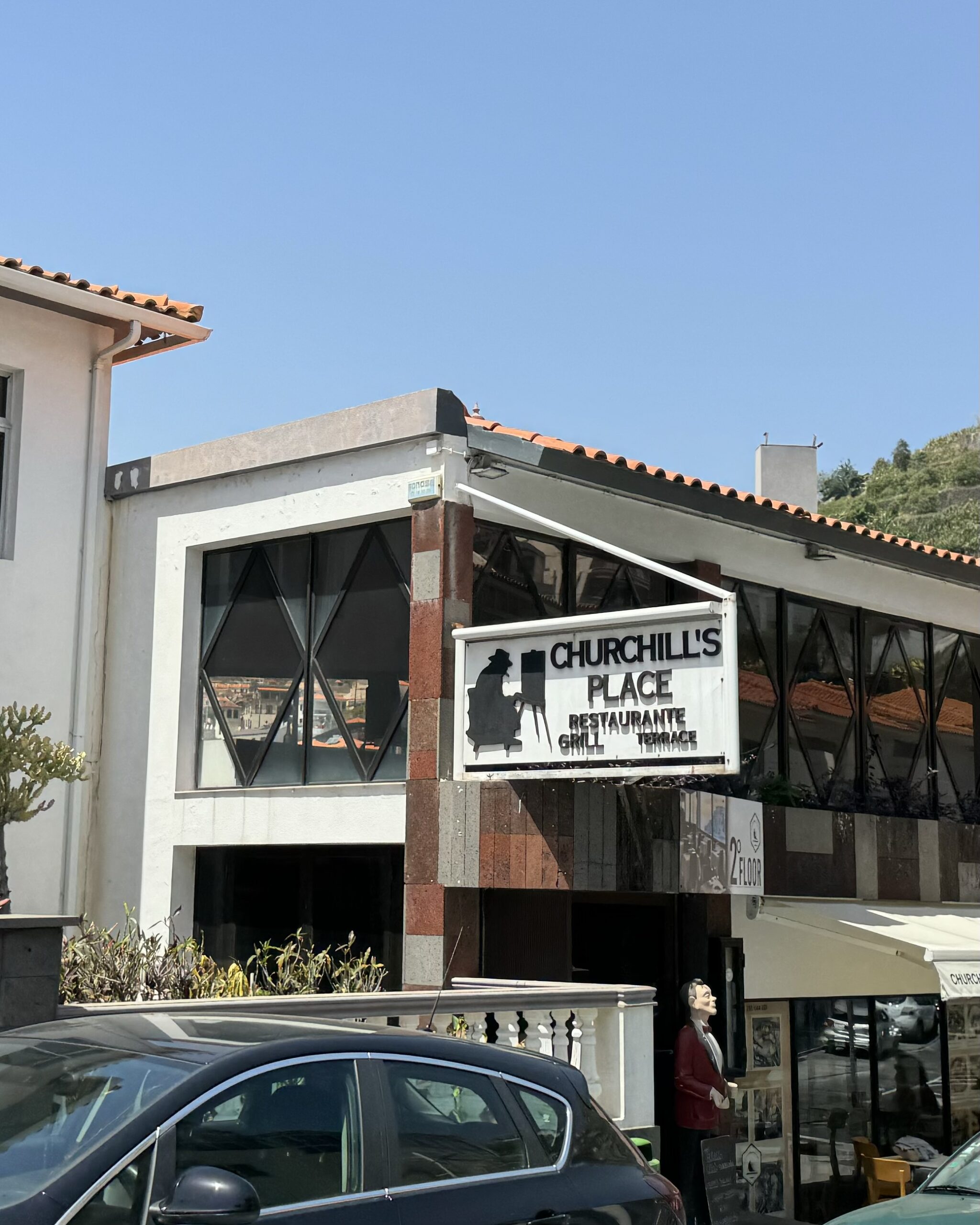
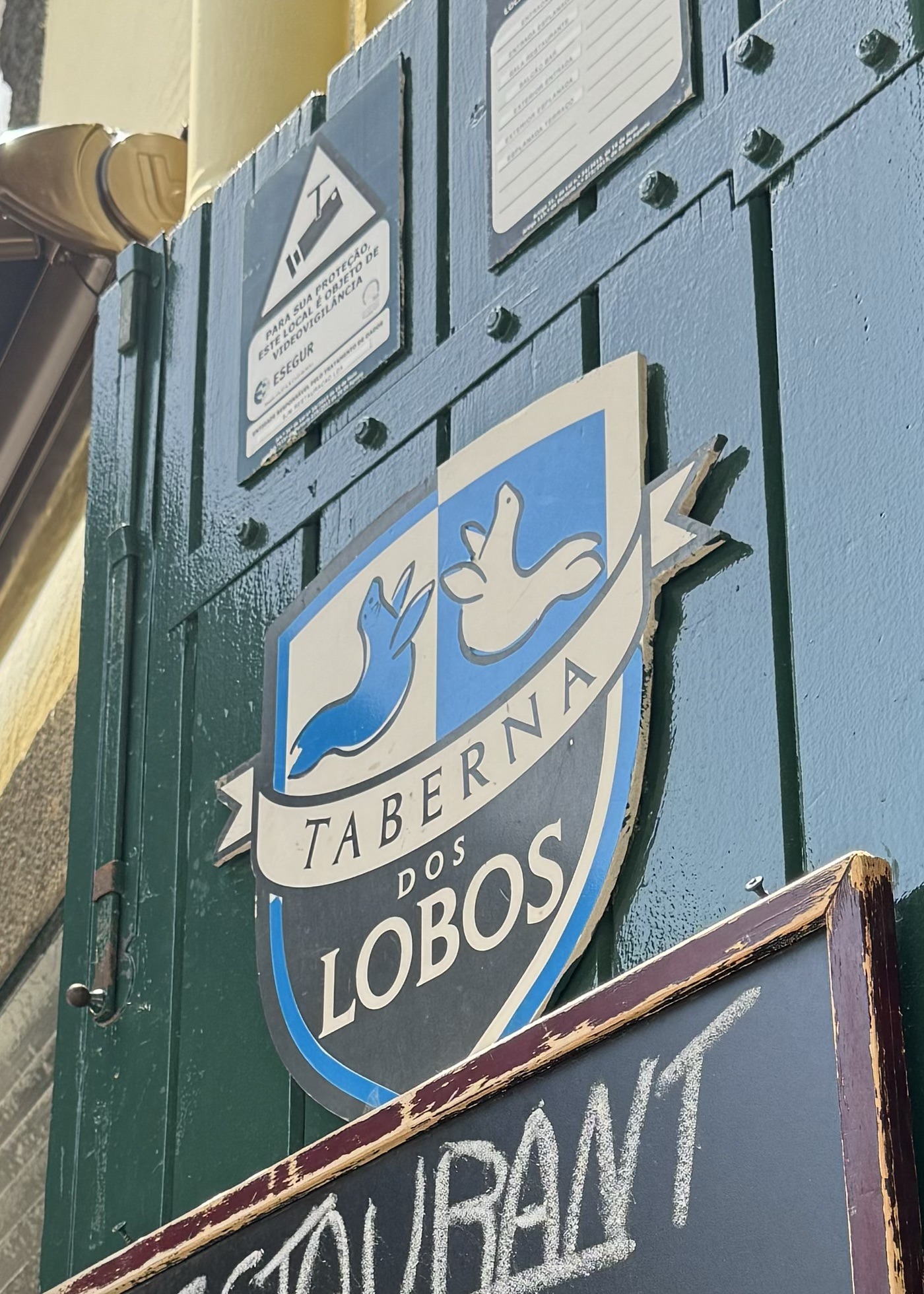
We continued to several other viewpoints as we headed down the mountain to Curral das Freiras, which translates to “Pen of the Nuns”, as nuns took refuge in the valley during the French privateer attacks on Funchal in the late 15th century. Our next stop was the fishing village of Camara Dos Lobos, a favorite of Winston Churchill, who would come here to relax and paint. We had lunch at Taberna dos Lobos, where I tried two of the traditional Madeiran specialties. The espada preta is grilled scabbard fish with grilled bananas, and the nikita, which is white wine drink with pineapple ice cream. (There is also a version of nikita, which involves beer and bananas. Go figure.) Scabbard fish are only found in the waters of Madeira and are caught using a hook and line to depths of 250 ft. The fish was very good and I was surprised at how well it went with the banana. It was not until after the meal was over did Nico show me a photo of the scabbard. Egads! Despite its look, I would eat it again in a heartbeat. It was that good.
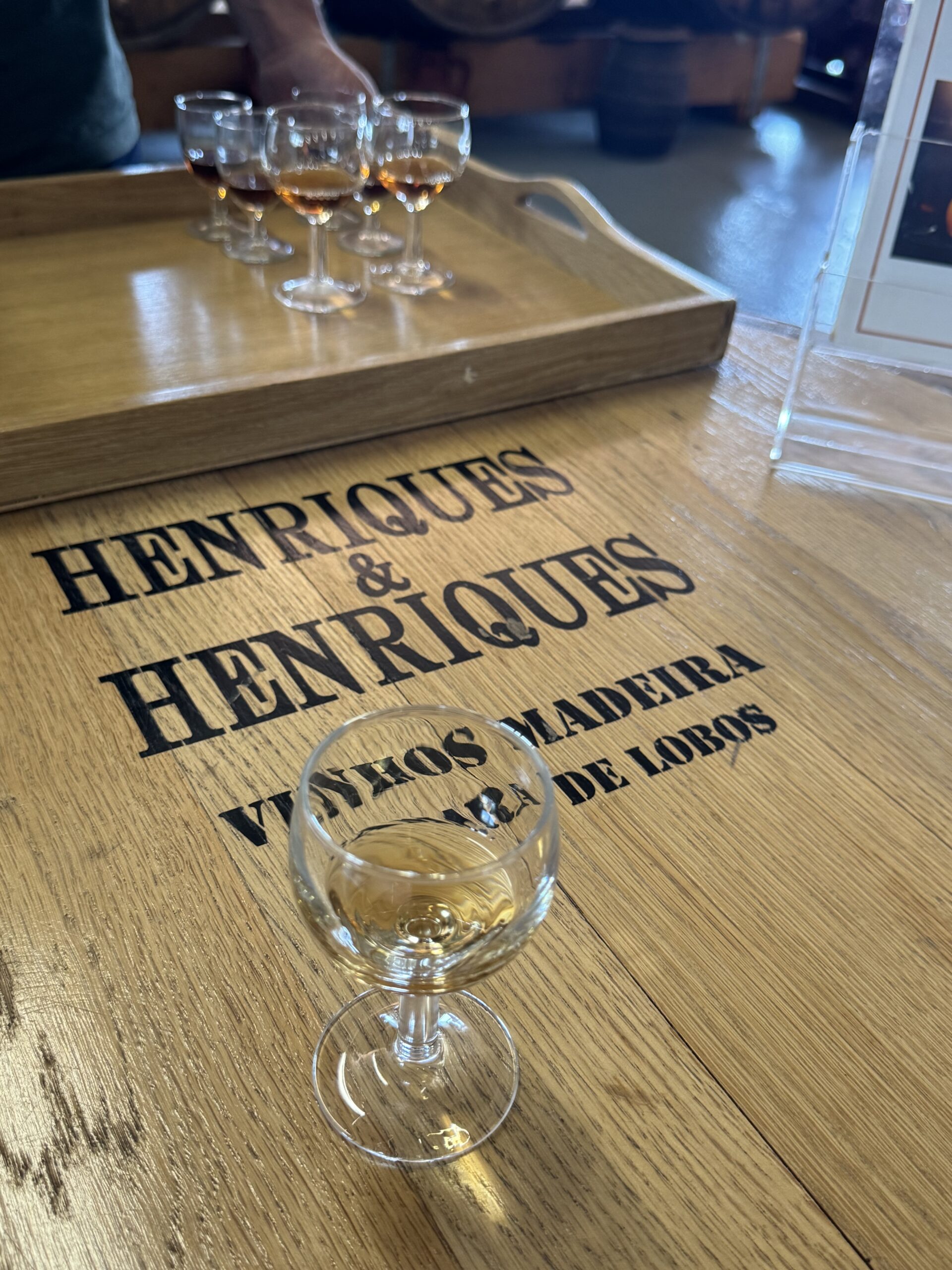
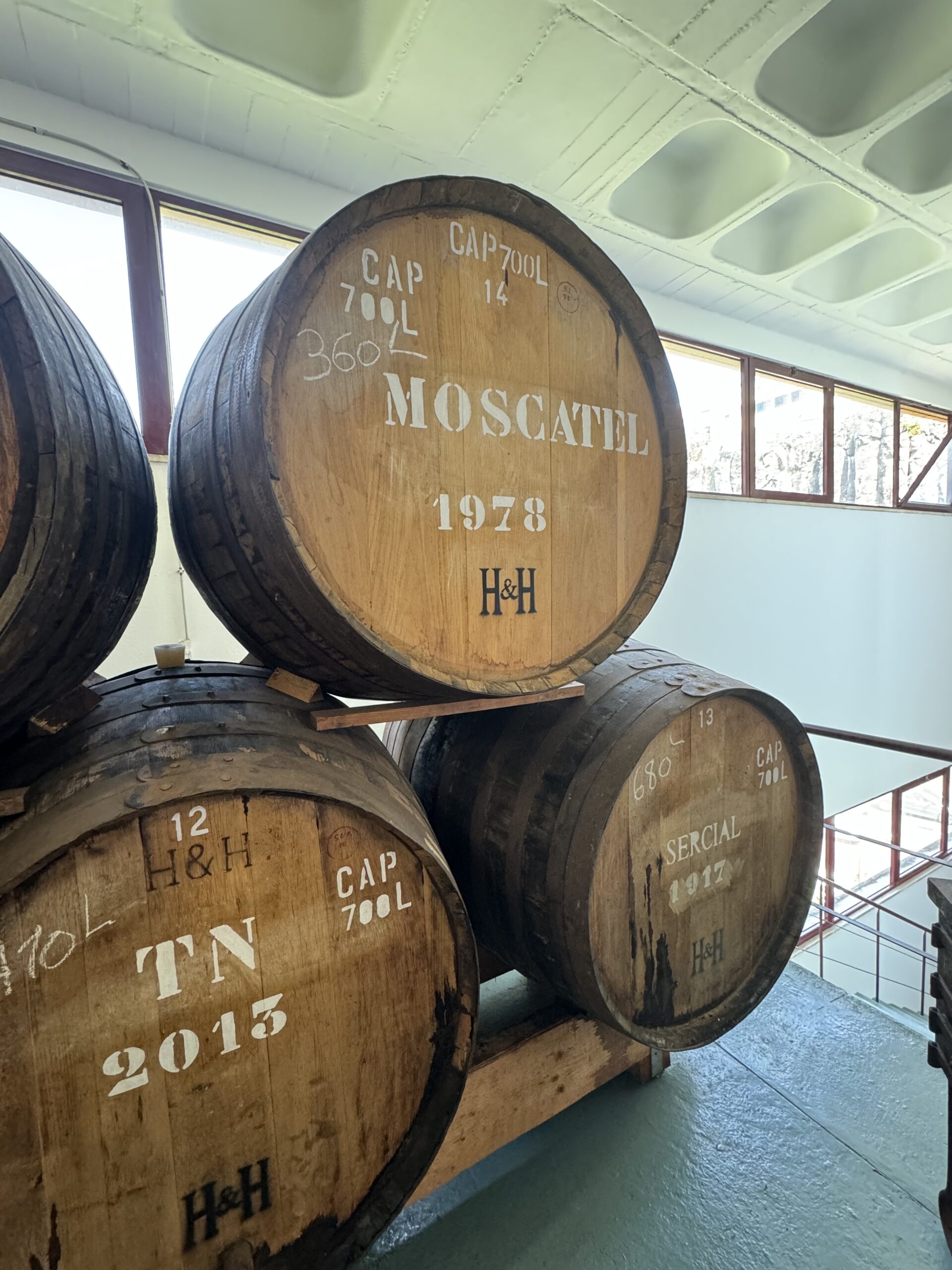
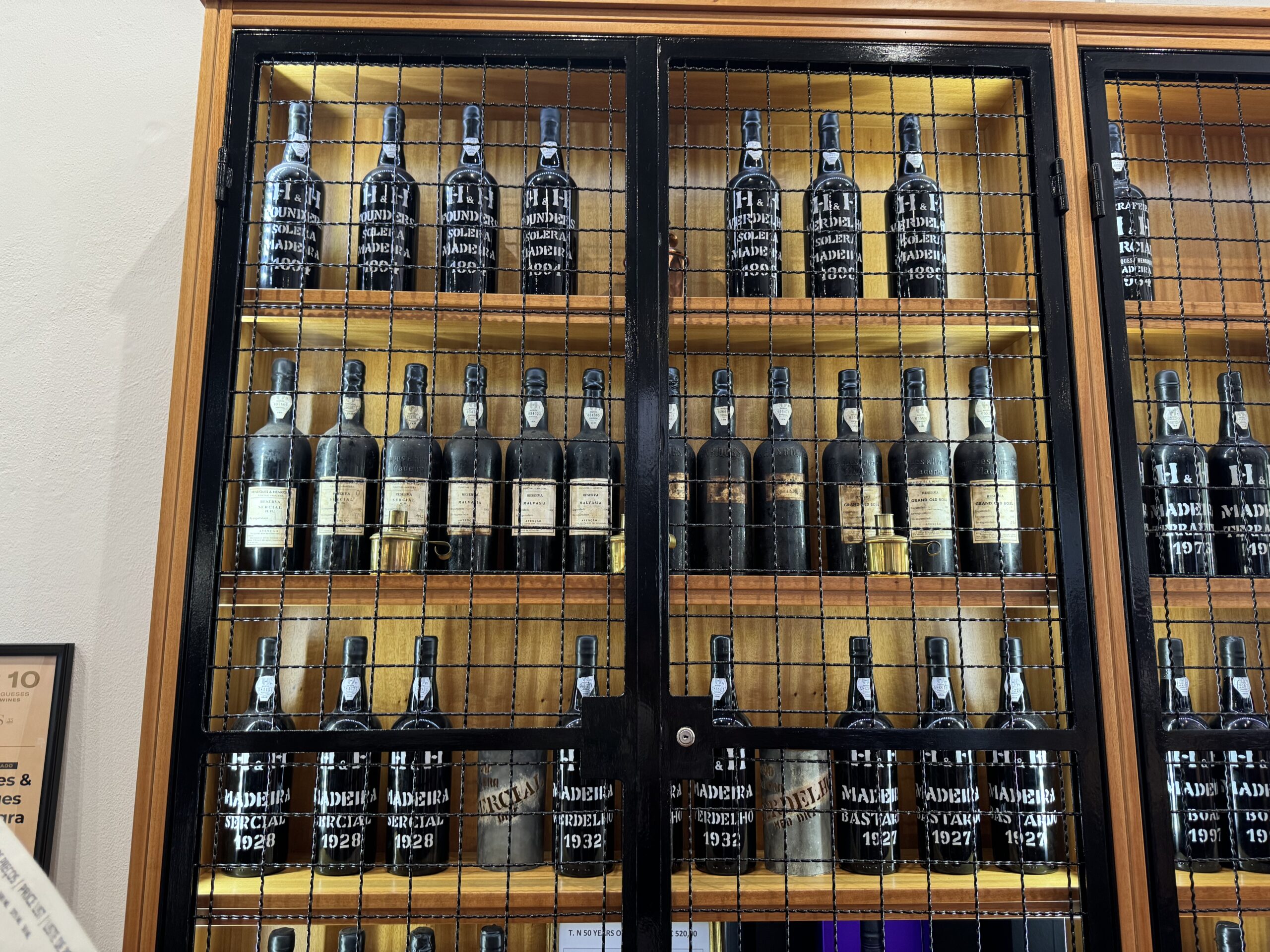
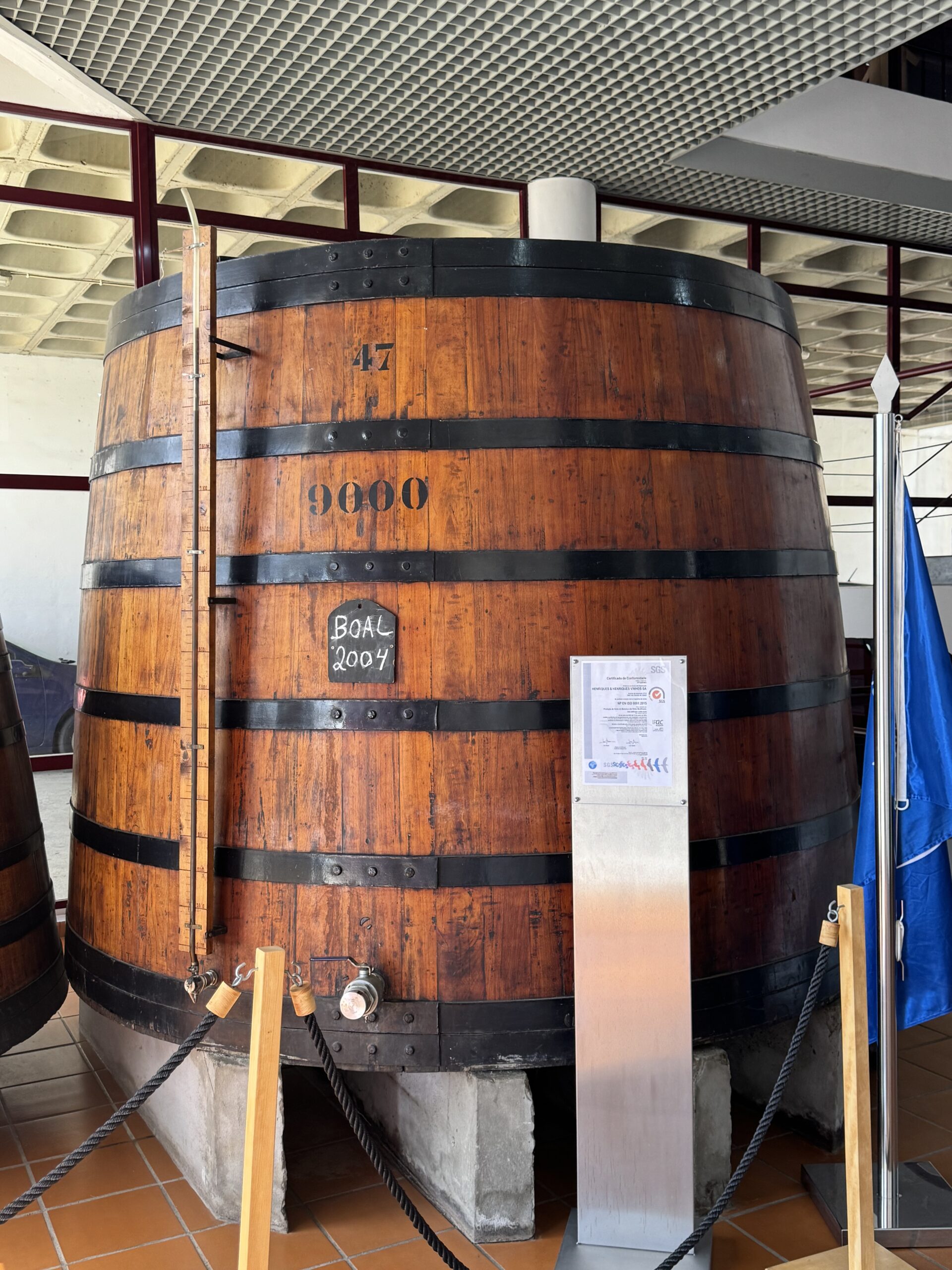
Our last stop was for a tasting at Henriques & Henriques, an establishment that has been making the world-famous Madeira wine since 1850. Two things were impressive: 1) the wine barrels sit in the sun (not tucked away in cool cellars) and 2) there were barrels with wine that were over 100 years old. In fact, the oldest wine they sell is from 1894, which sells for about $6500 USD a bottle and a single tasting is approximately $100 USD.
Madeira’s taste development was quite by accident in the mid-1600’s after a barrel of the wine was returned to Funchal after sitting in the hold of a ship at sea. The producers realized that the heat had a positive effect on the wine and it forever changed the taste profile and storage process. Madeira wine was very popular with the early settlers of the United States and played a role on the road to the American Revolution when John Hancock’s sloop was seized by the British and he was forced to pay tax on the Madeira wine he was transporting, setting up the Boston riots of 1768. Madeira was used to toast the Declaration of Independence and was a favorite of George Washington, Alexander Hamilton, Benjamin Franklin and John Adams.
As we drove back to Funchal, we were astonished by the amount of banana trees. This is a very fertile island with near perfect weather allowing for the trees to produce bananas year-round, with most being exported to mainland Portugal. Tourism is their largest industry. The island is very self-sufficient, growing most of its food, raising lamb and beef, foraging wild fruits and herbs, hunting rabbits and fishing. They are very proud of that.
Next stop in 5 days: West End, Bermuda
Recommend: Tours by Locals
https://www.toursbylocals.com/tour-guides/funchal-madeira/portugal/guide-profile/nicolau-c-664d21bd96689af343324504
Post Gallery
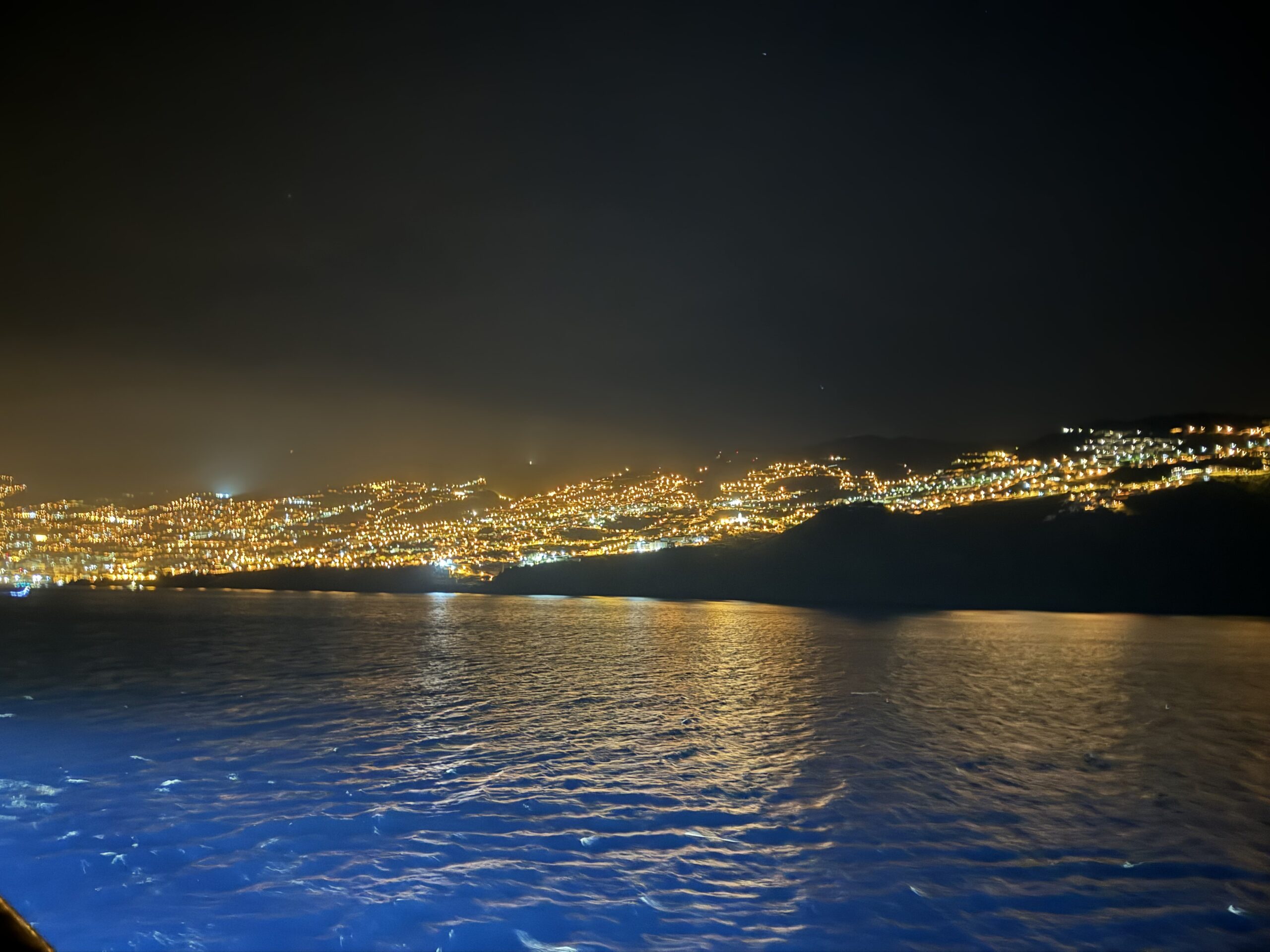
Early morning arrival to Madeira.
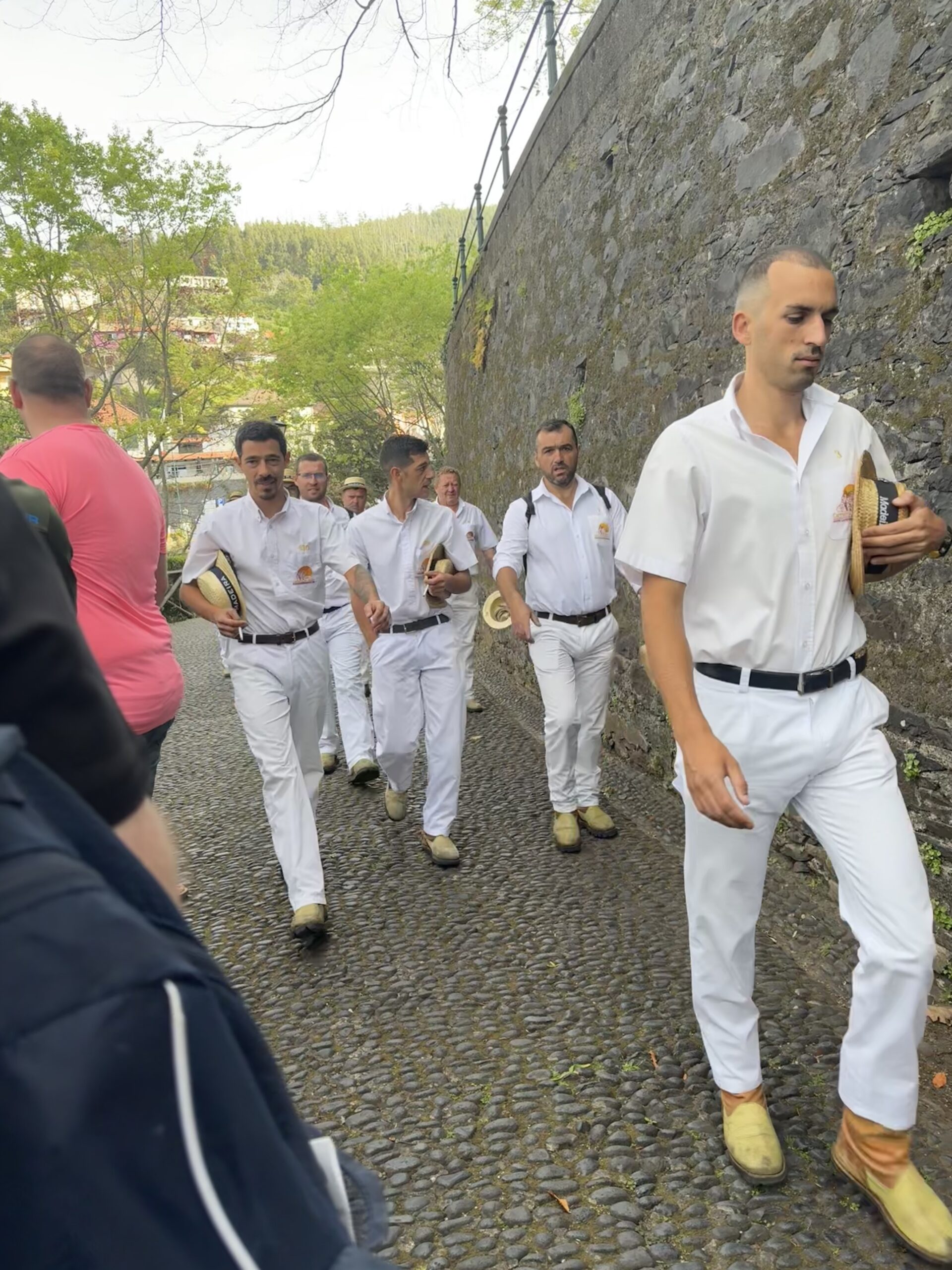
Here come the Carreiros!
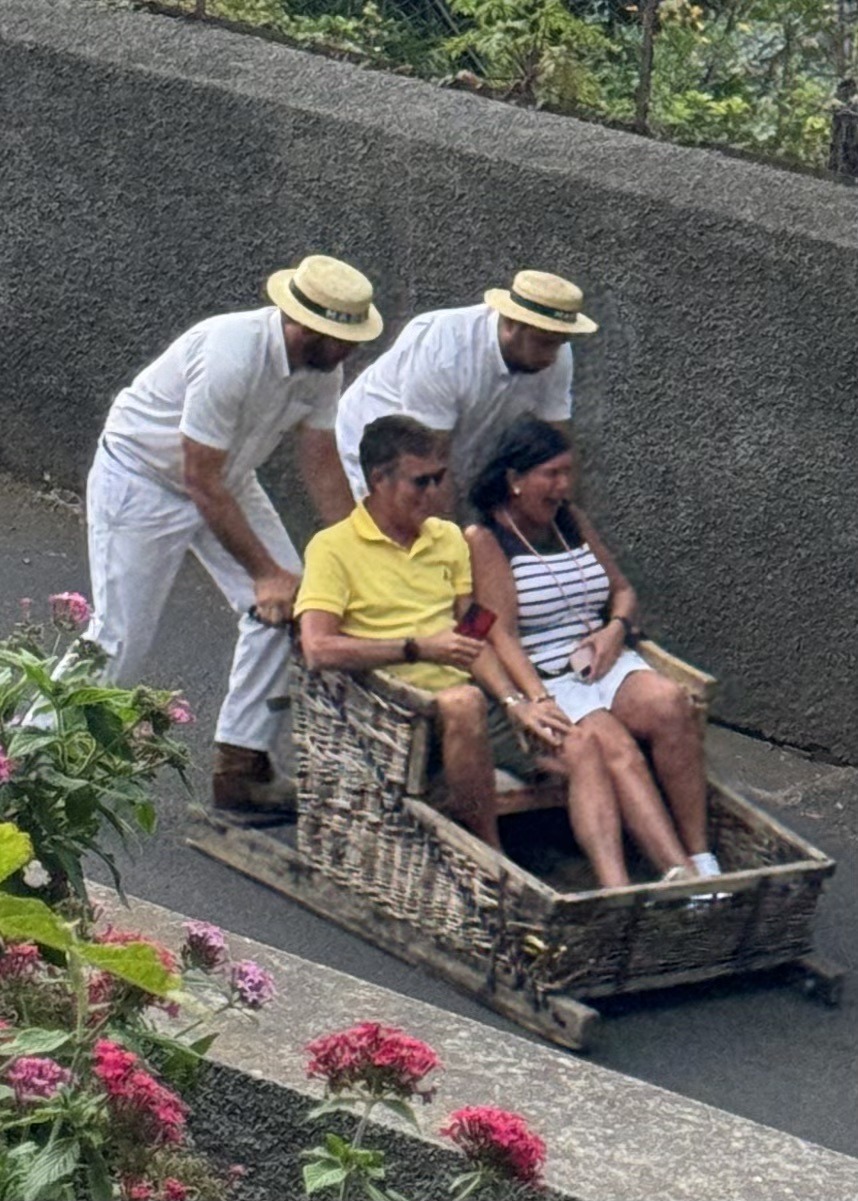
This poor lady screamed the whole way down.
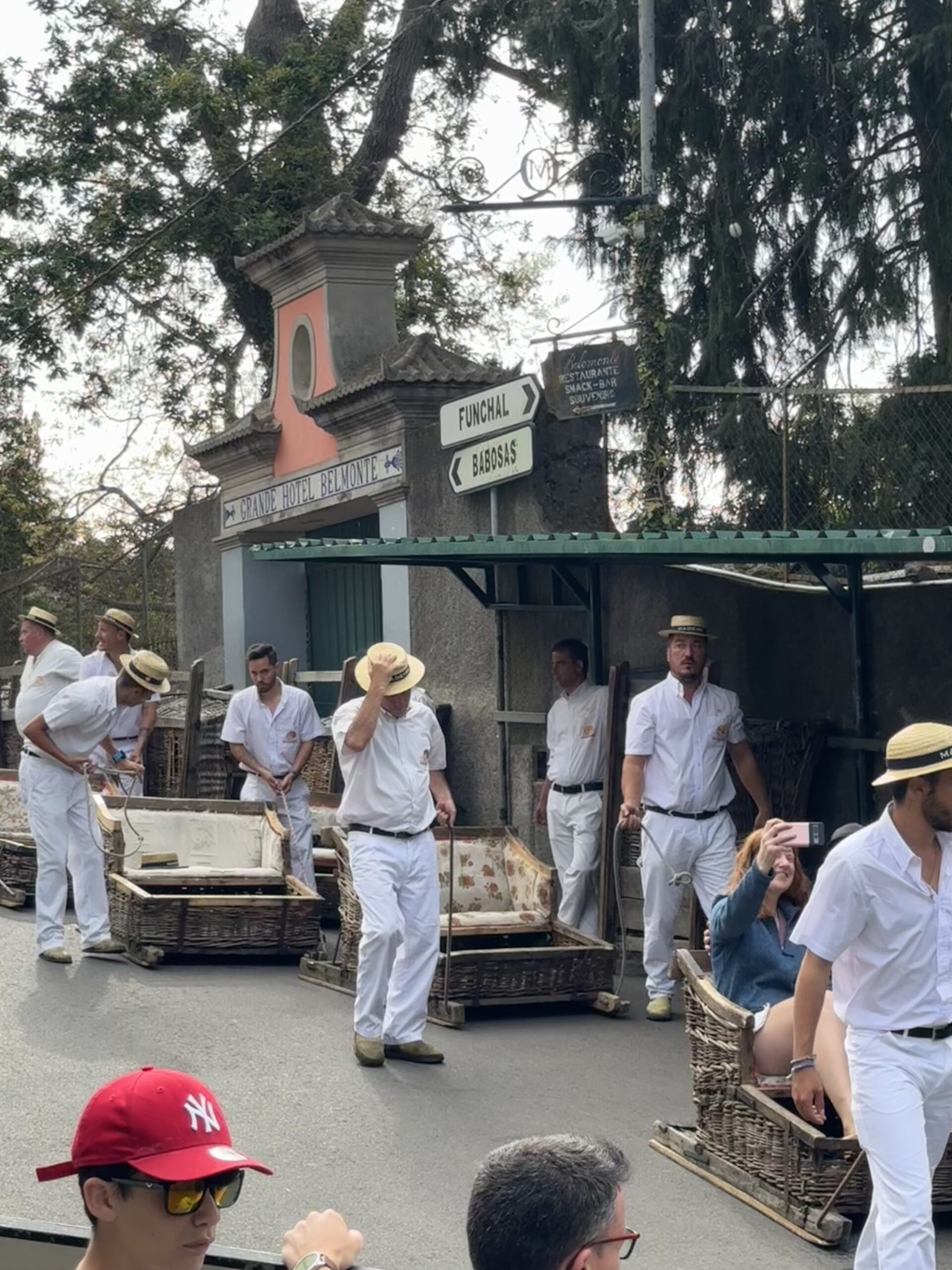
The loading zone.
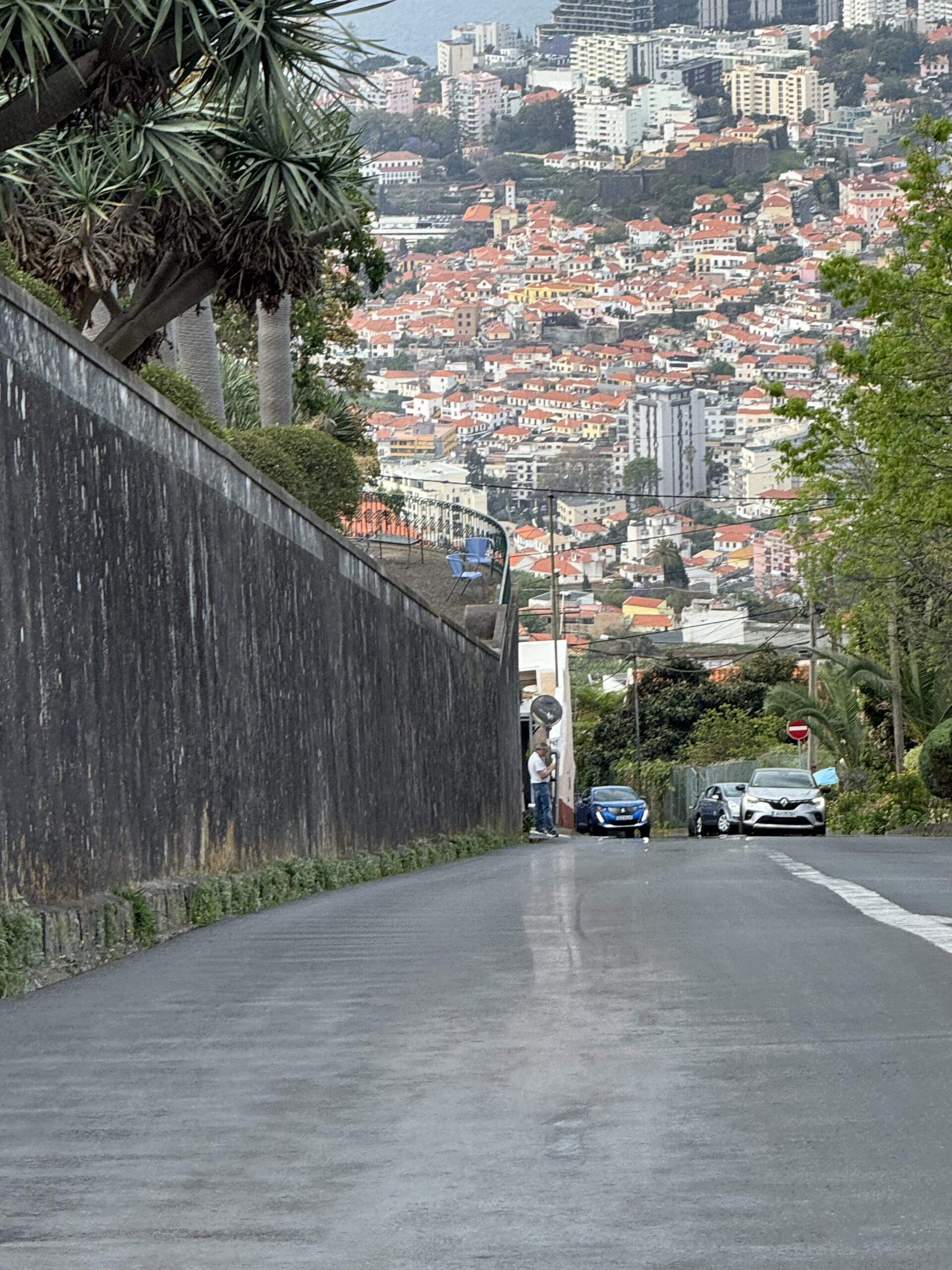
If this seems steep, I promise you it was! And the road is shared with cars too.
There is one stretch where it flattens out and the Carreiros pull the toboggan.
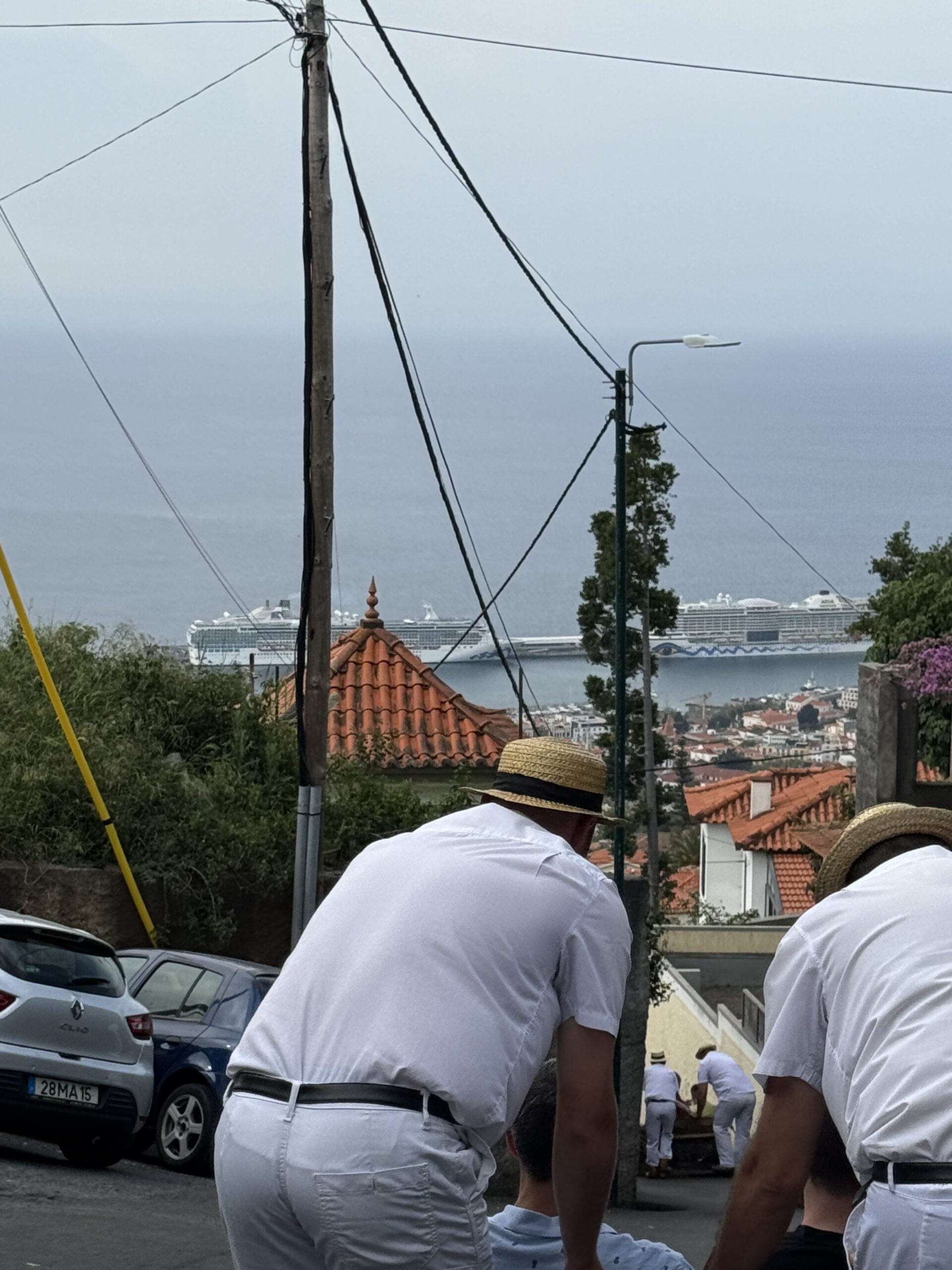
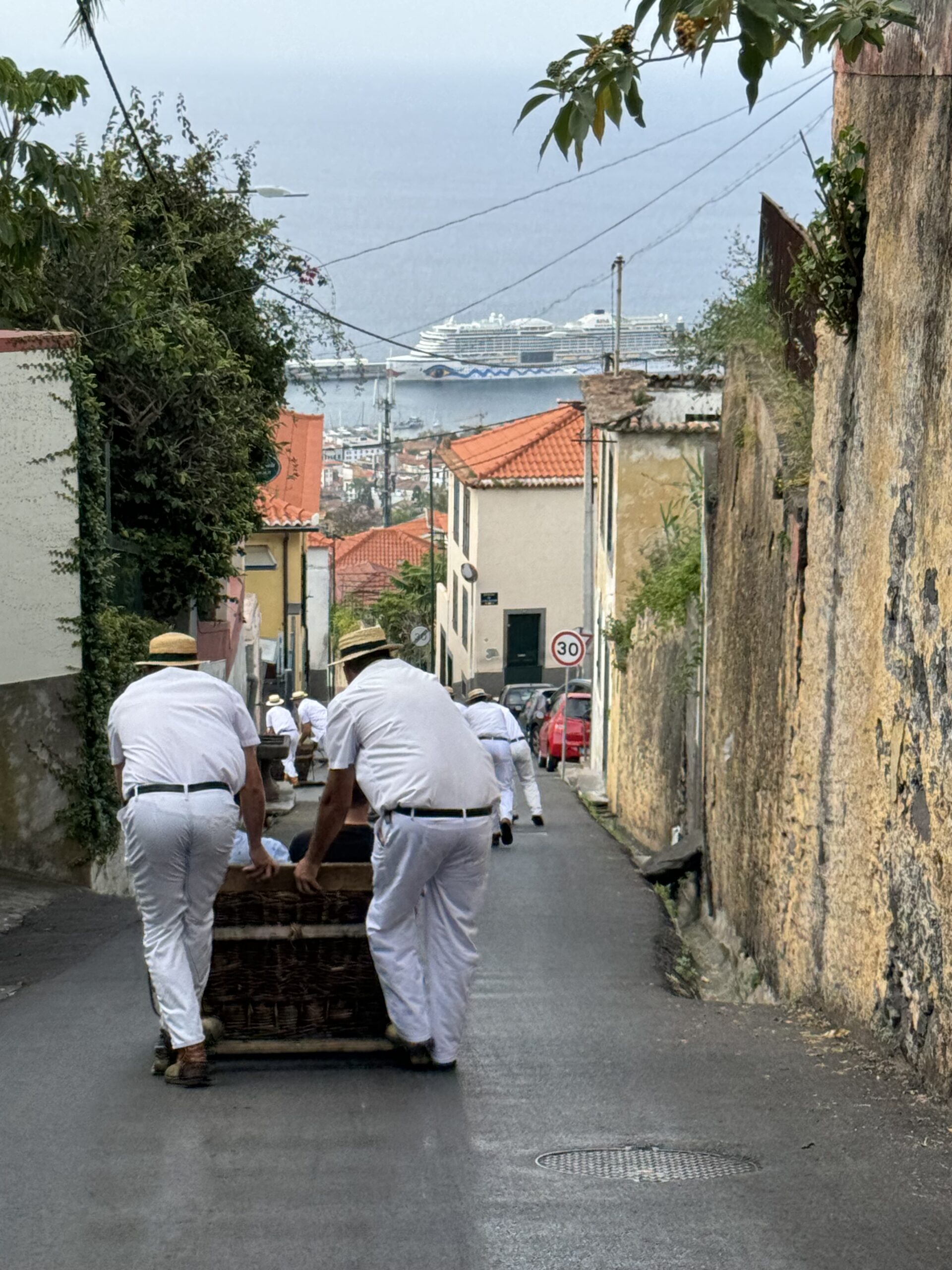
There's the Island Princess in the distance. Do you see the Carreiros' braking system in play?
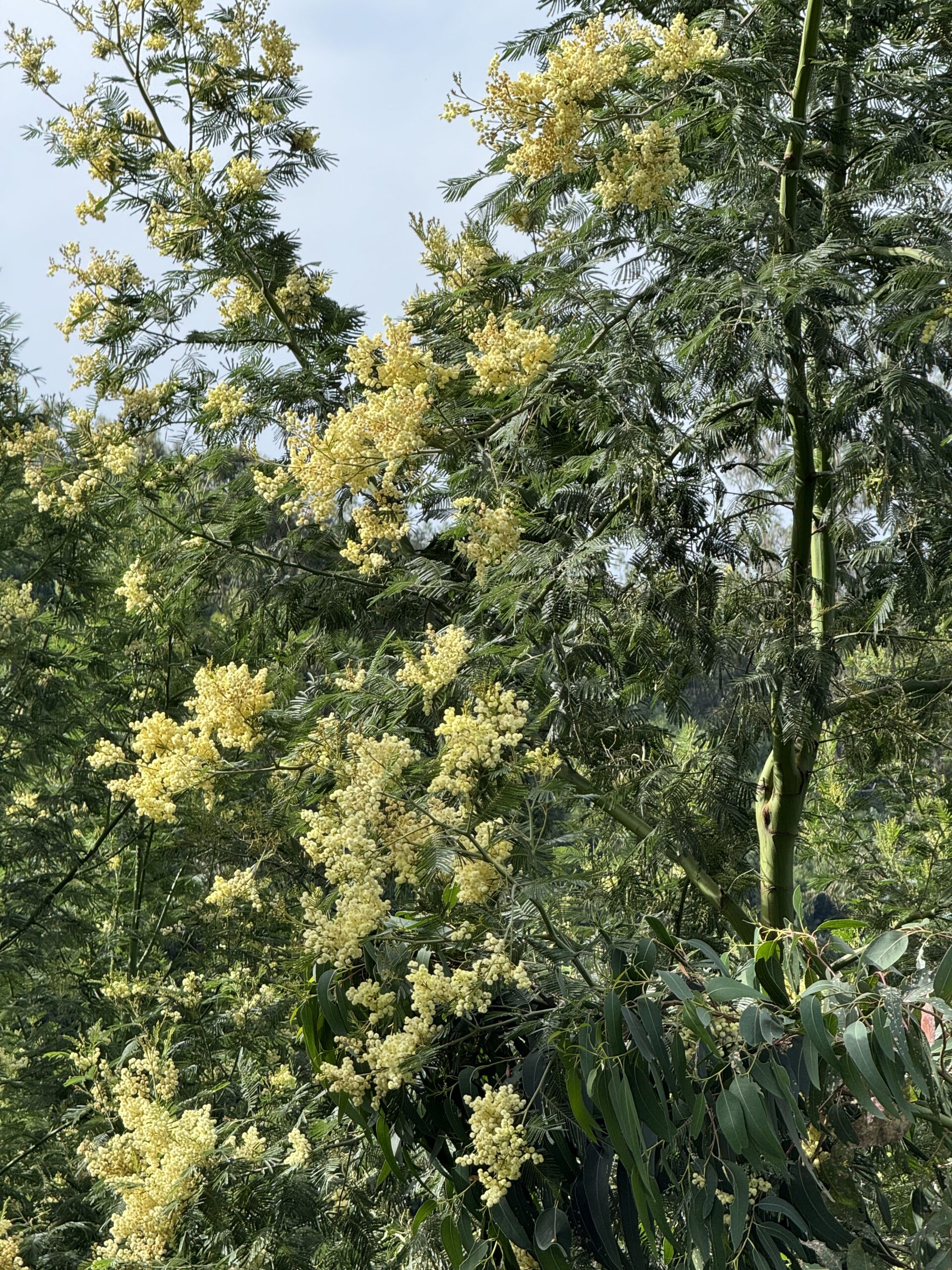
Flowering mimosa trees.
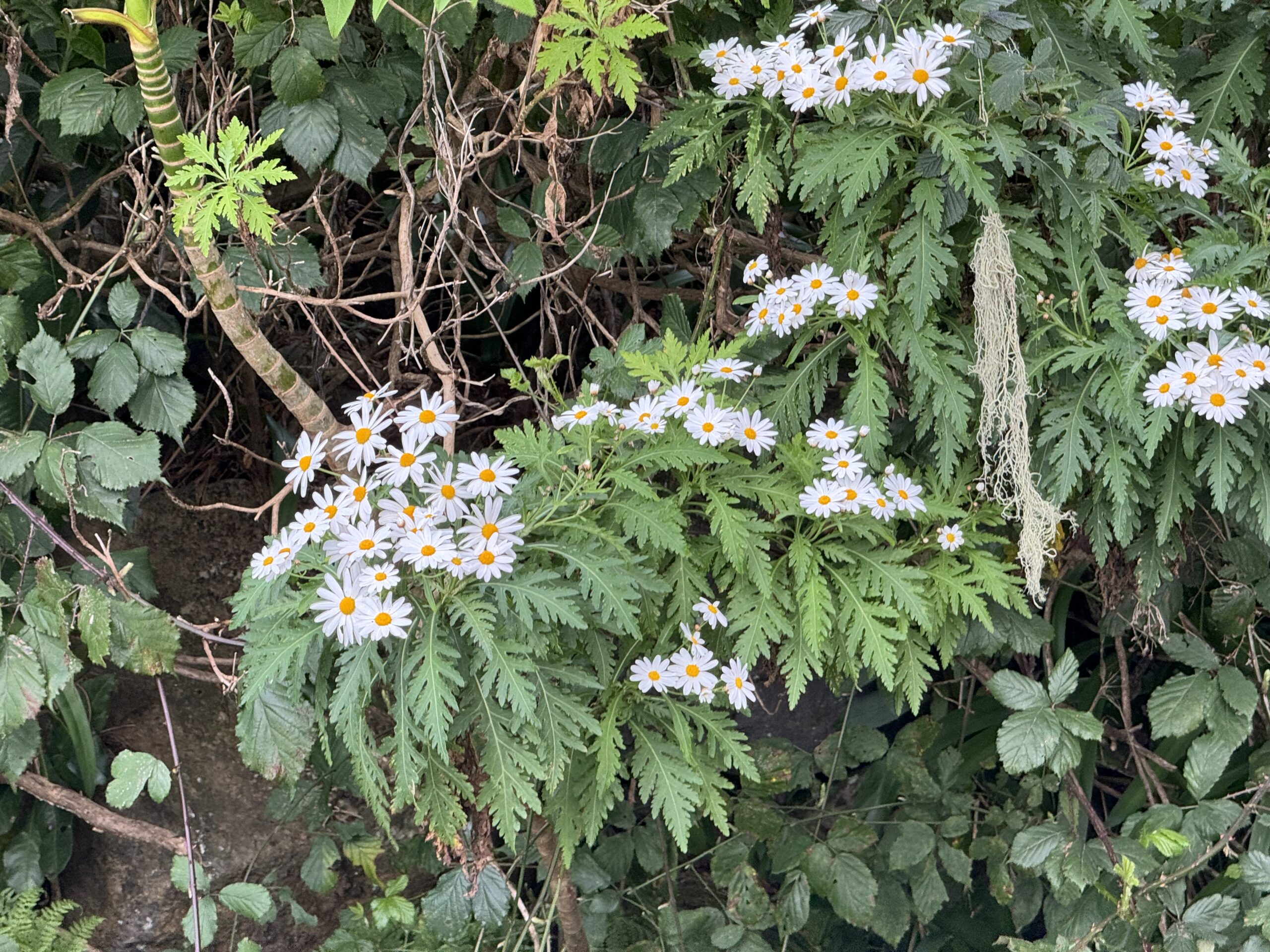
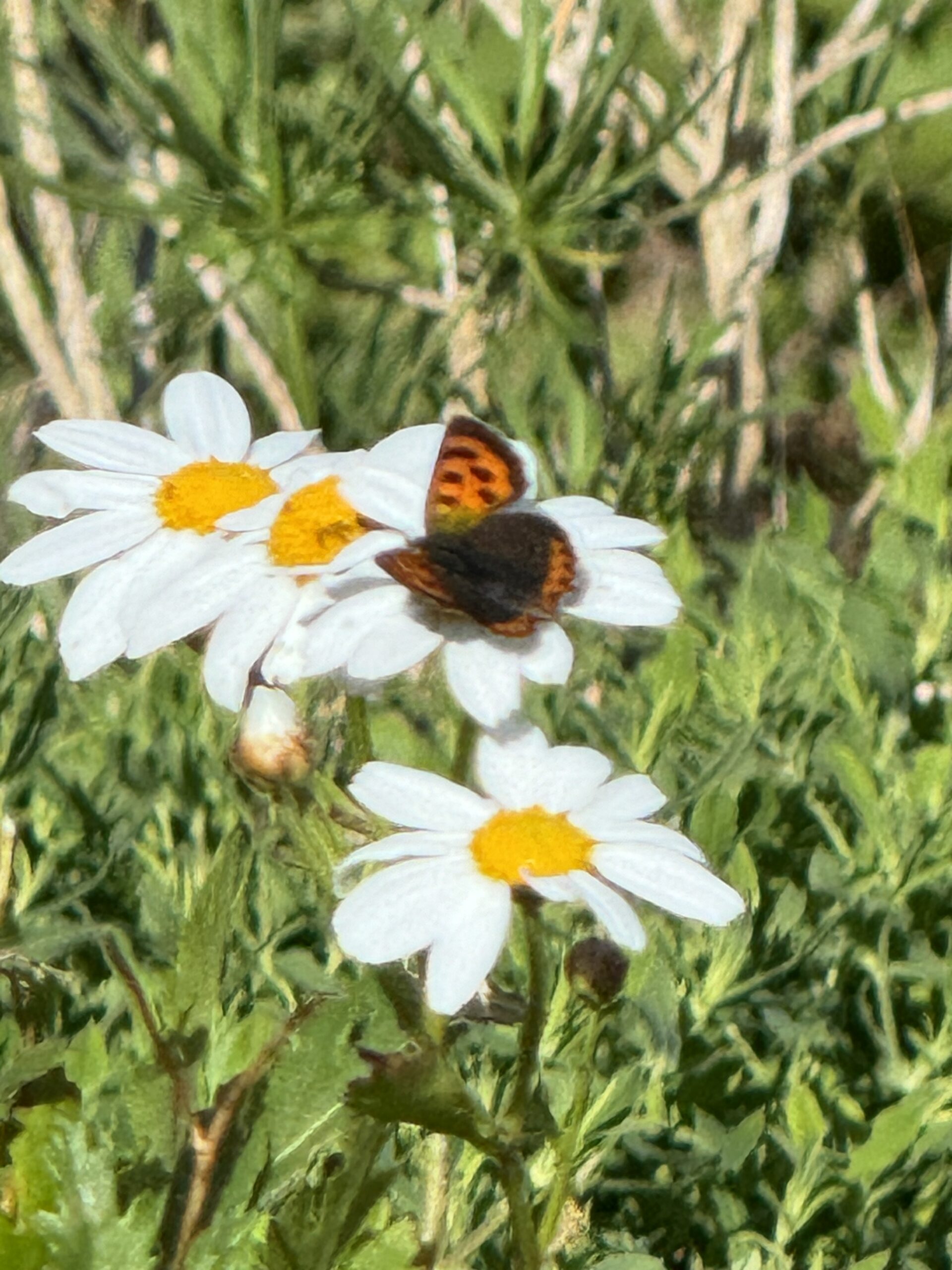
Madeira daisy's.
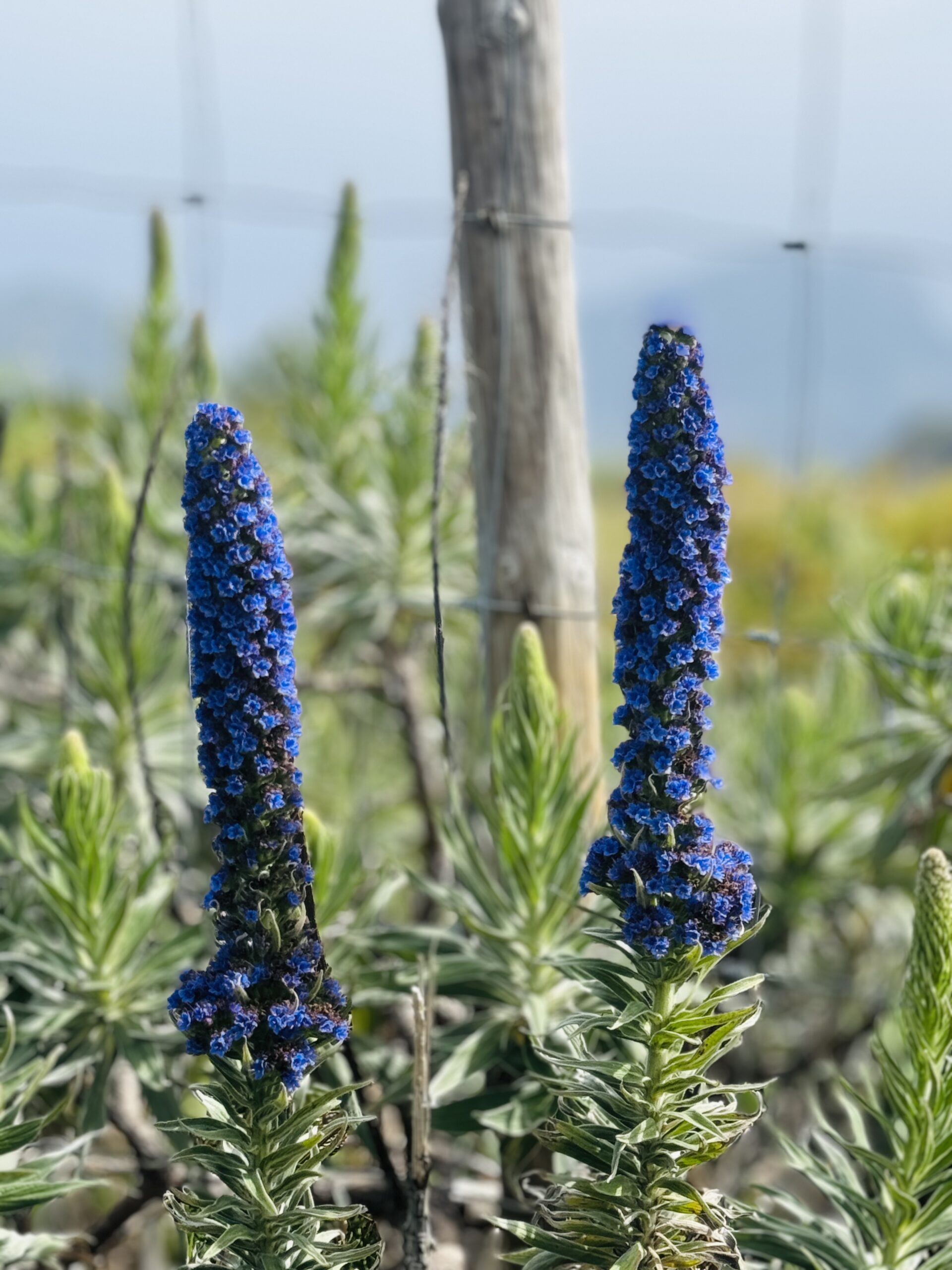
Echium candicans, or “Pride of Maderia”.
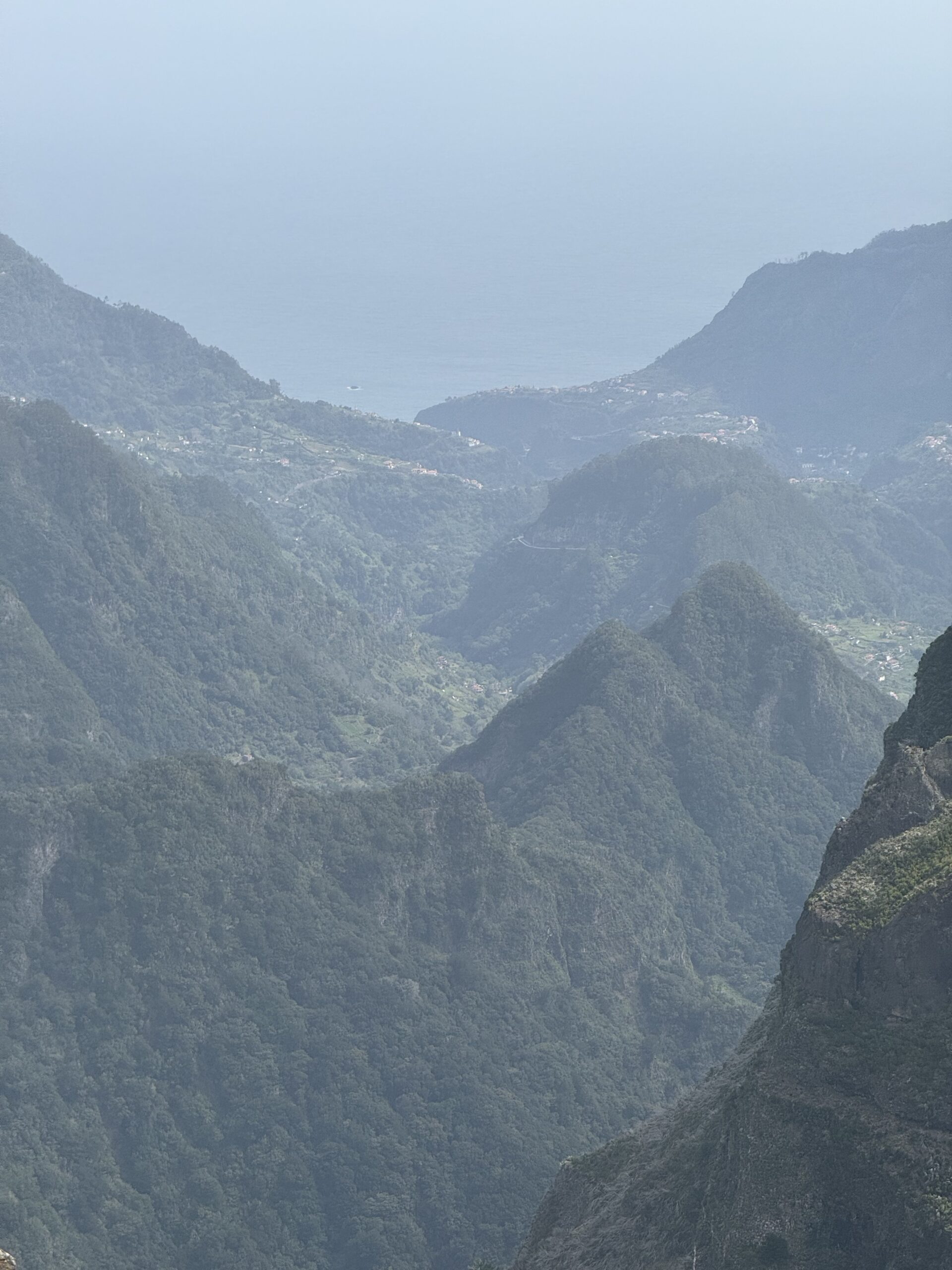
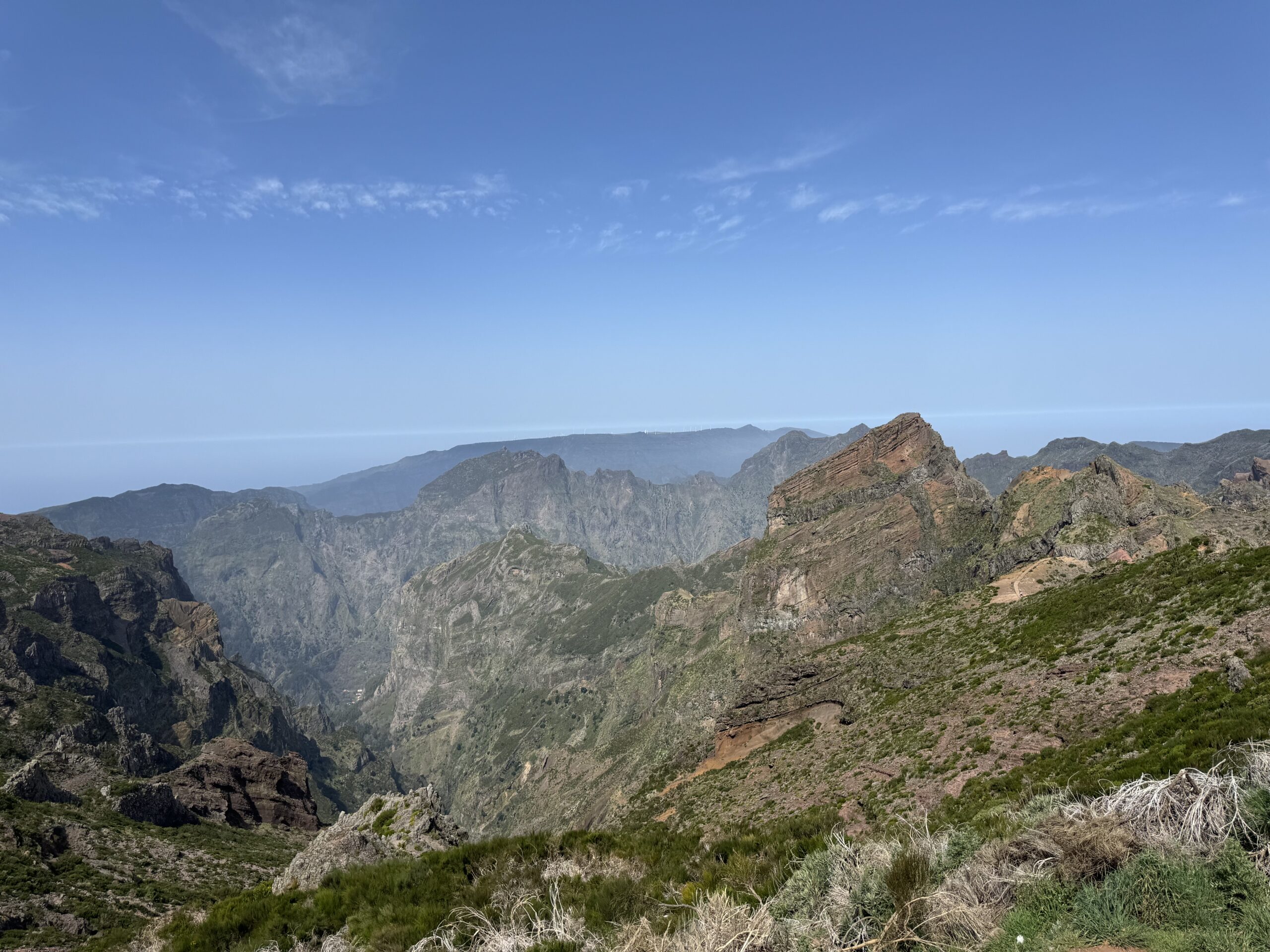
The view from the Pico du Areerio viewpoint.
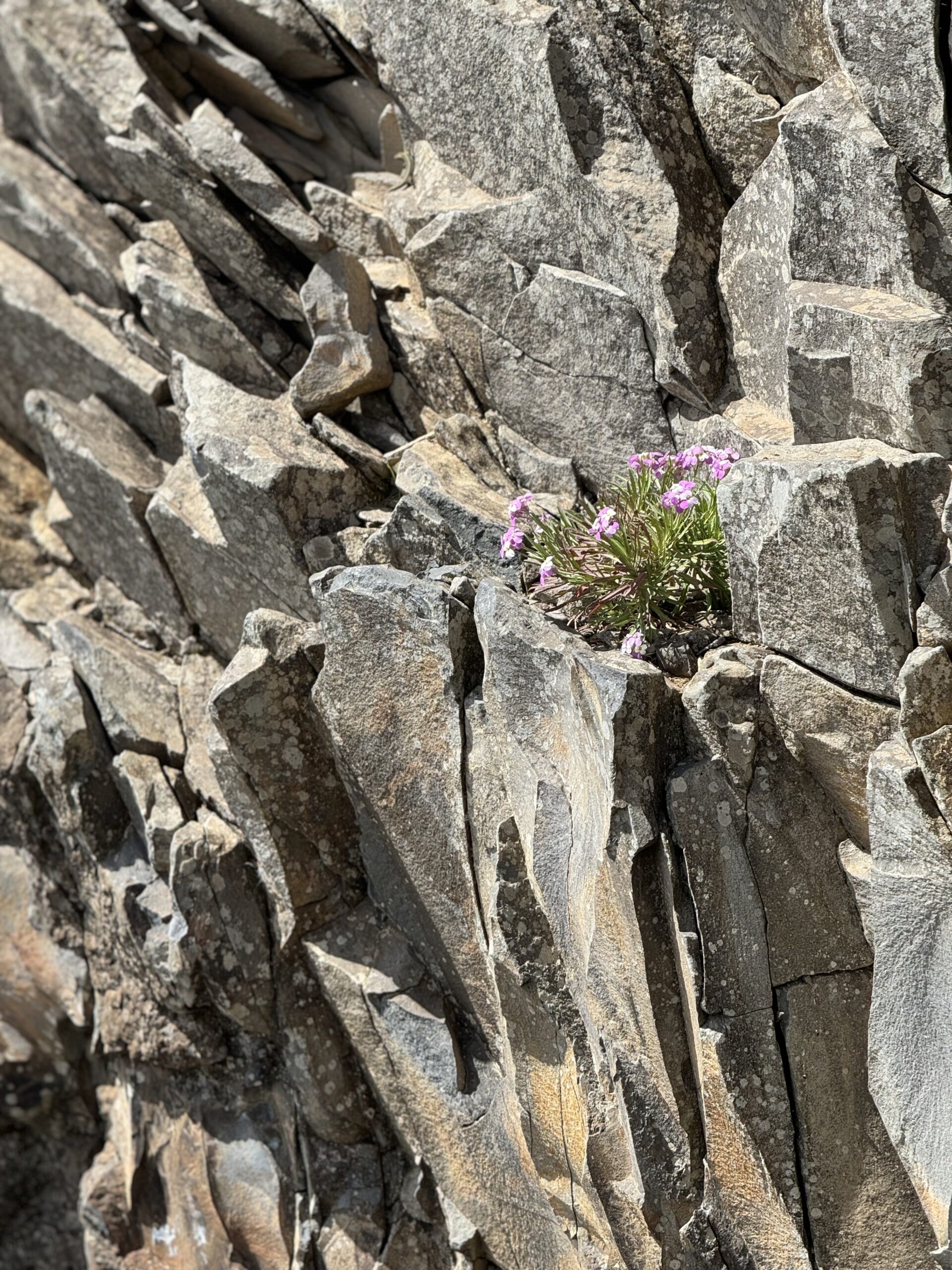
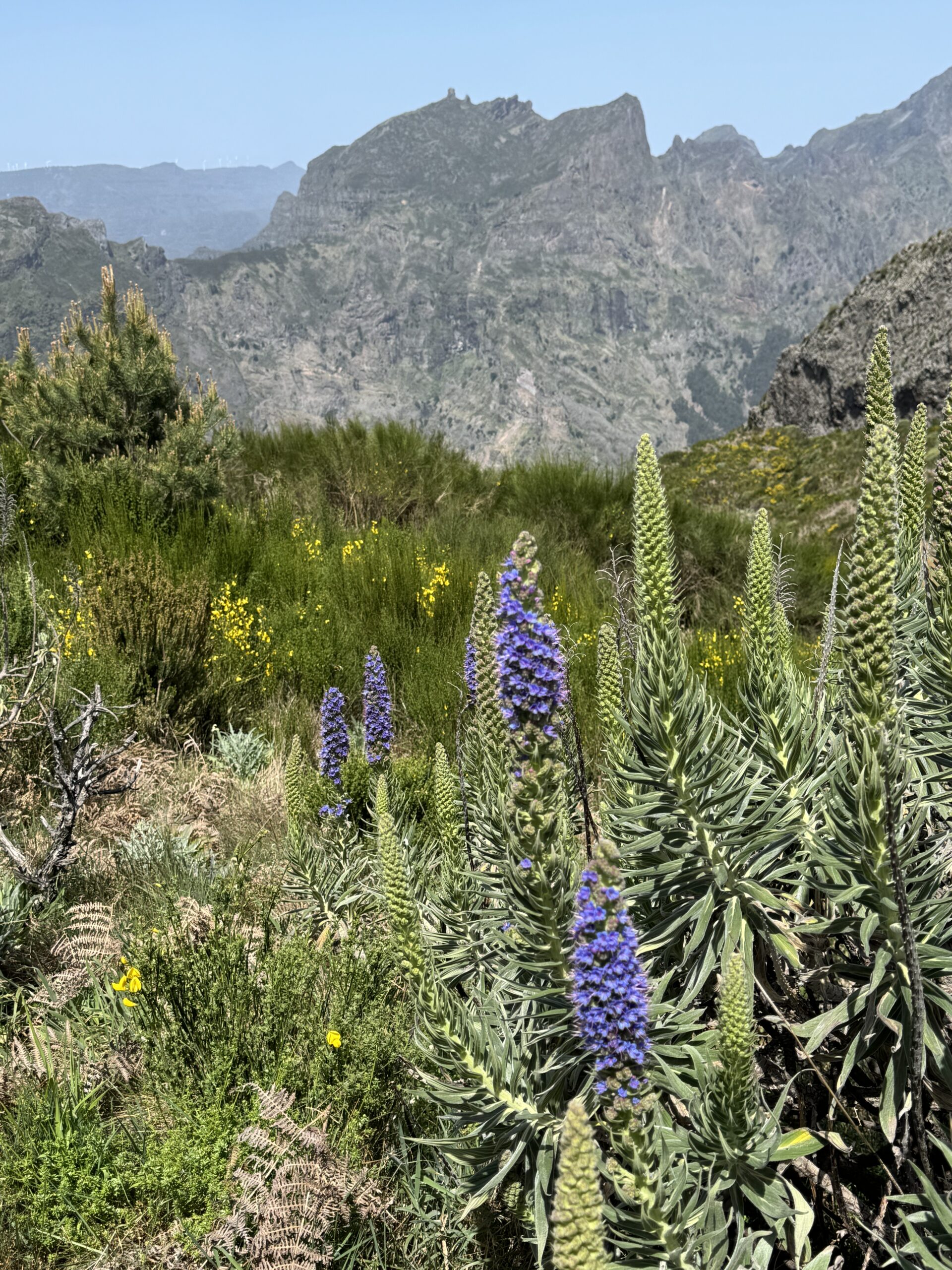
Madeira Broom in the background with yellow flowers. Echium candicans, or “Pride of Maderia, in the forefront.
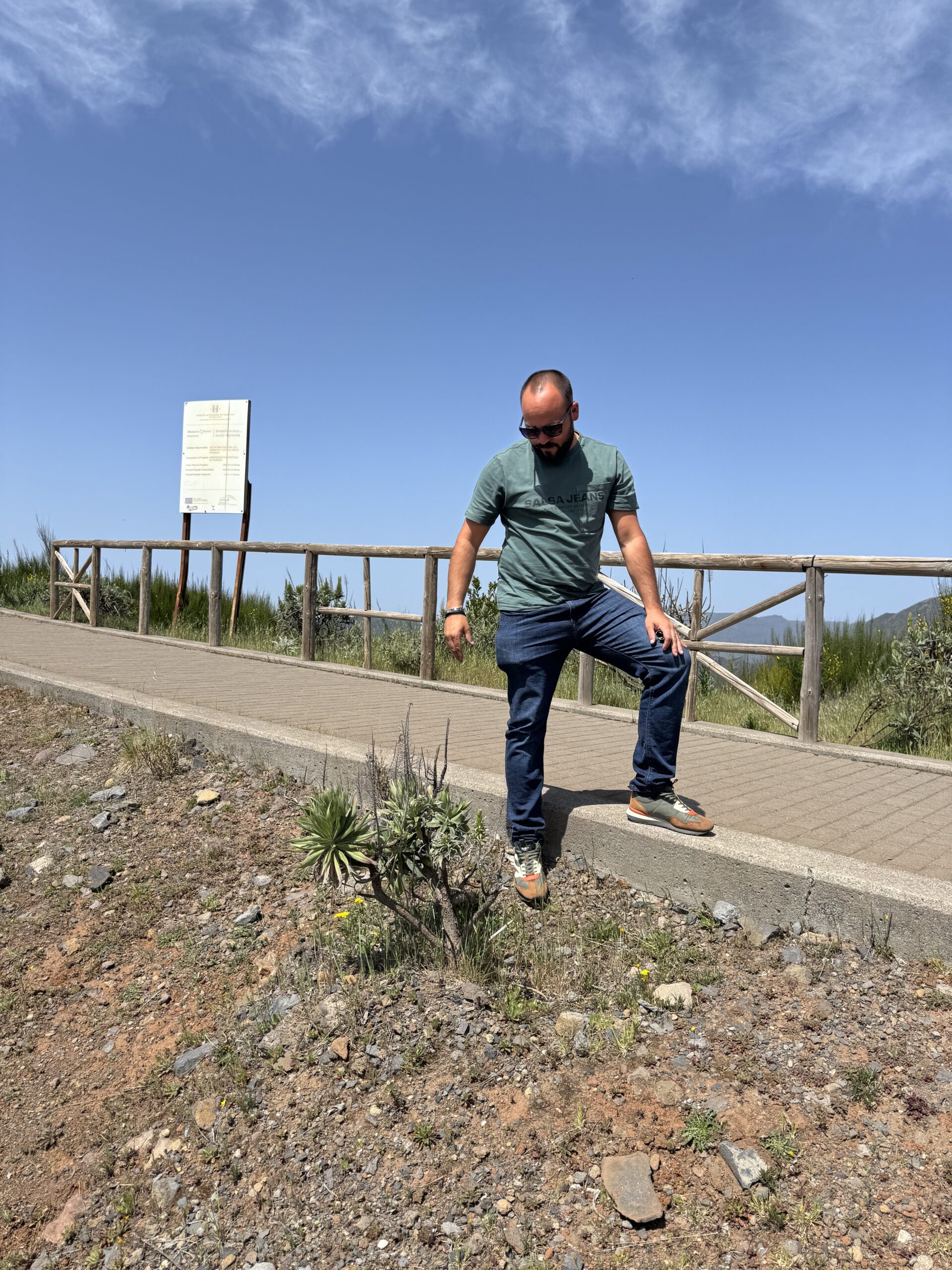
Our guide Nico showing us an old Pride of Madeira.
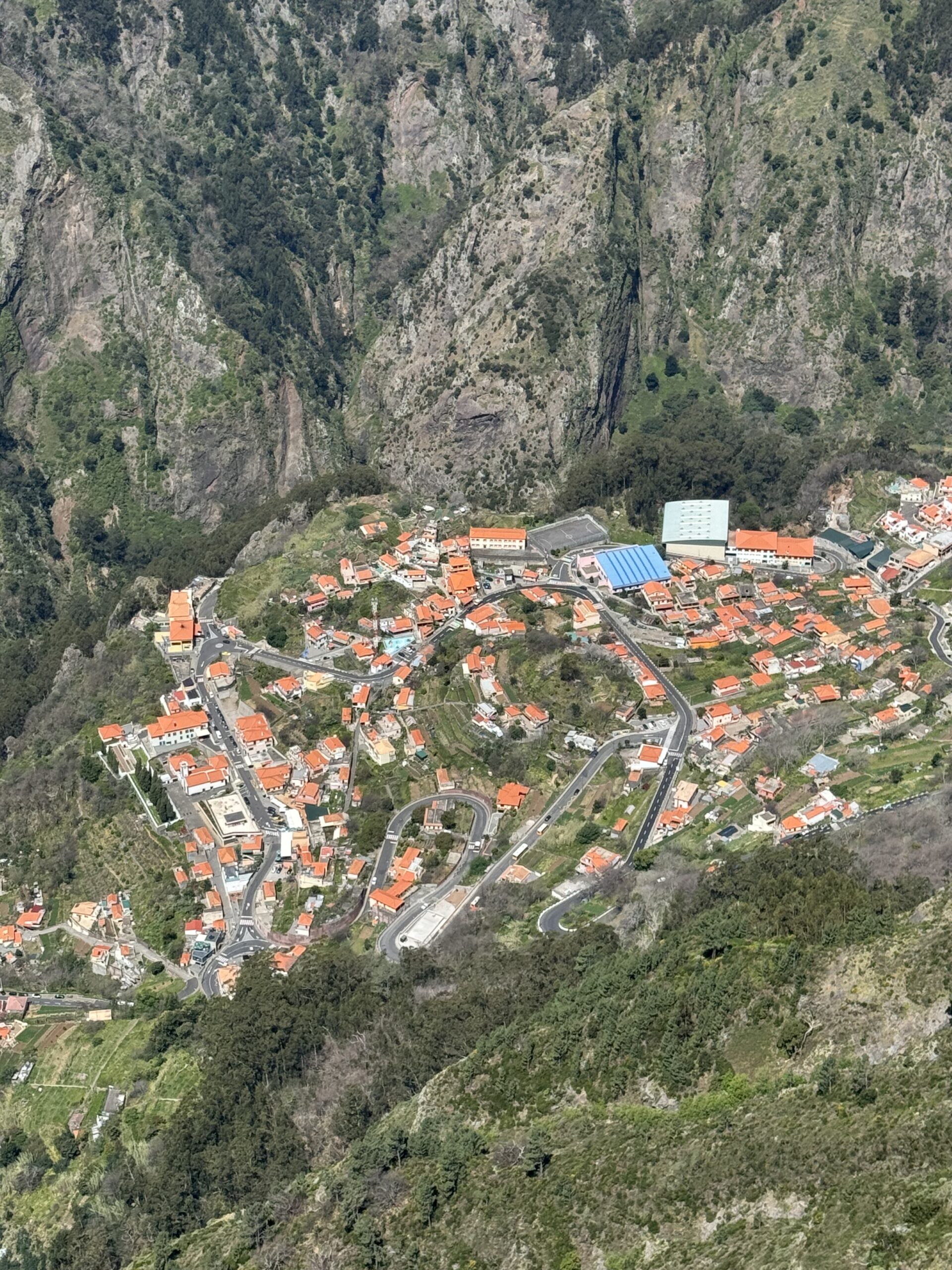
Curral das Freiras or Nun Valley.
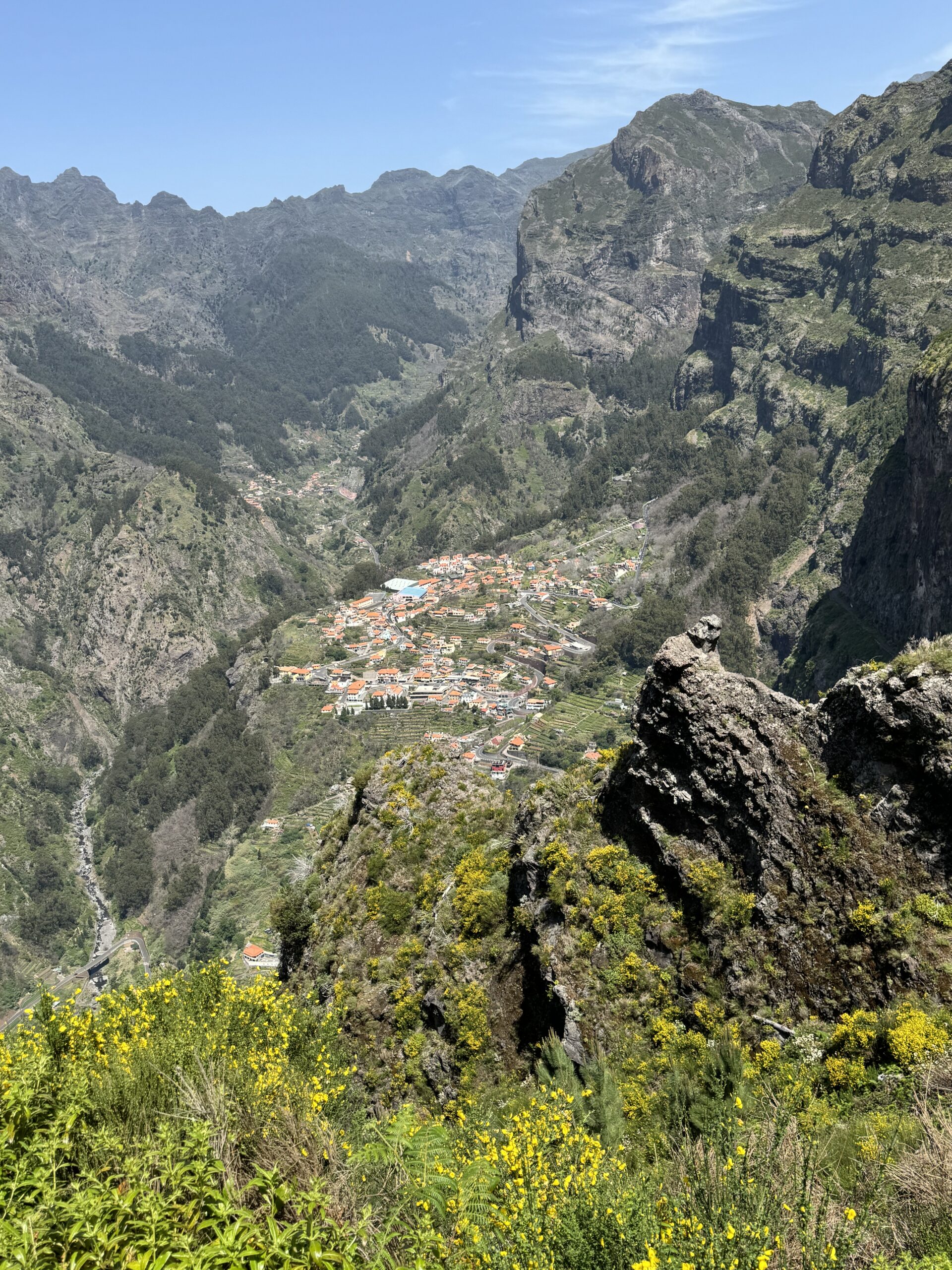
Another view of Nun Valley.
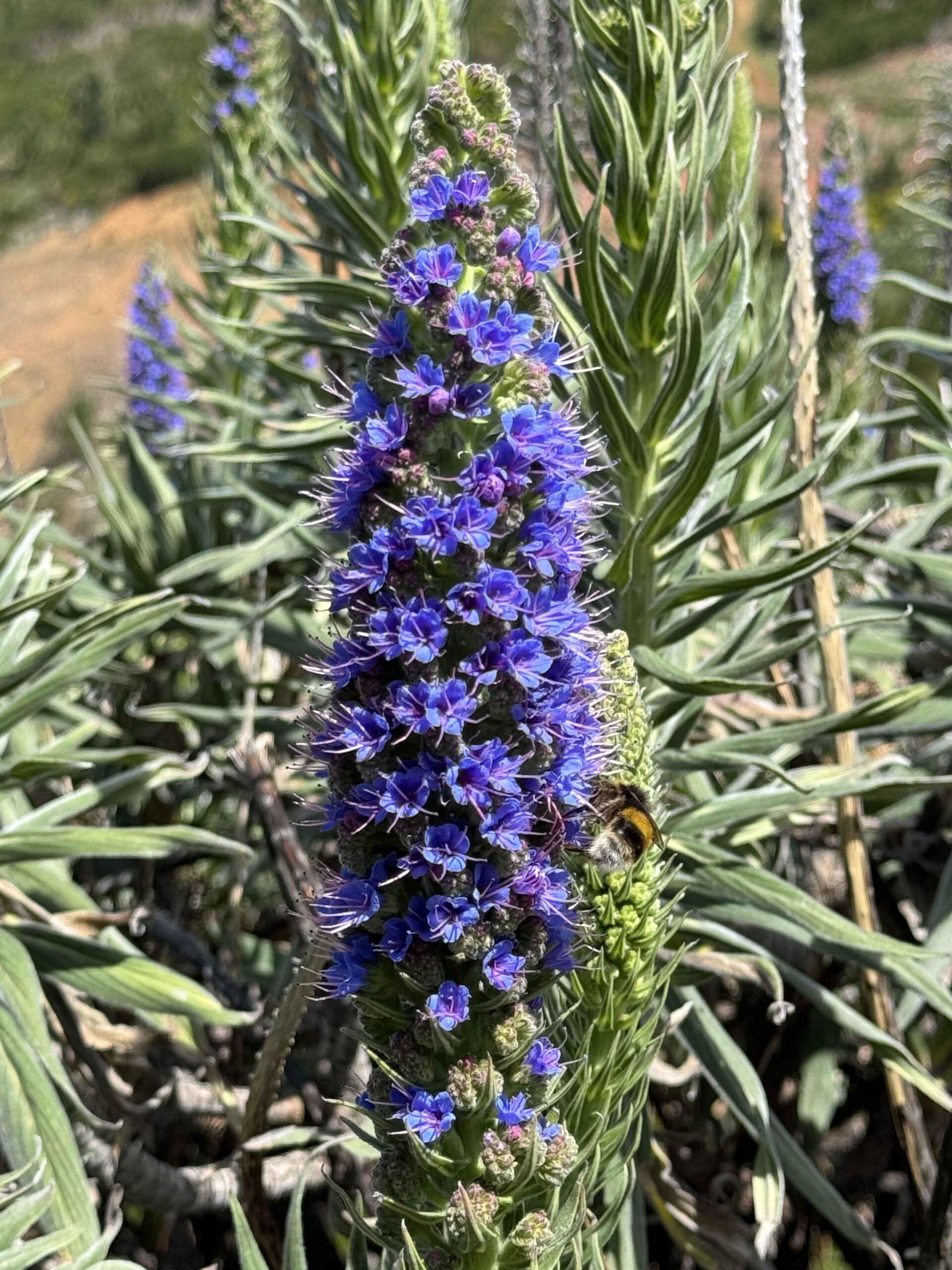
Pride of Madeira with bee.
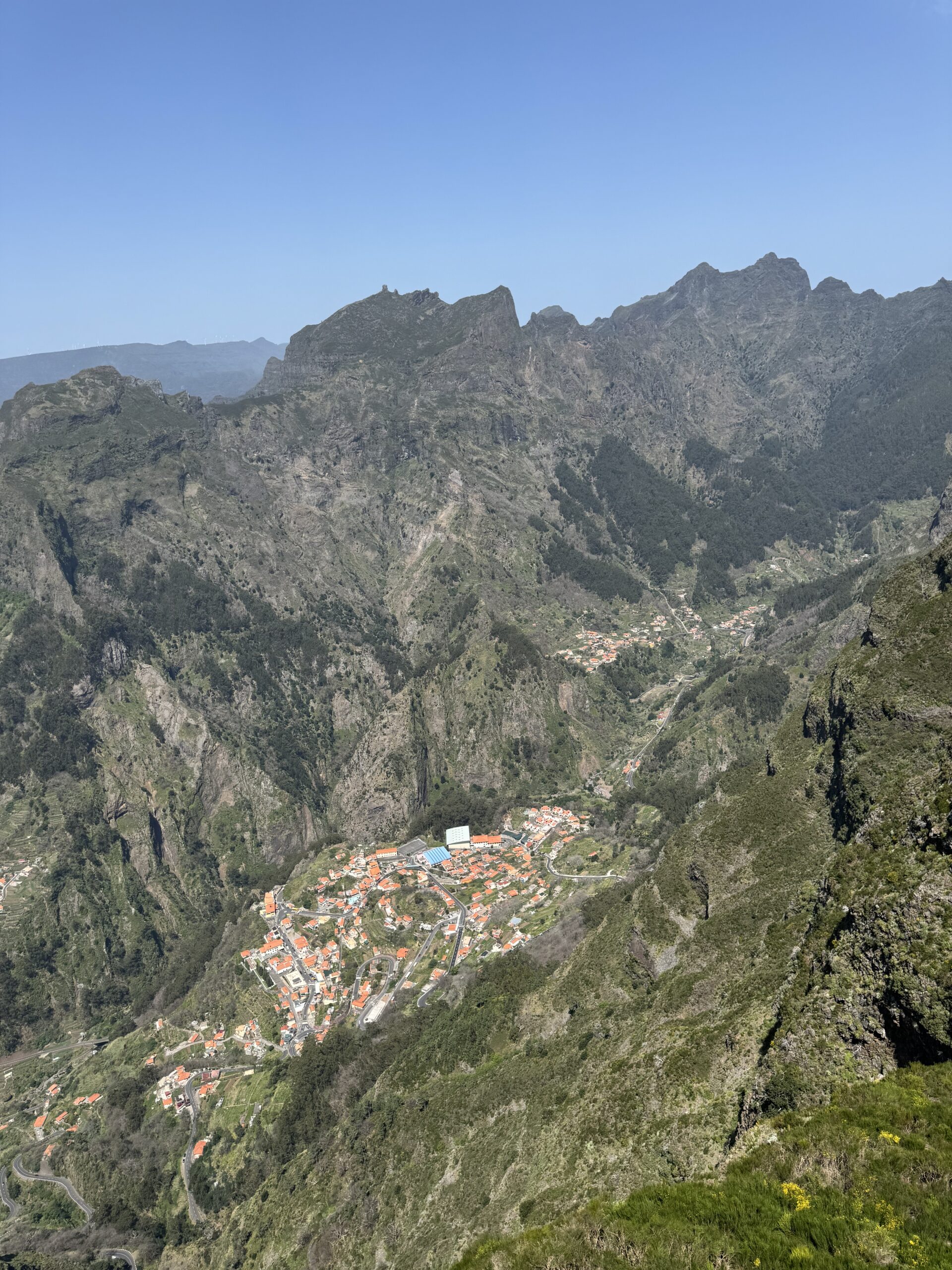
Nun Valley with the town of Curral das Freiras.
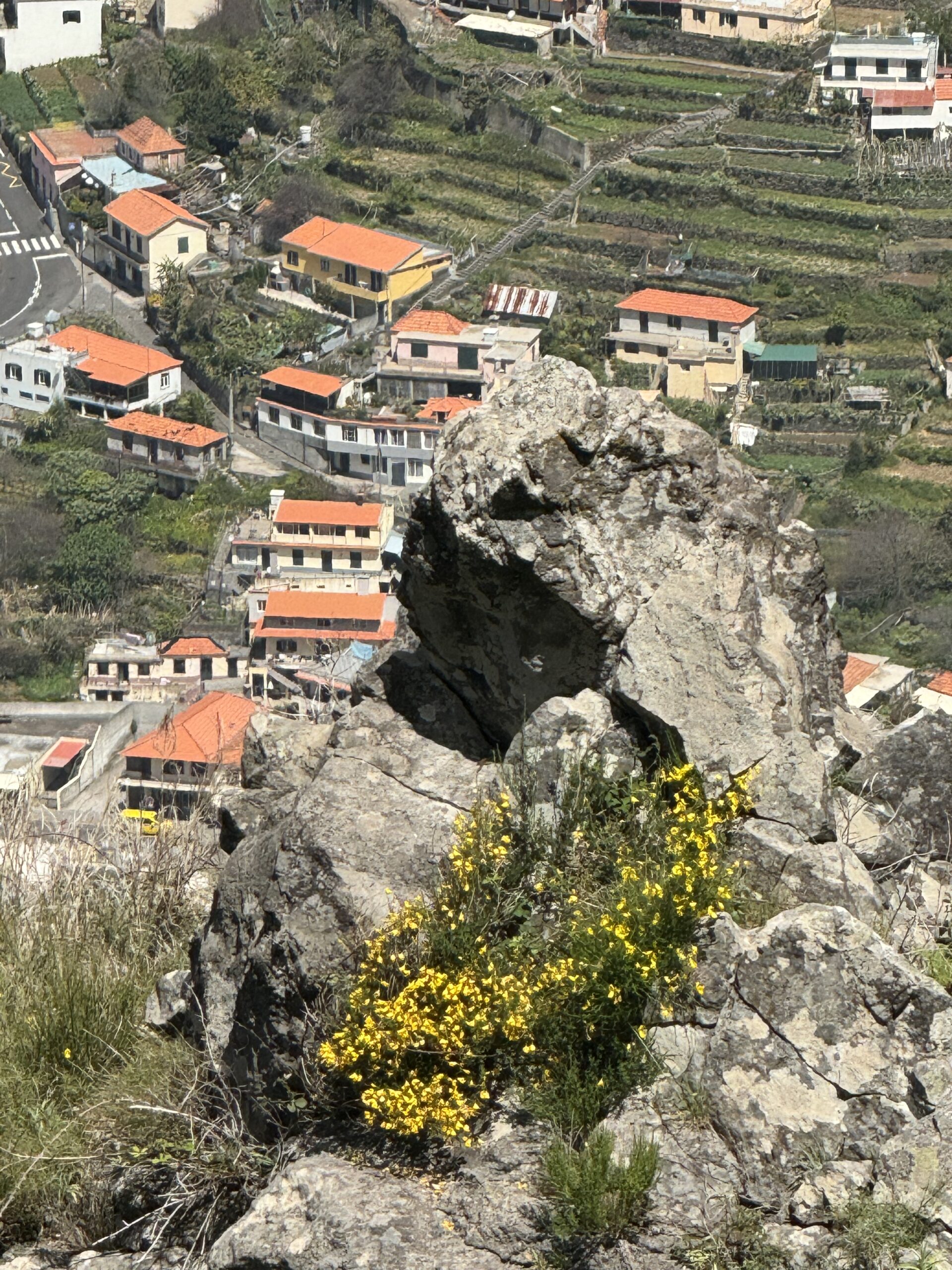
The broom grows anywhere and everywhere!
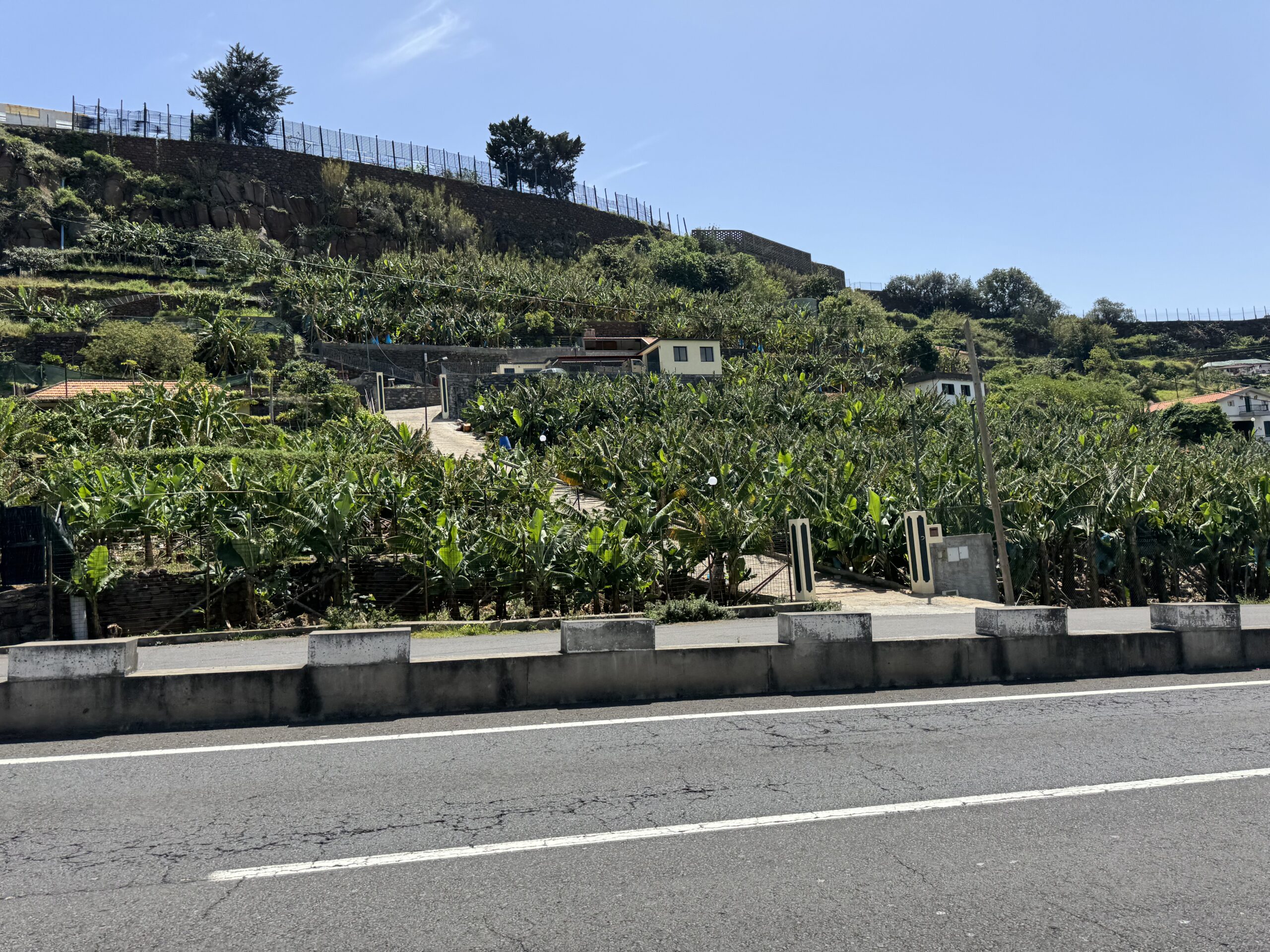
Banana trees.
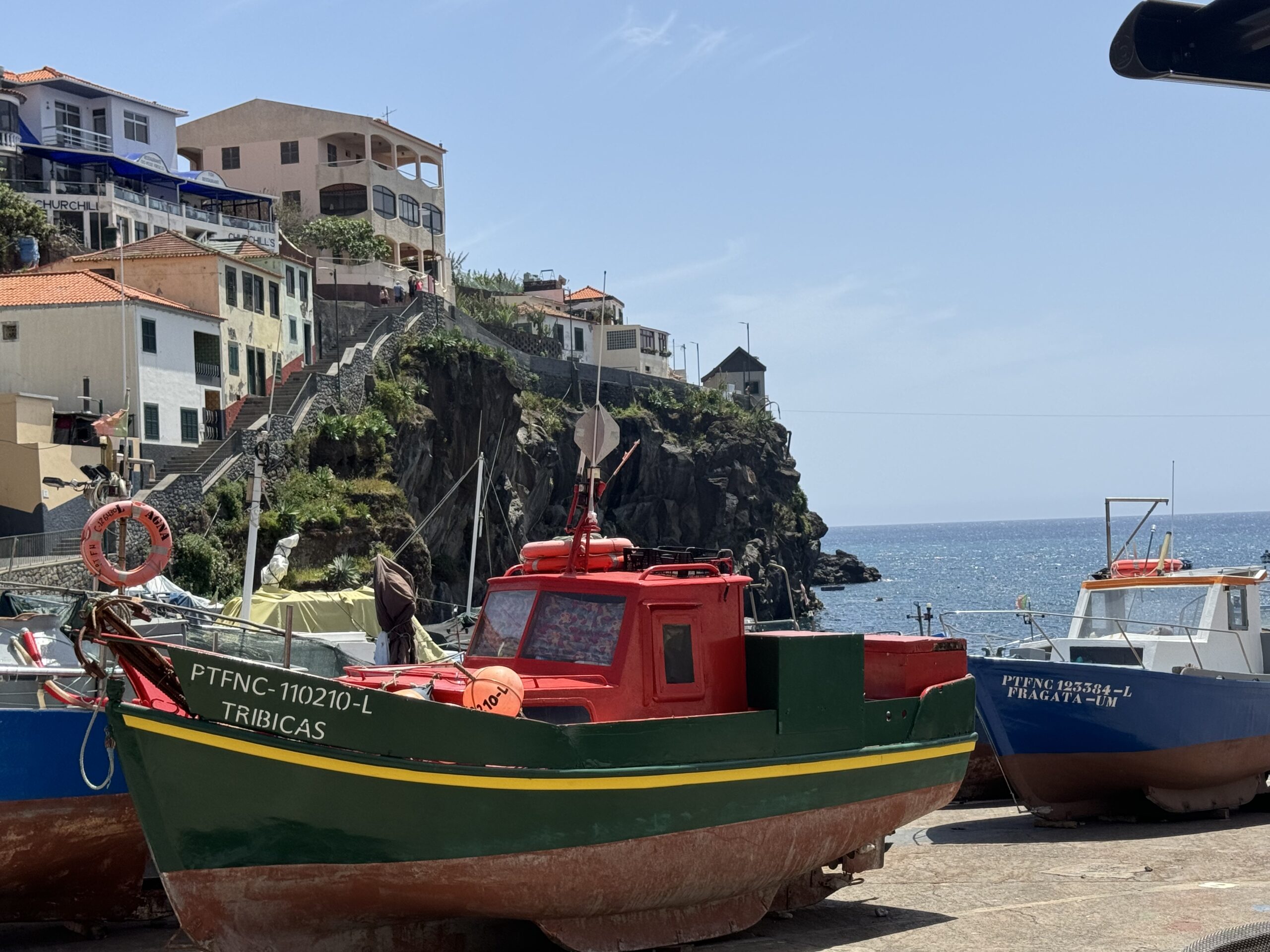
The village of Camara Dos Lobos.
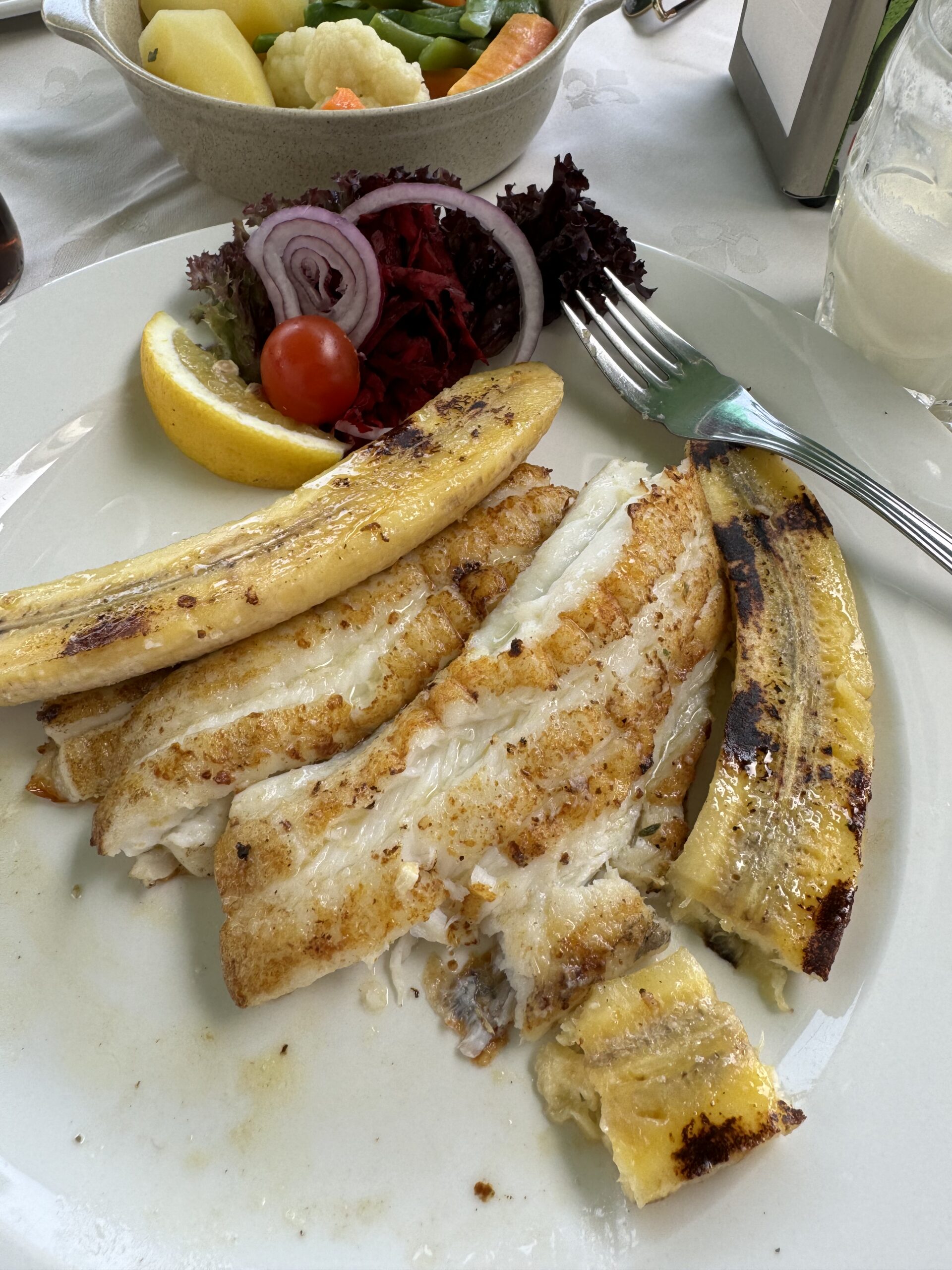
My Espada Preta, or scabbard fish and bananas.
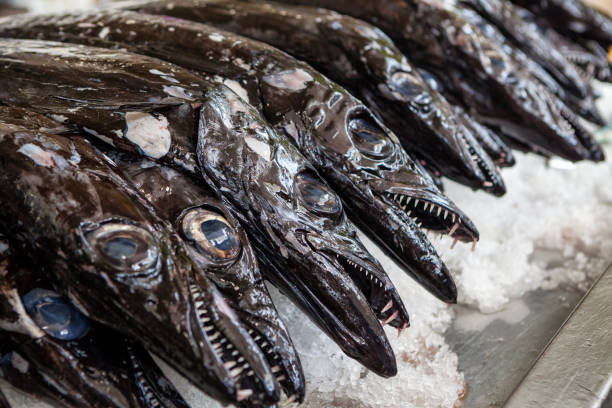
Scabbard fish – aren't they good looking?
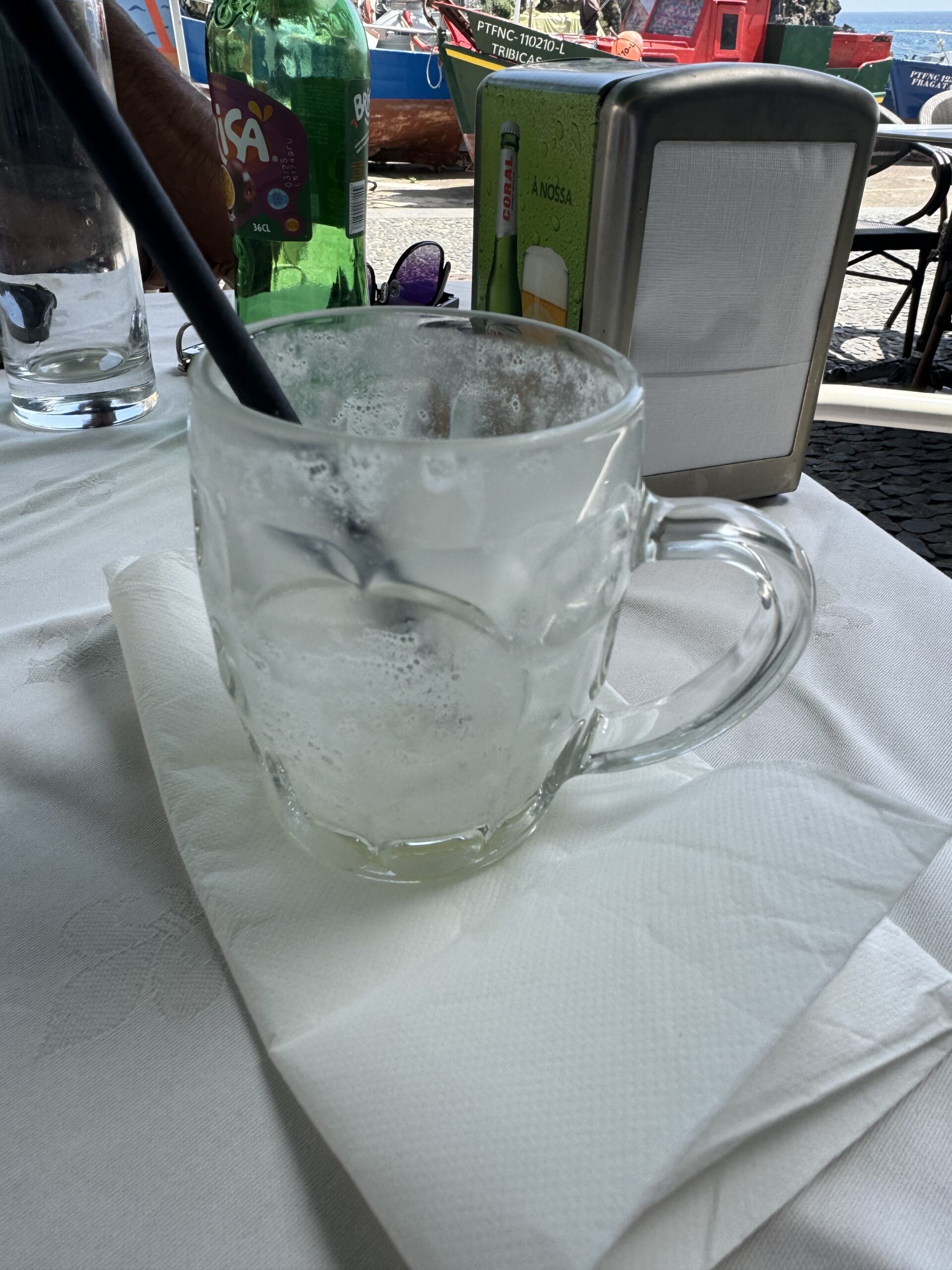
What is left of my Nikita!
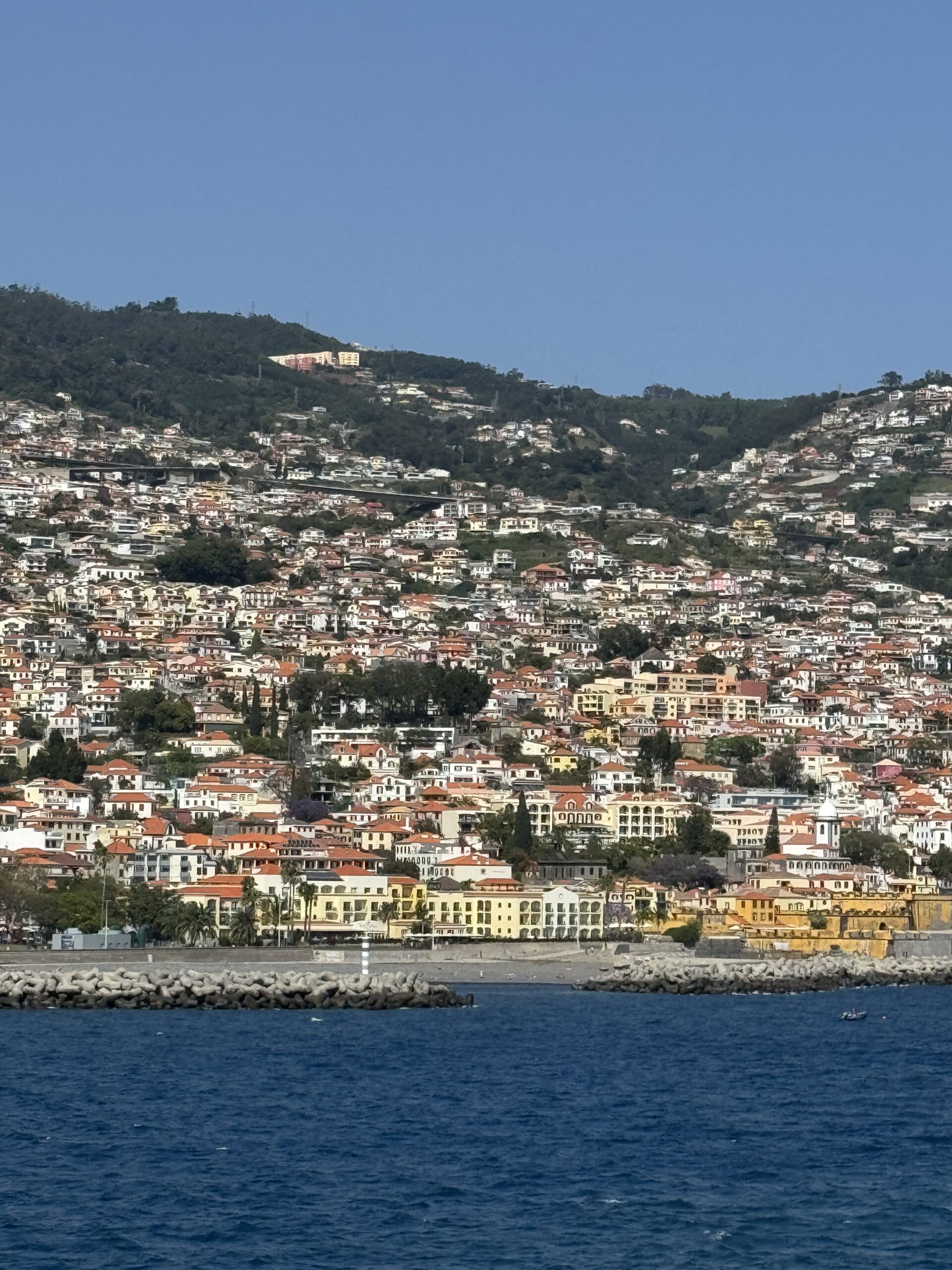
Funchal as we sailed away.
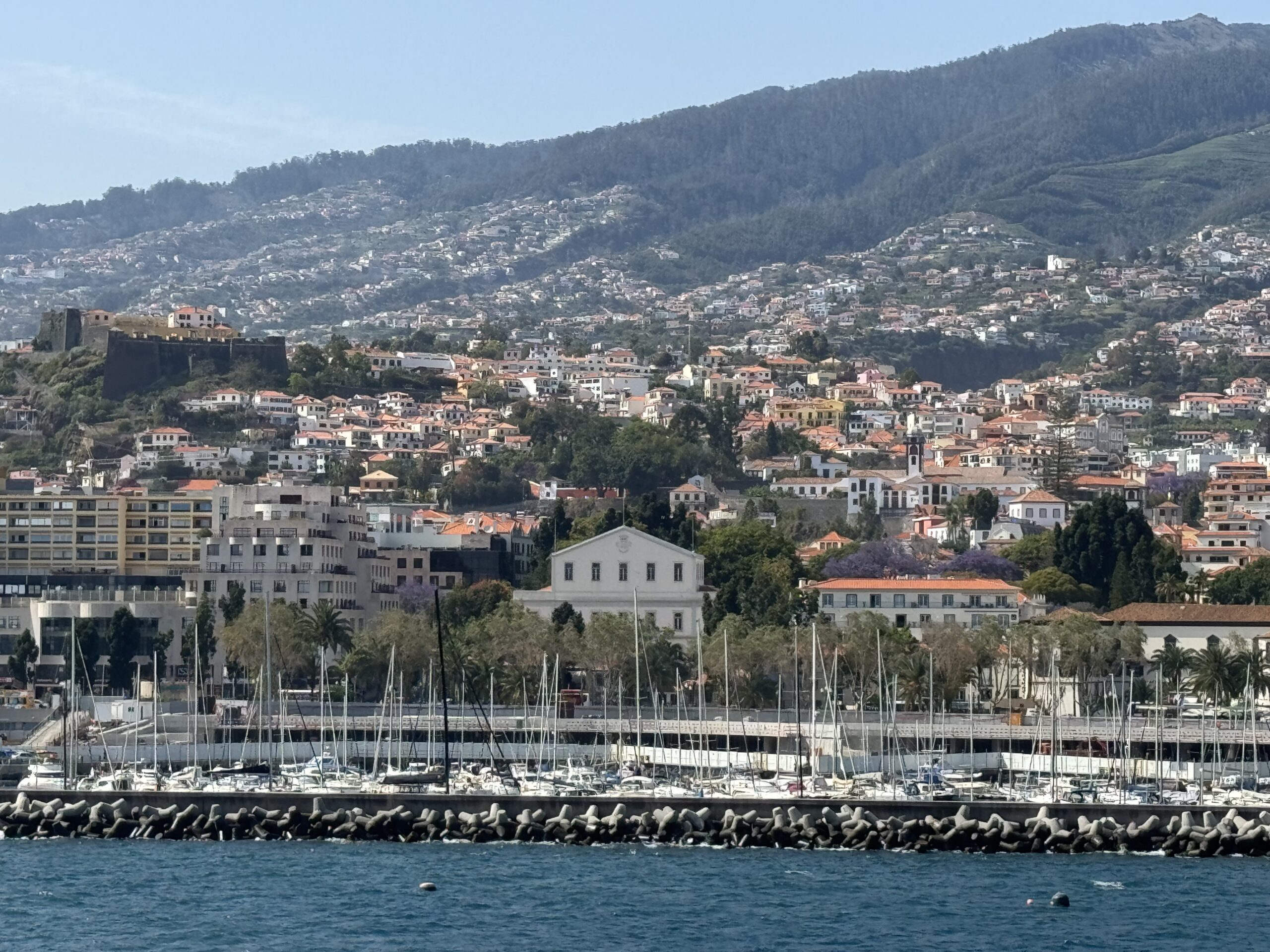
A beautiful island – Madeira!
Great post! We’re going there in November and have scheduled a ride in one of those toboggan baskets. Can’t wait since reading about your day.
We had a terrific guide from Tours by Locals – highly recommend!
I could have guessed the main photo would be the wicker transportation! Nice memories of a 1980s trip with my parents. At the time, the airport was the “8th wonder of the world” – short runway with sea on one end and mountains on the other. Will never forget that landing. They have since built the runway into the sea, but the crosswinds are notorious…and missed approaches are common.
Have a great crossing and see you Thursday!
That slide looks amazing! Wonder if I could convince Mary to go down it with me as well! Looks amazing!!!!