
Luxor, Egypt
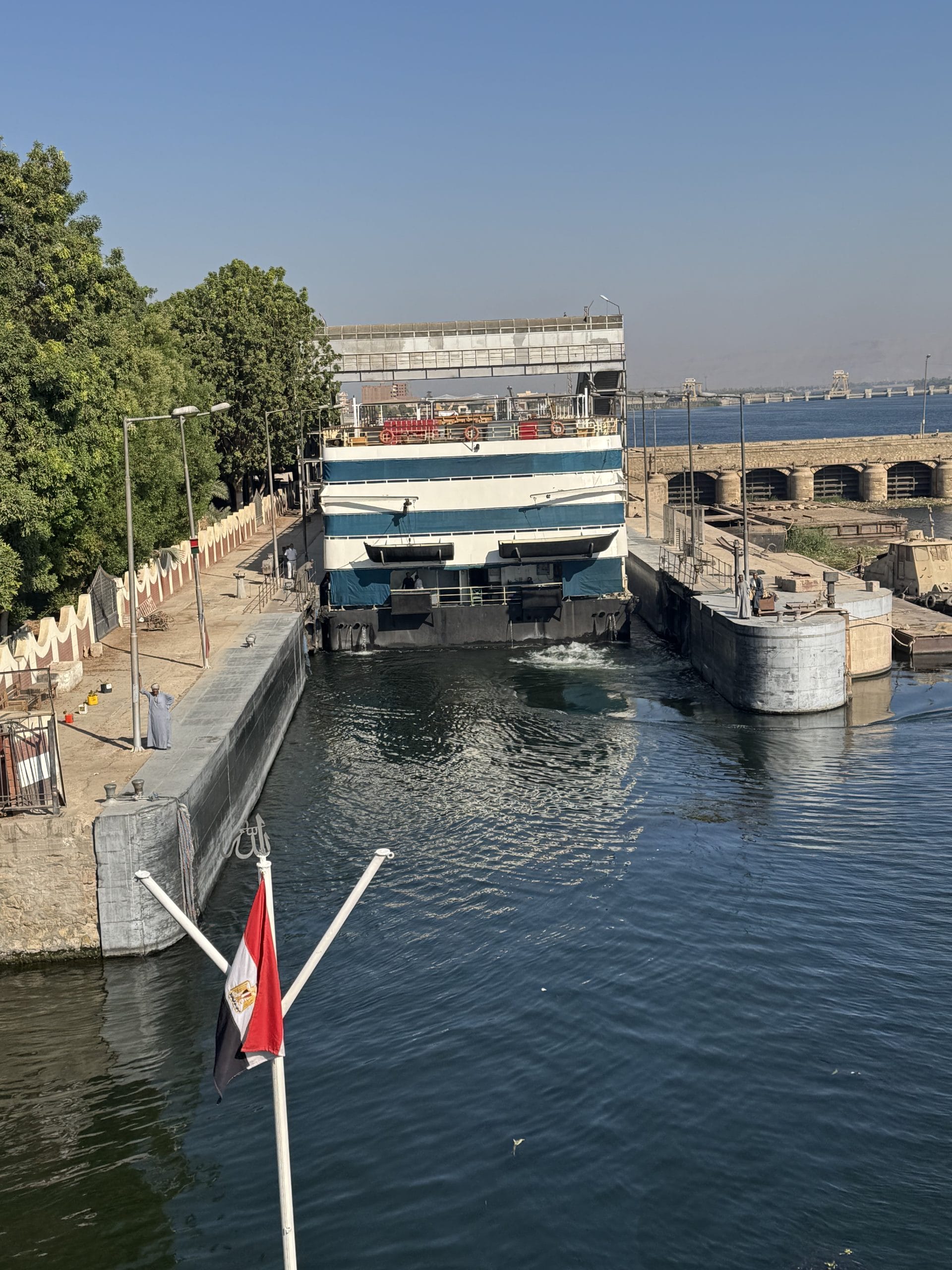
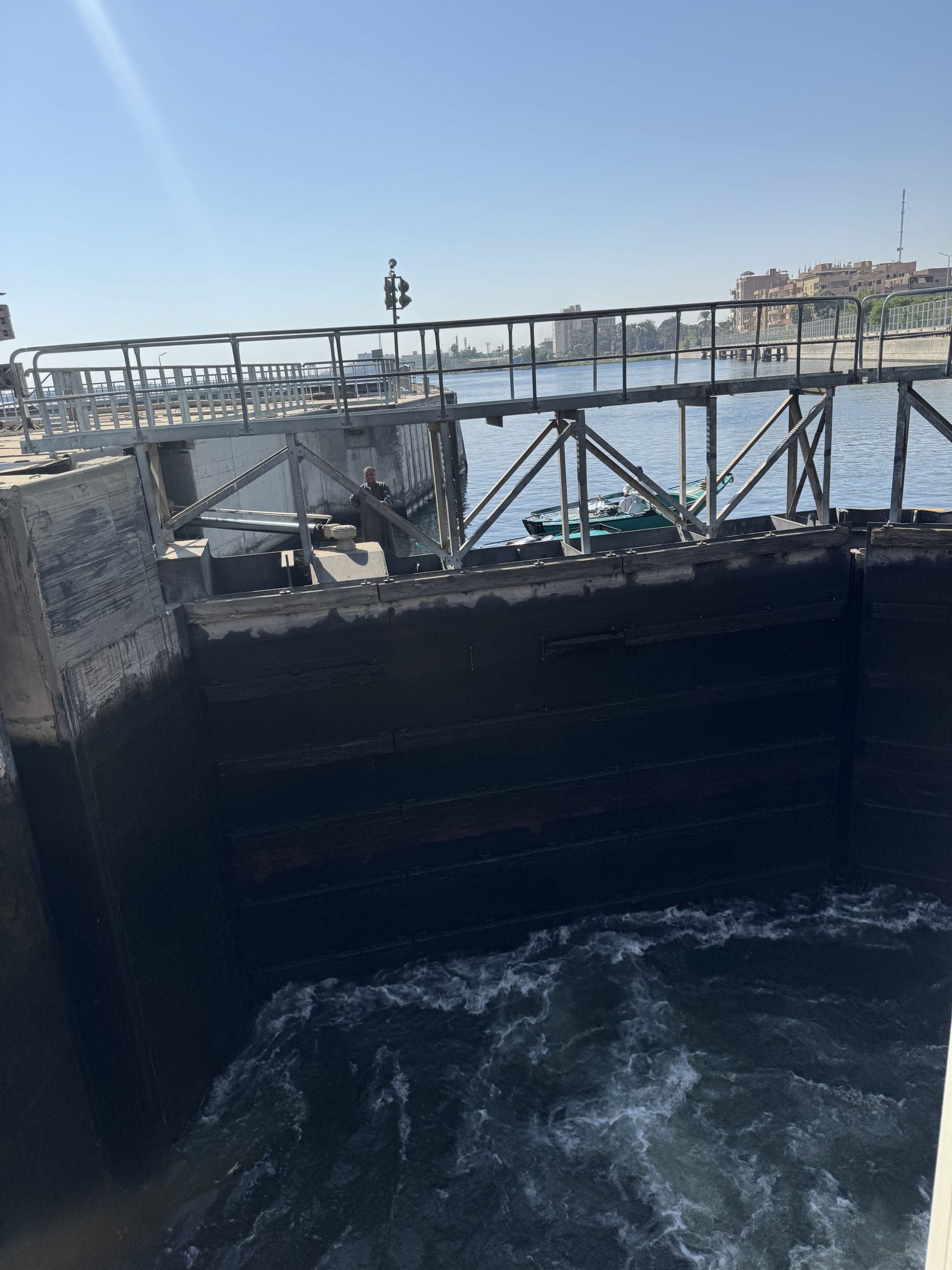
We began our day scenic cruising to Luxor. We passed again through the only lock on the Nile River, which was a treat in the daylight. As usual, as the ship started to slow down to enter the lock, the river merchants were busy trying to get us to buy their wares.
If you remember, we visited Luxor 6 days ago when we visited the Valley of the Kings and boarded the ship. Today we returned for a look at two massive temple sites. Luxor sits on the east side of the Nile and its population is 1.5M. Like many cities on the Nile, it boasts a long corniche which is clean and designed to handle many tourist ships. There were liveries everywhere, ready to transport you to the sites, though we were grateful not to be using them, as we’re not sure how well treated these animals are. Fortunately, our group has been moving about in air-conditioned buses, with drivers that are crazy talented at navigating through the crowds, traffic and horses.
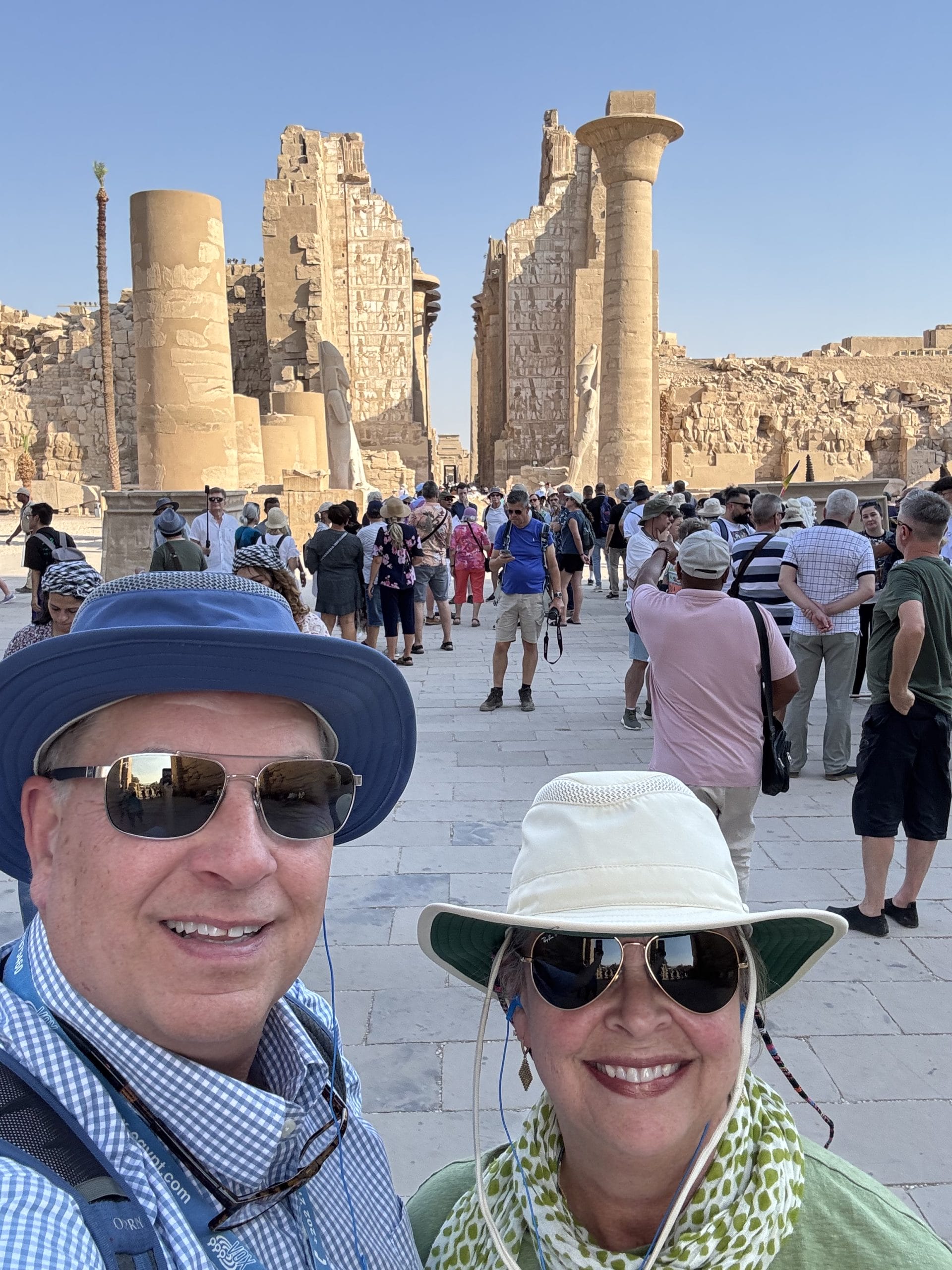
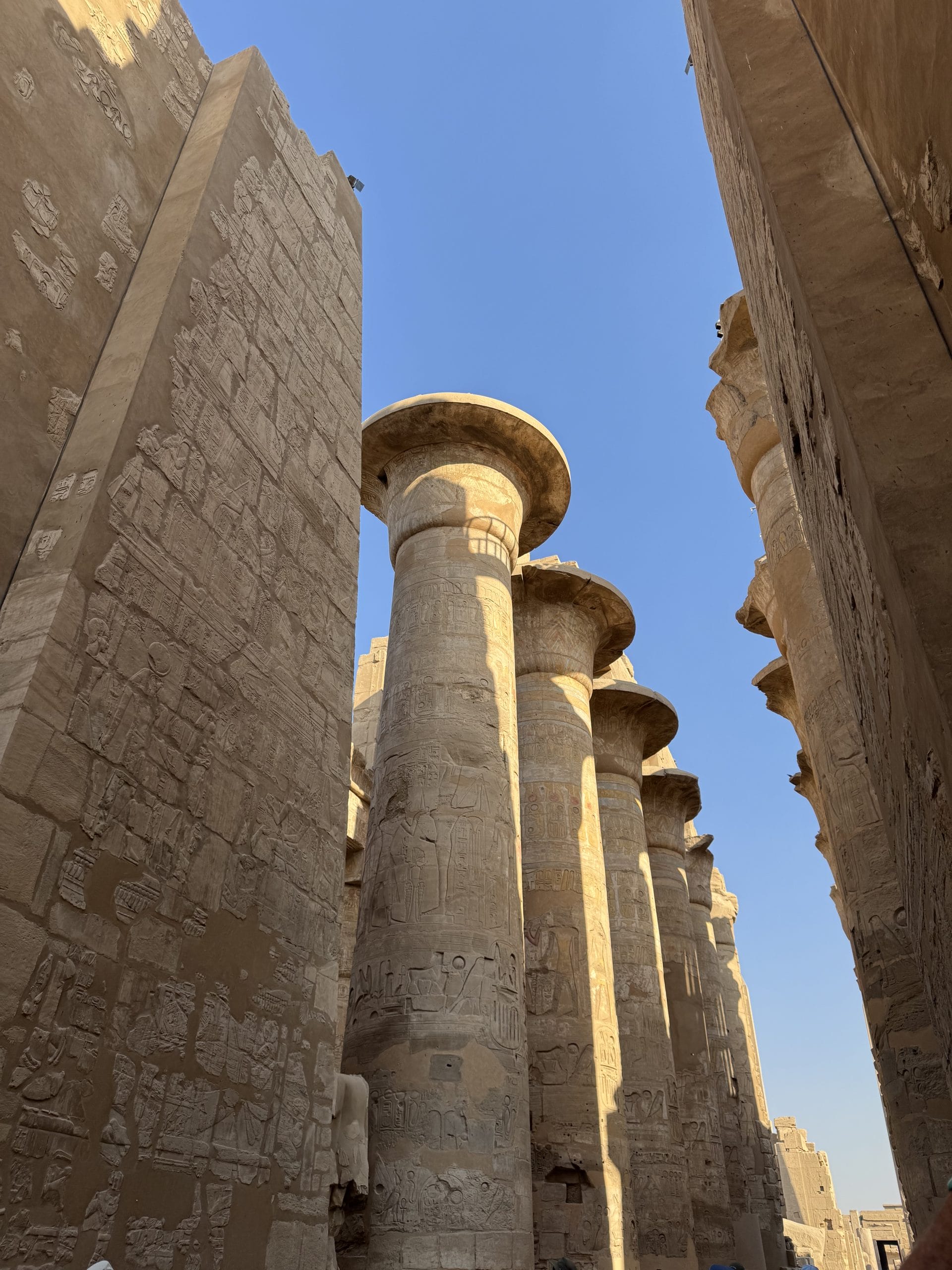
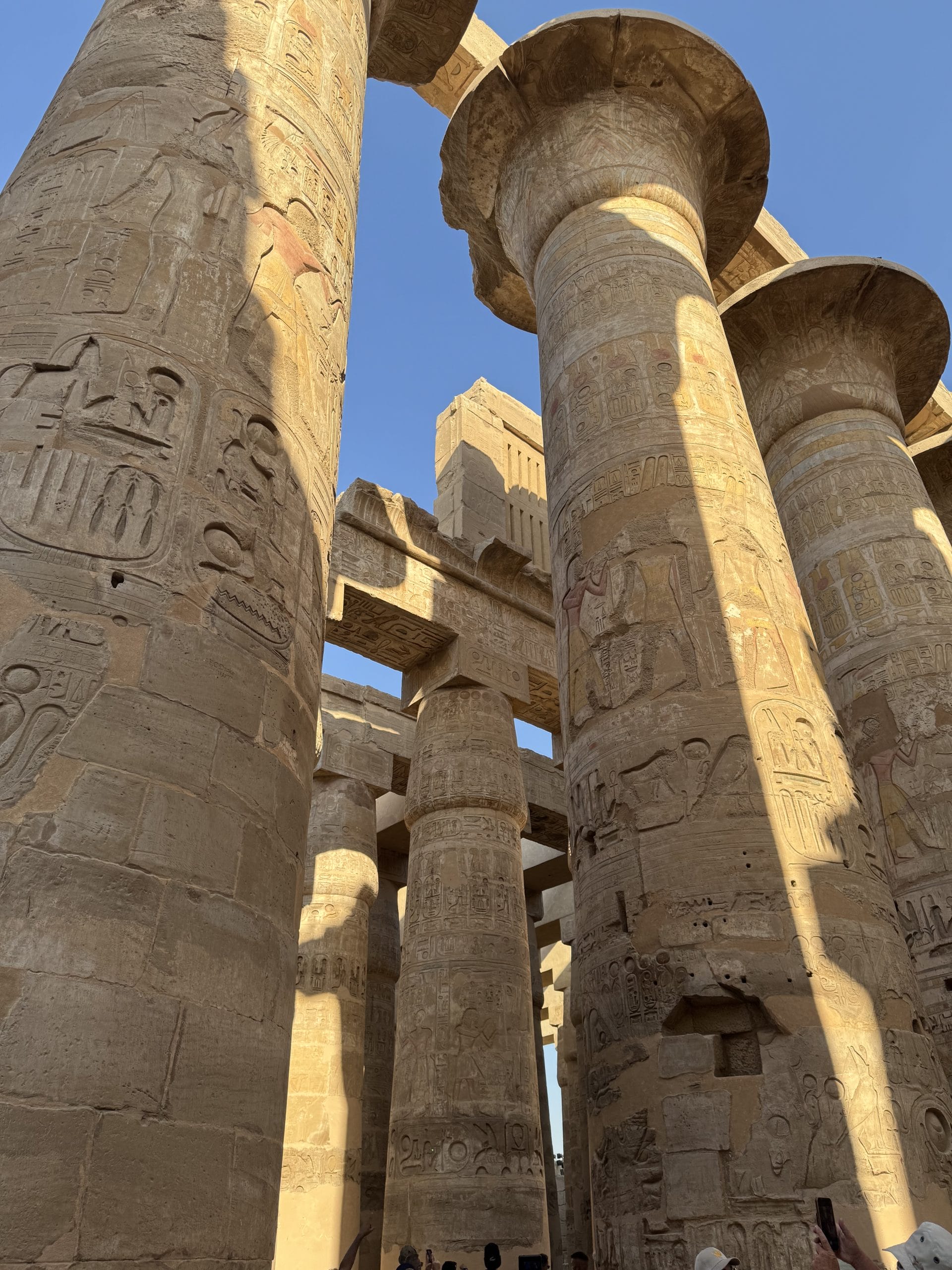
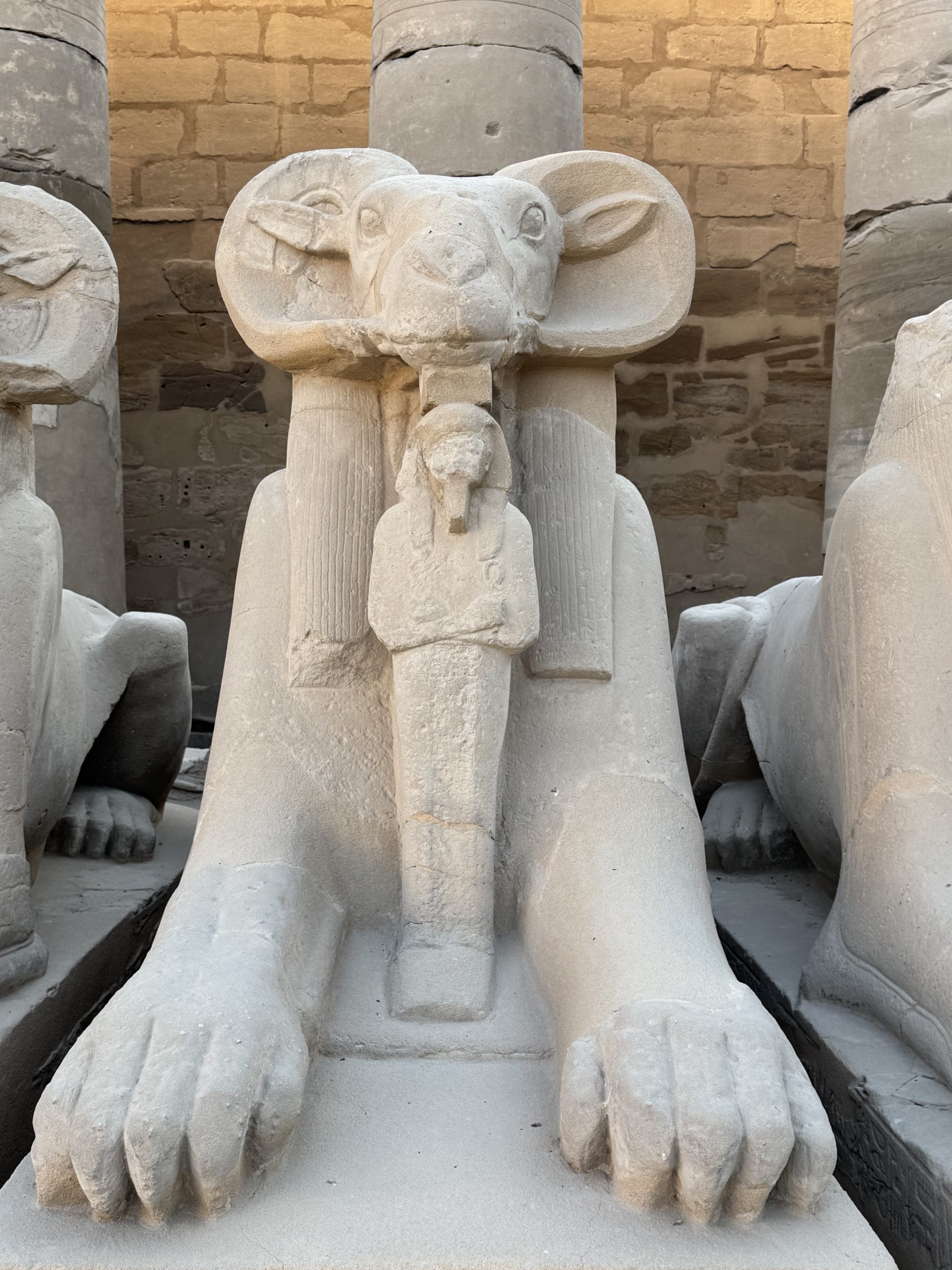
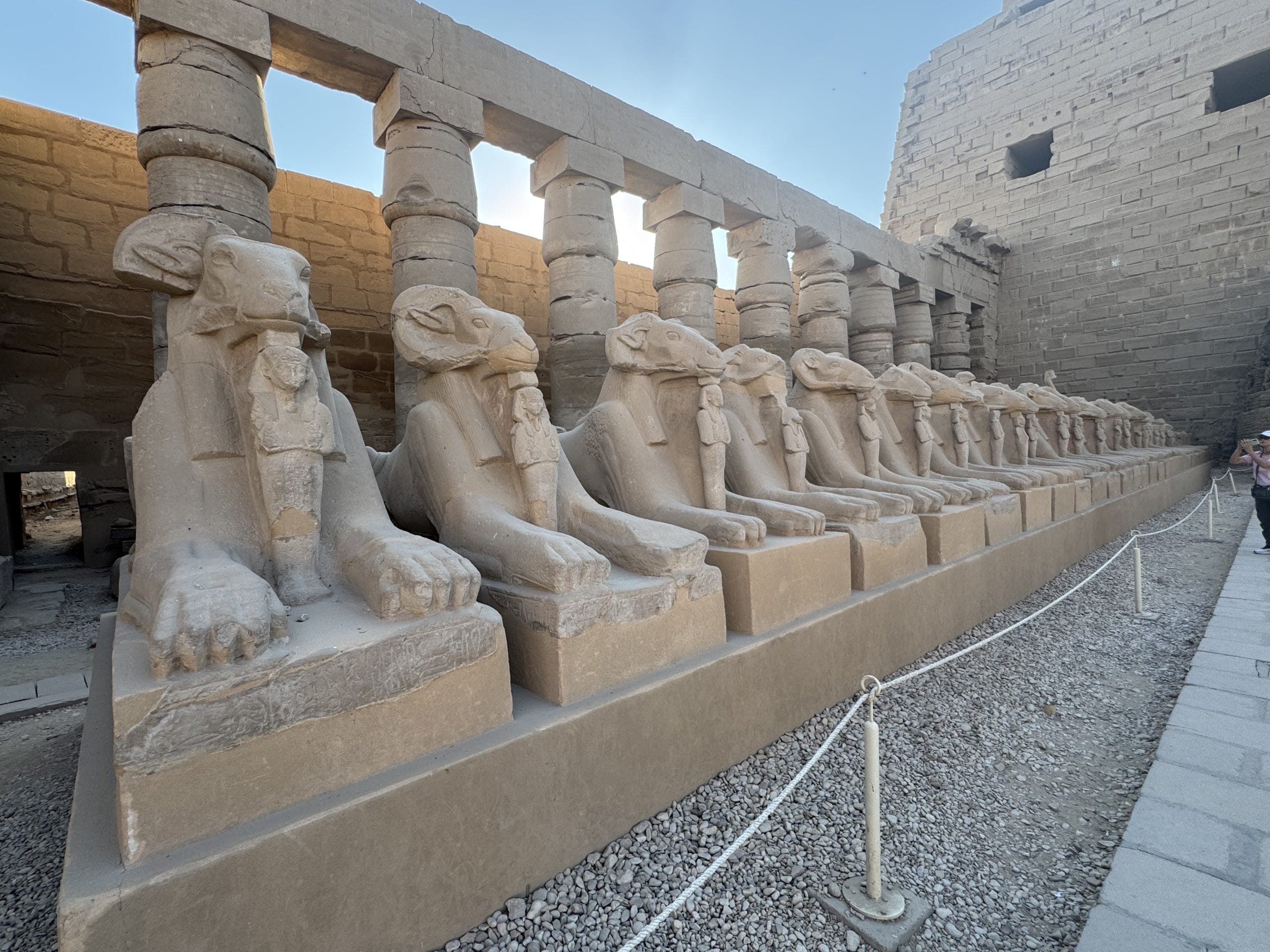
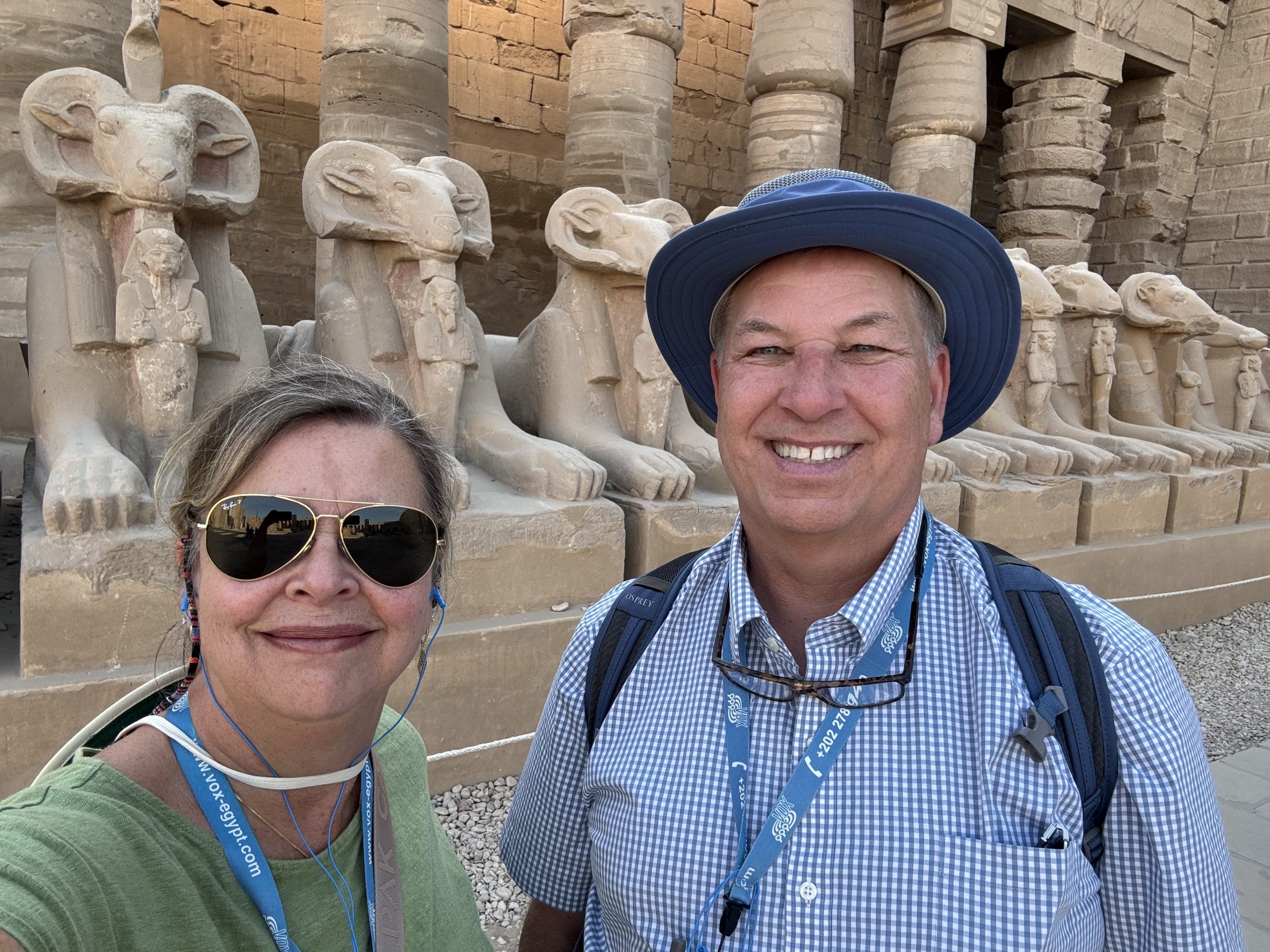
Our first stop, the Karnak complex is a vast site and includes the Karnak Open Air Museum. It is believed to be the second most visited historical site in Egypt; only the Giza pyramid complex near Cairo receives more visits. It consists of four main parts, of which only the largest is currently open to the public. It was originally named Thebes, and it’s not clear when the use of Karnak became popular but the complex elements date from between 1900 BC and 300 BC.
Next, we visited a workshop and learned about the ancient Egyptian technique for creating paper from the papyrus plant. The demonstration was informative, though we think the instructor’s style came straight from QVC. Printed papyrus was offered to purchase, and each of us received a papyrus paper with our name spelled in Arabic.
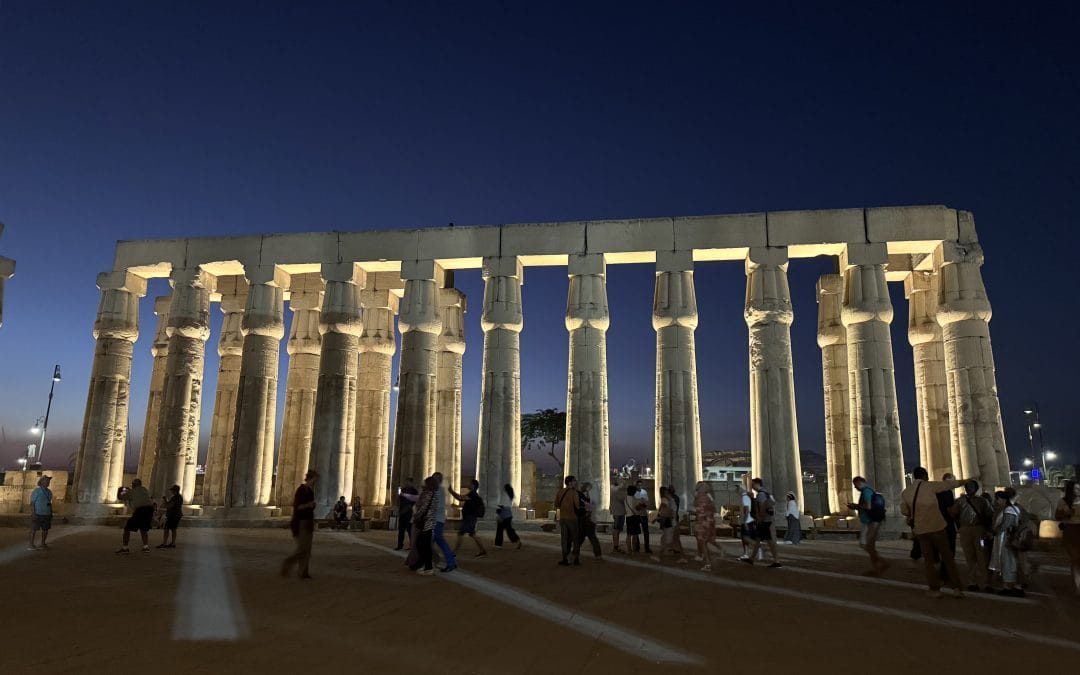
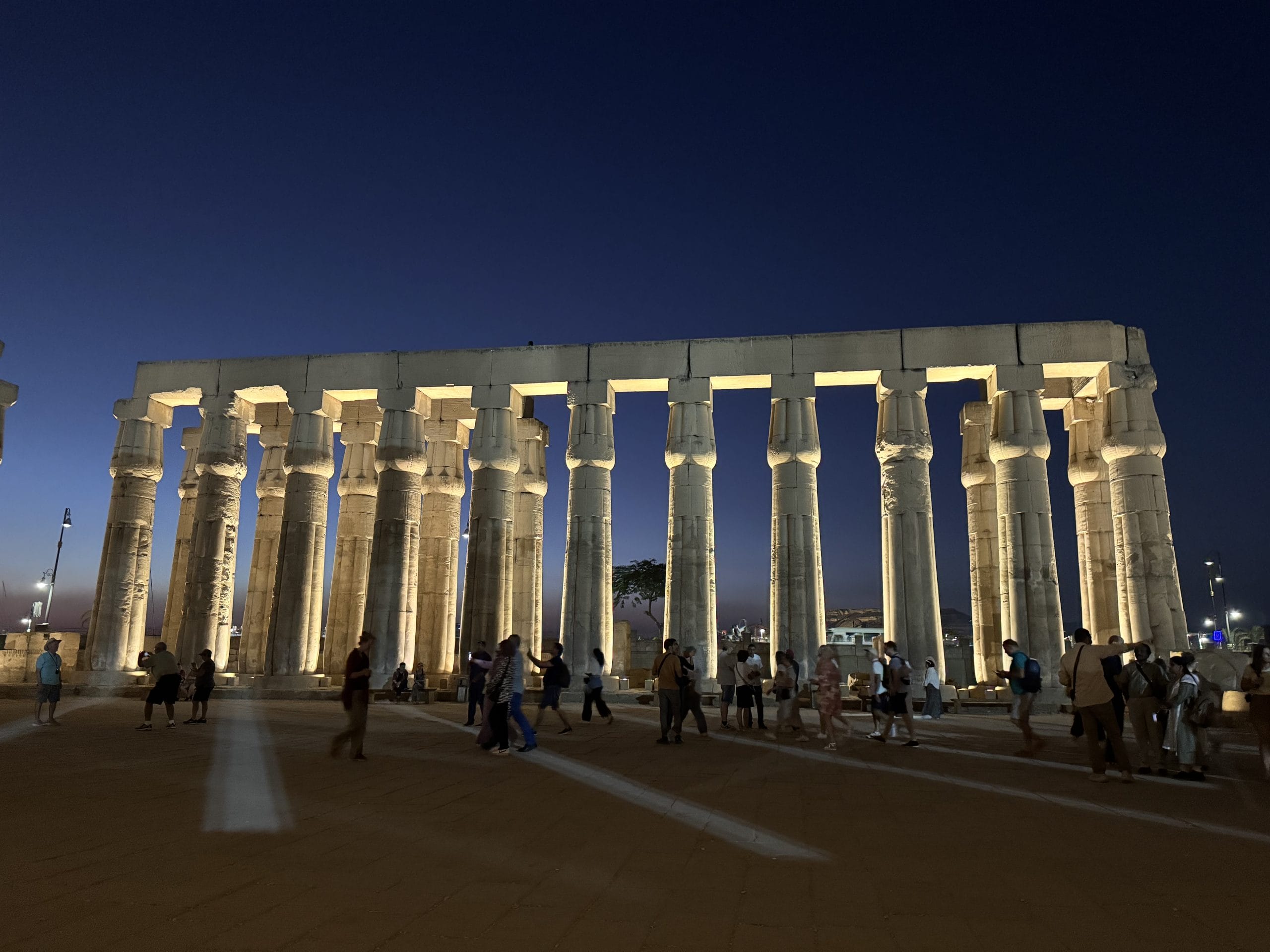
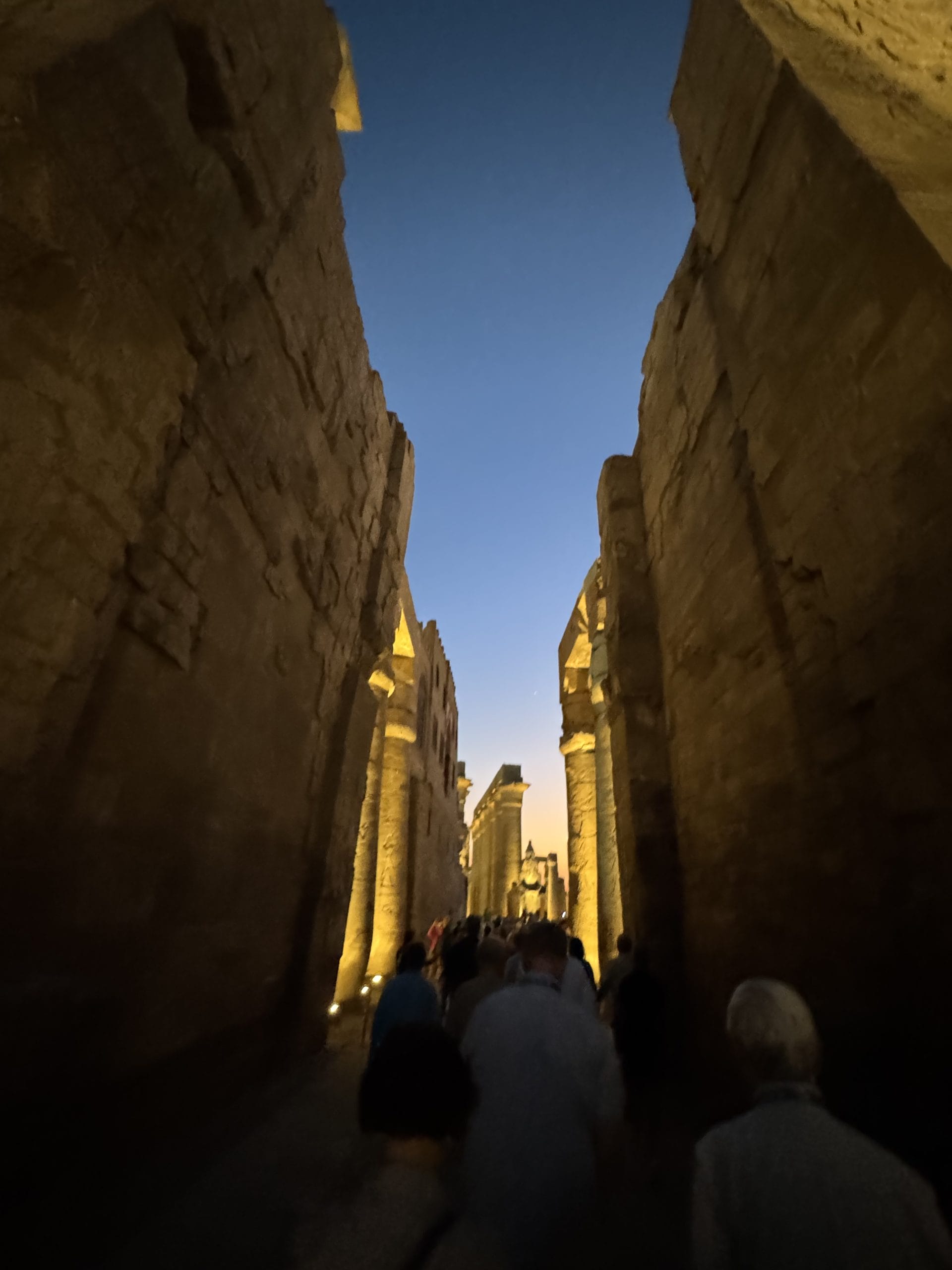
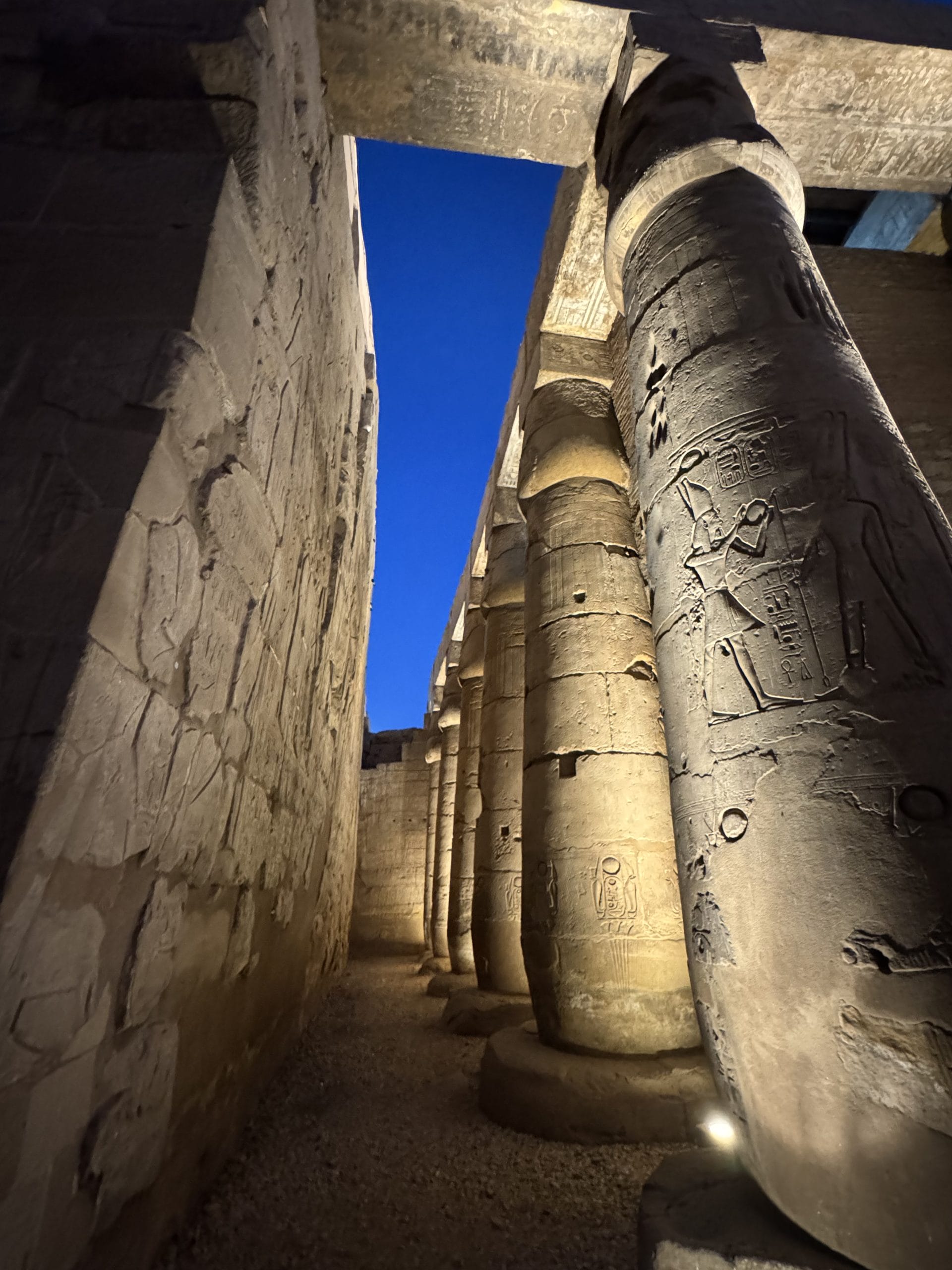
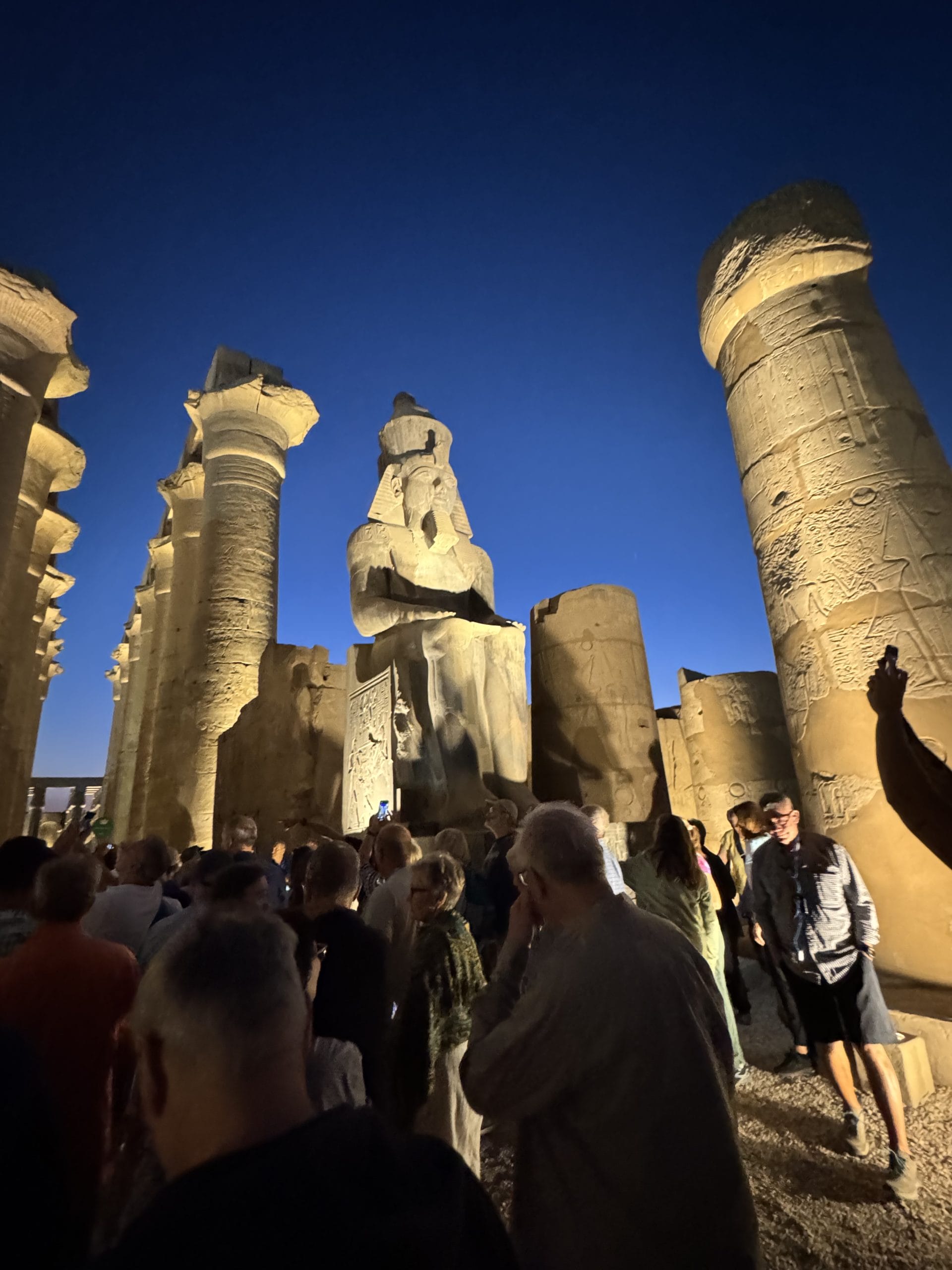
As the sun was setting, we visited the beautiful Luxor Temple. Good golly this was a treat seeing it at dusk, all lit up. The hall of pillars was massive and so dramatic. Built in 1400 BC approximately, unlike the other temples in Luxor, Luxor Temple was not dedicated to a cult god or a deified version of the pharaoh in death. Instead, Luxor temple was dedicated to the rejuvenation of kingship; it may have been where many of the pharaohs of Egypt were crowned in reality or conceptually. Whatever the reason, the temple was buried in sand until excavations began in 1884 to unearth and free the Temple, and today stands as one of the most impressive.
Later at night, we were entertained by a belly dancer, who seemed particularly keen on Marshall. Belly dancing originated in Egypt and Egyptian trained dancers are highly sought after around the world. We also watched a Whirling Dervish perform his ritual. While Egypt cannot claim the beginning of whirling, that distinction goes to Turkey, Egyptian Dervishes have some popularity here. The dancer is able to enter some level of a meditative state, allowing him to not get dizzy. Our Dervish twirled for a good 15 minutes. It was neat to watch.
Tomorrow: Scenic cruising to Qena and the Temple of Hathor
Post Gallery
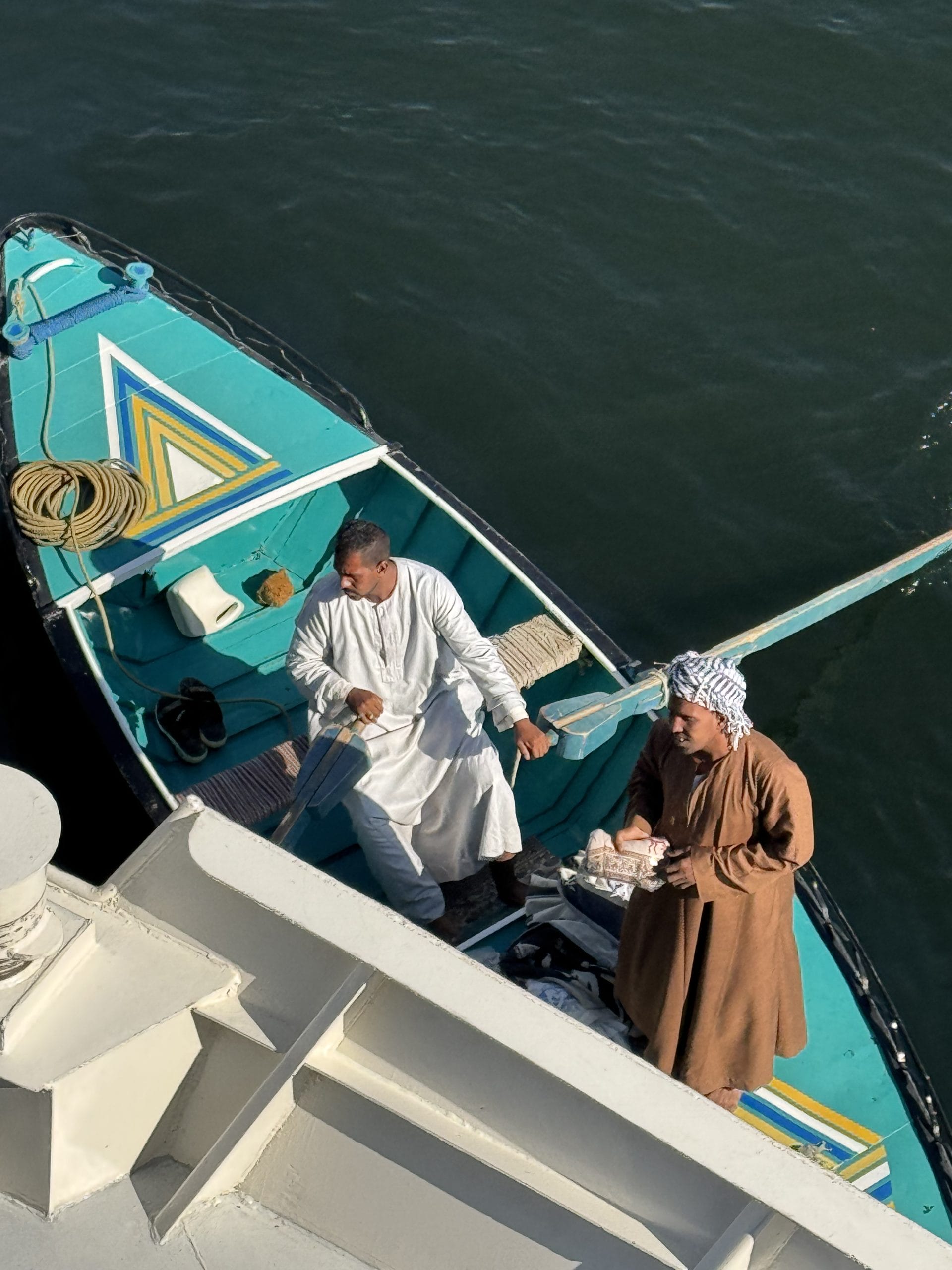
The Nile merchants. Actually, Abdul said that most of these folks hold government jobs and only do the merchant hustle on the side.
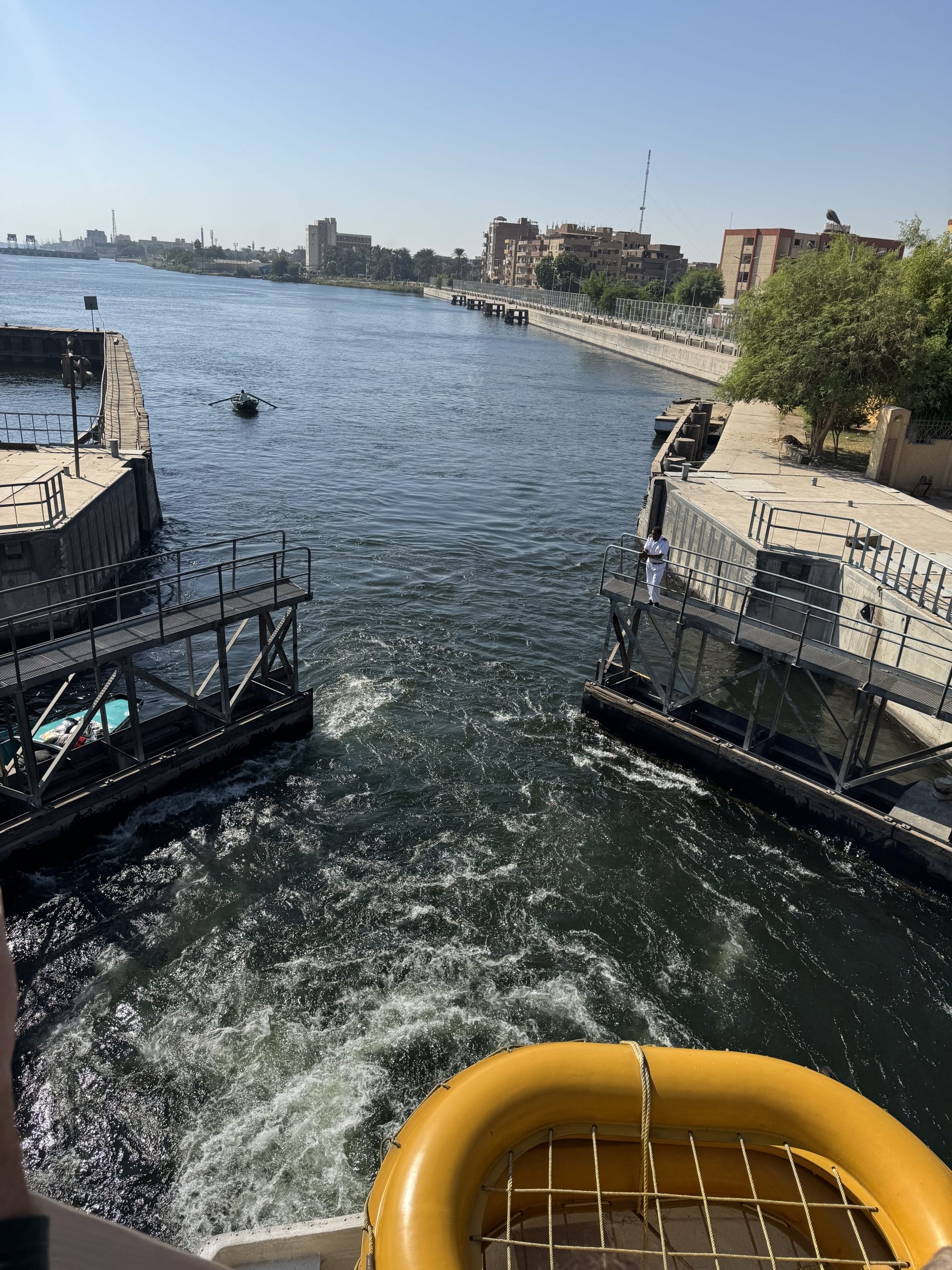
Lock doors closing behind us.
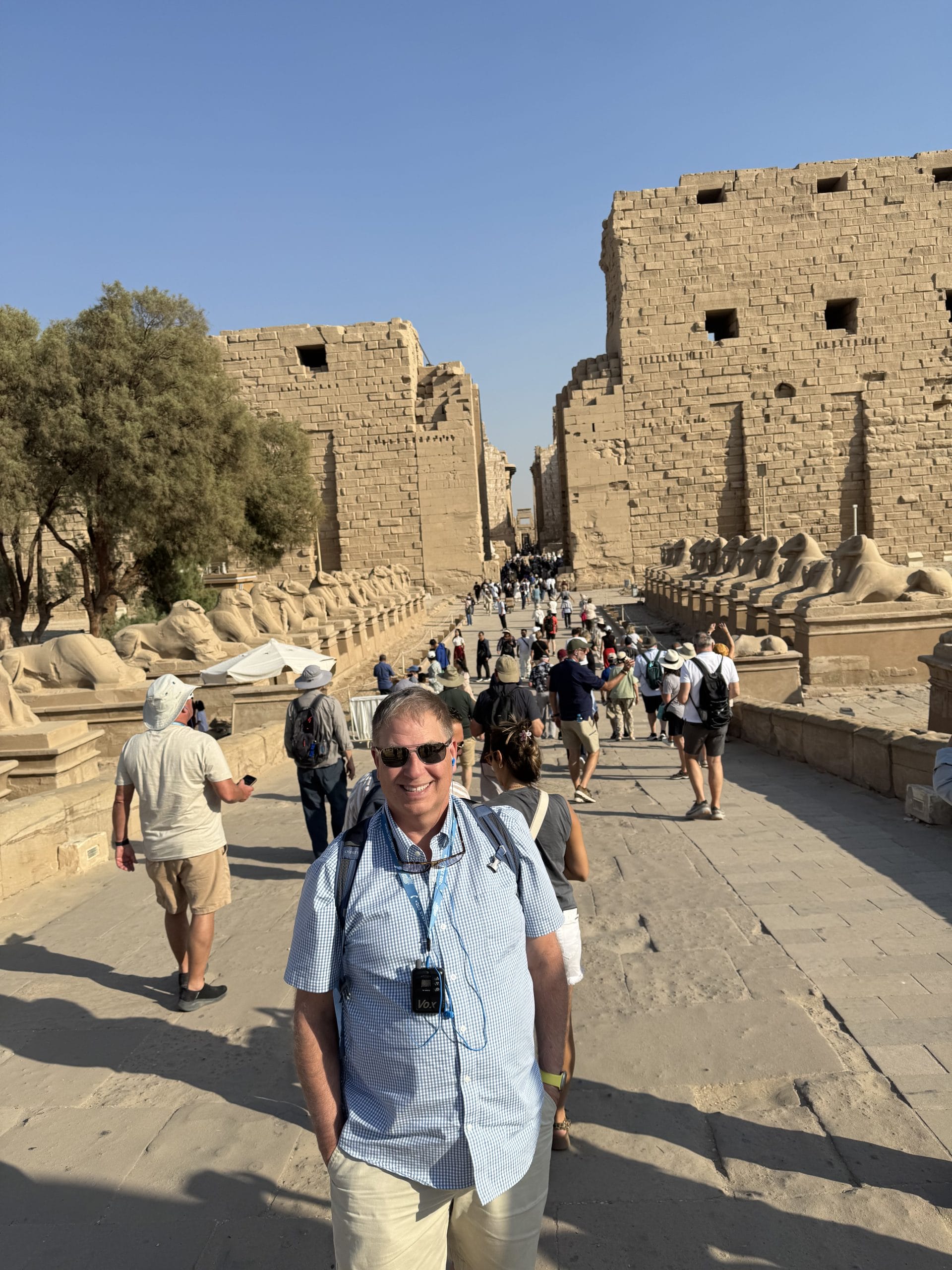
Entering Karnak Temple complex.
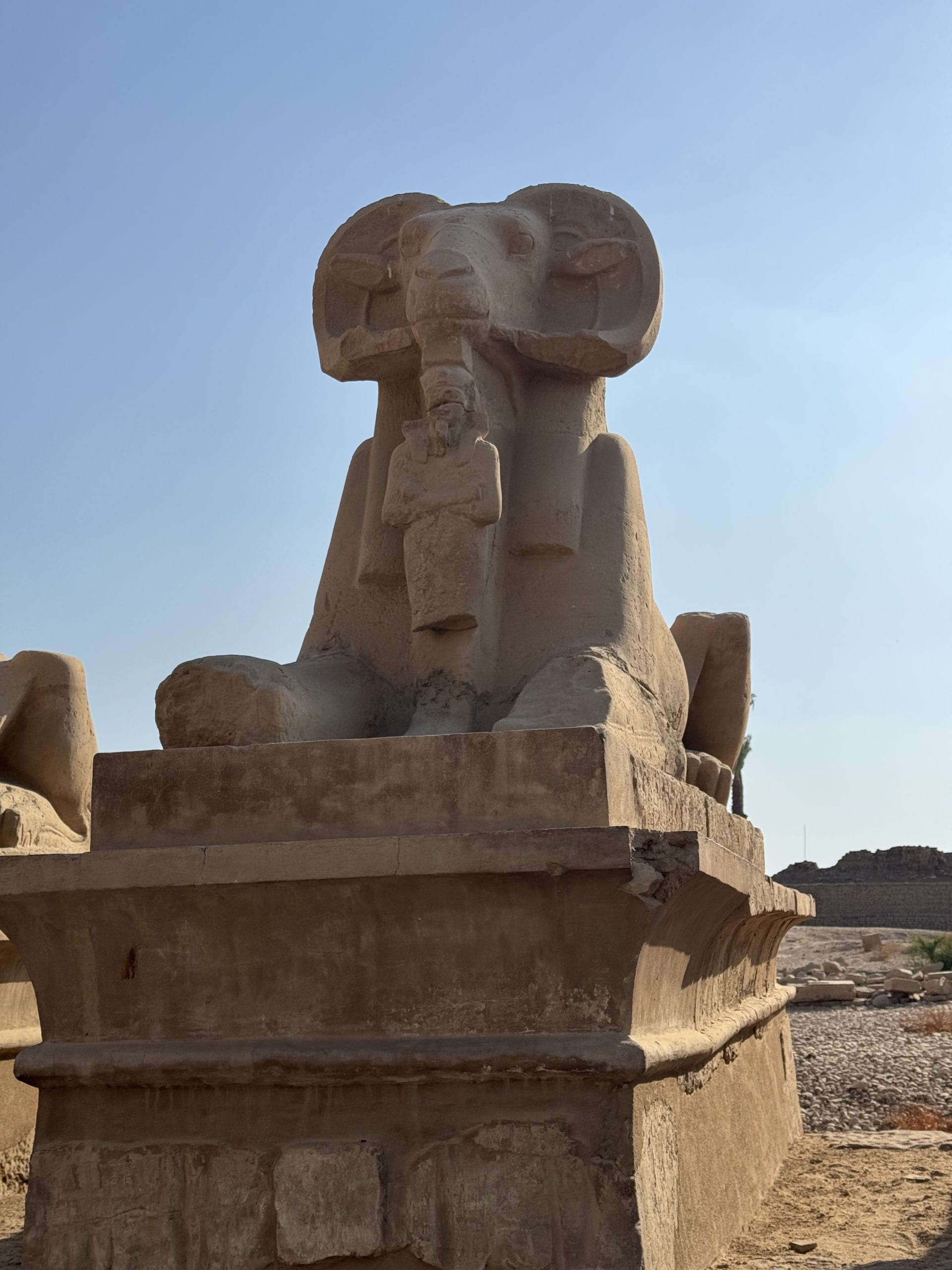
This sphinx is the Rams head on the Lion body.
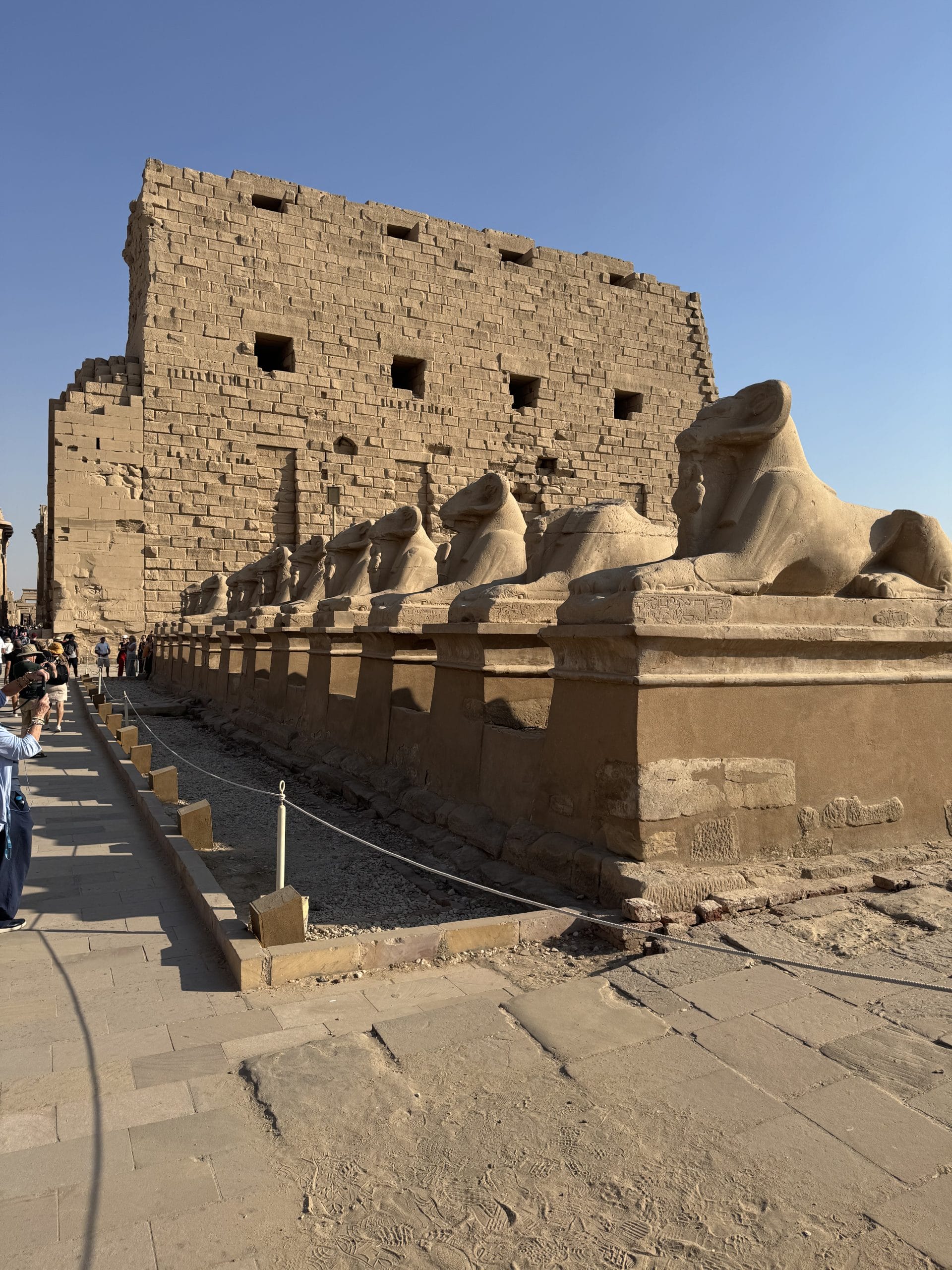
Walk of Sphinx.
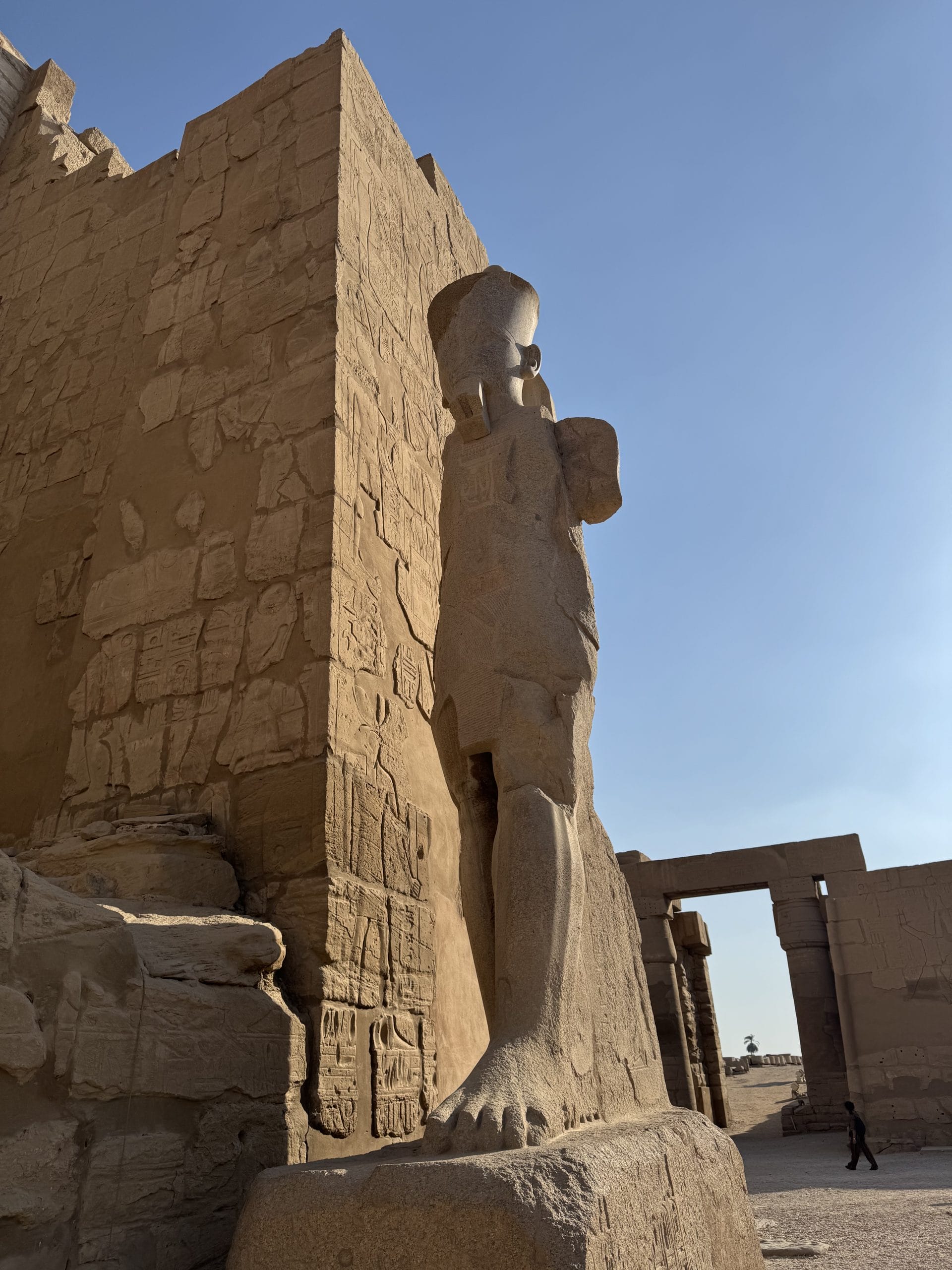
Left foot forward!
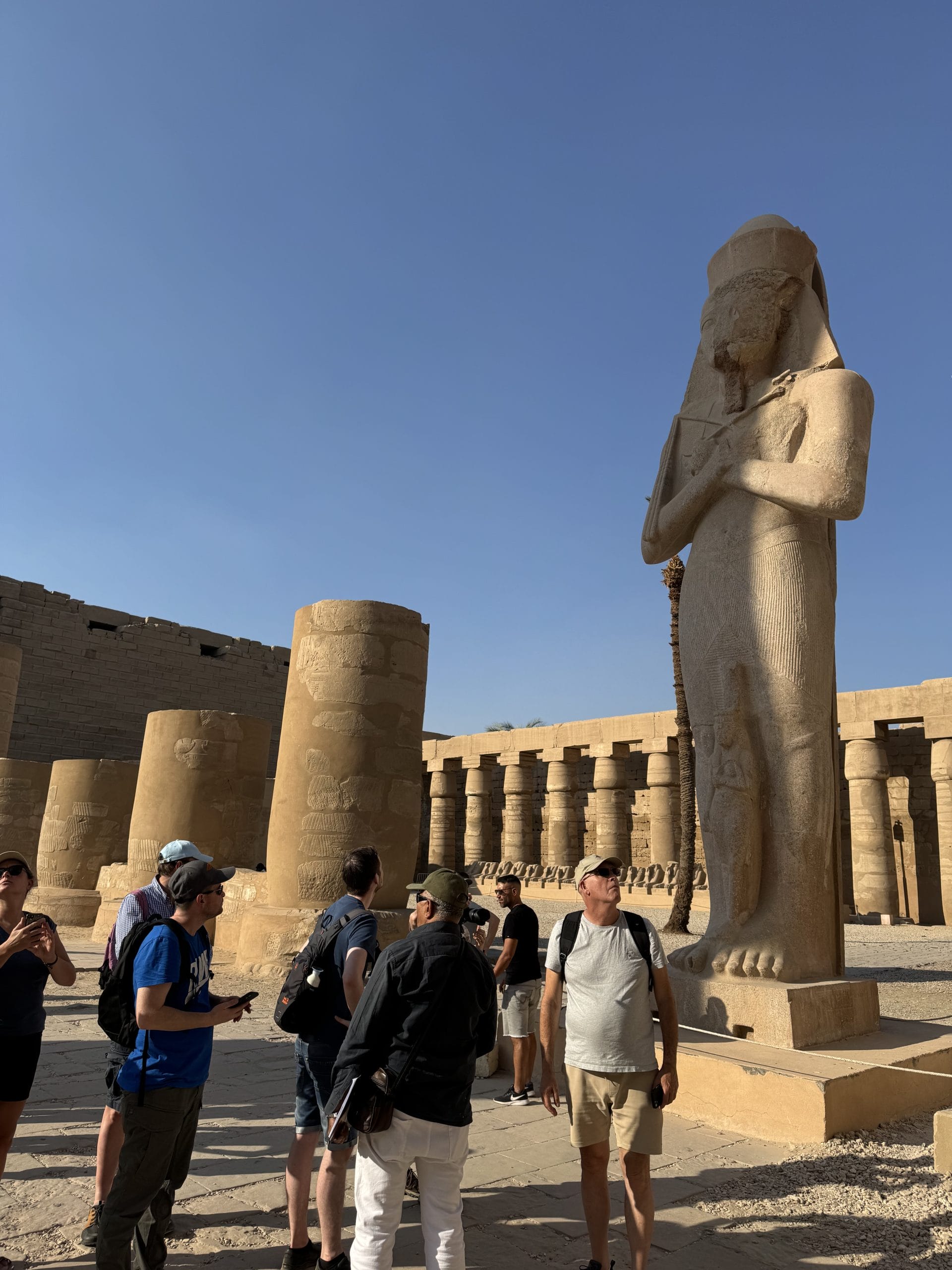
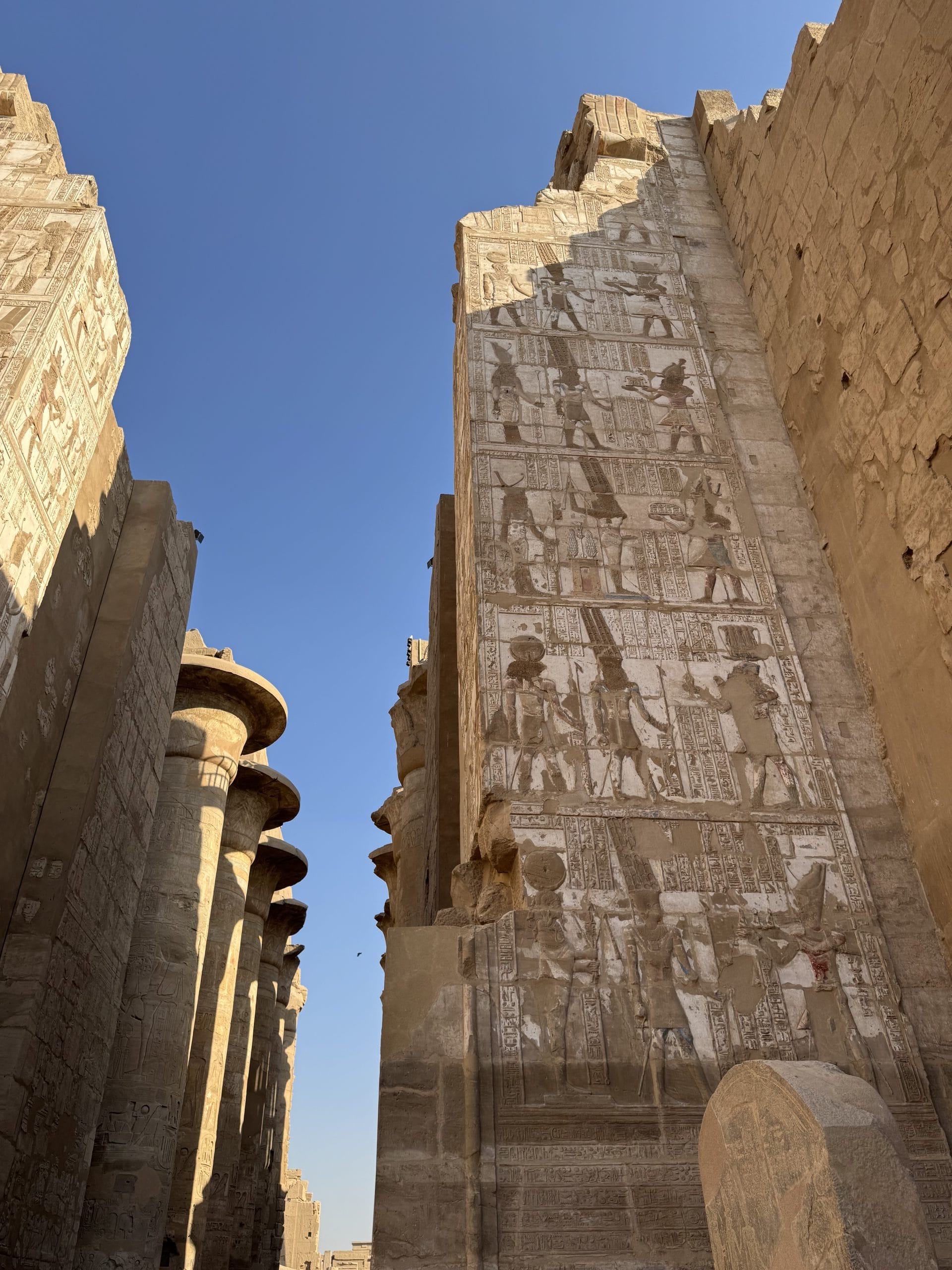
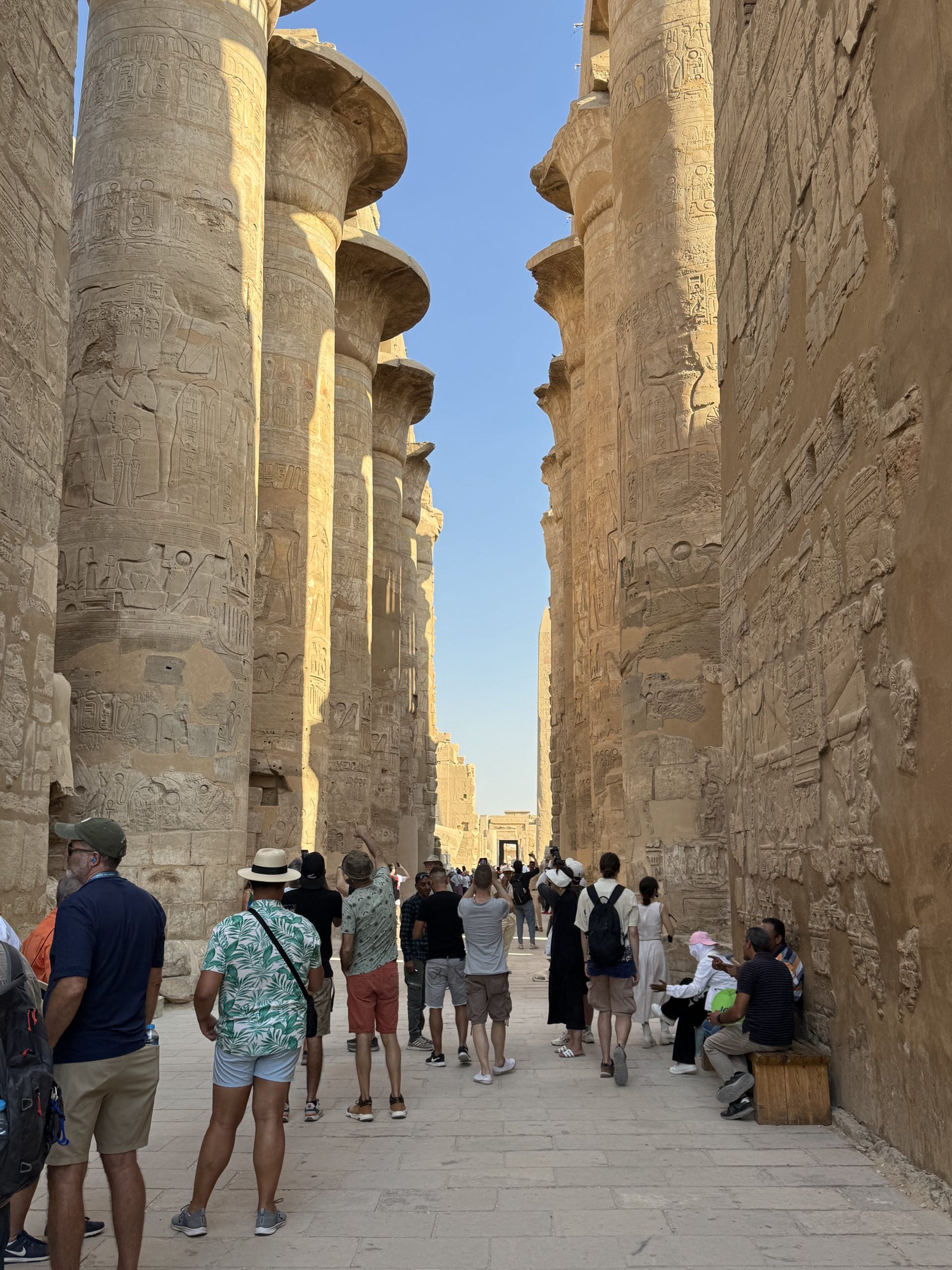
Karnak Temple halls of pillars.
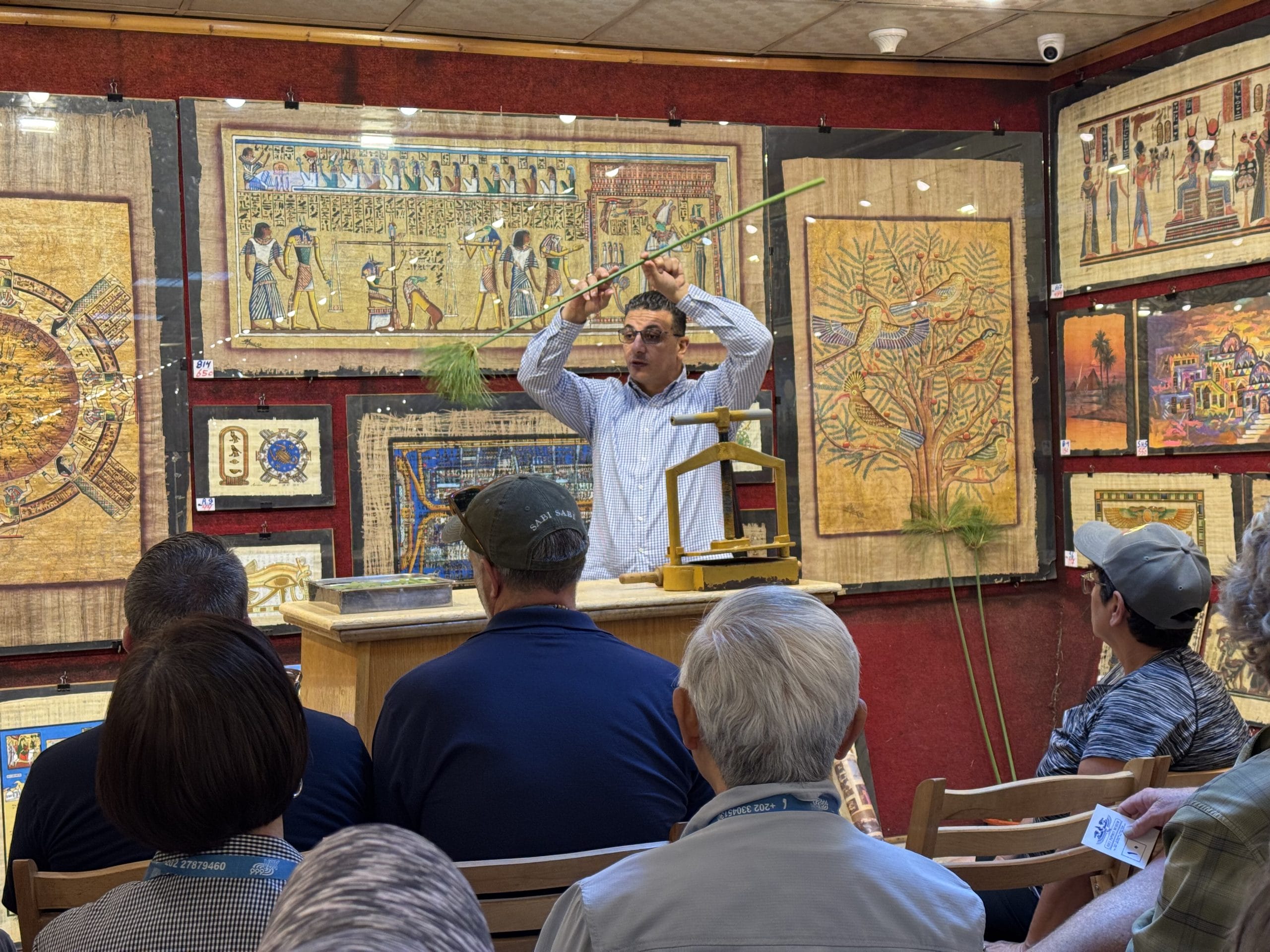
Papyrus paper demonstration.
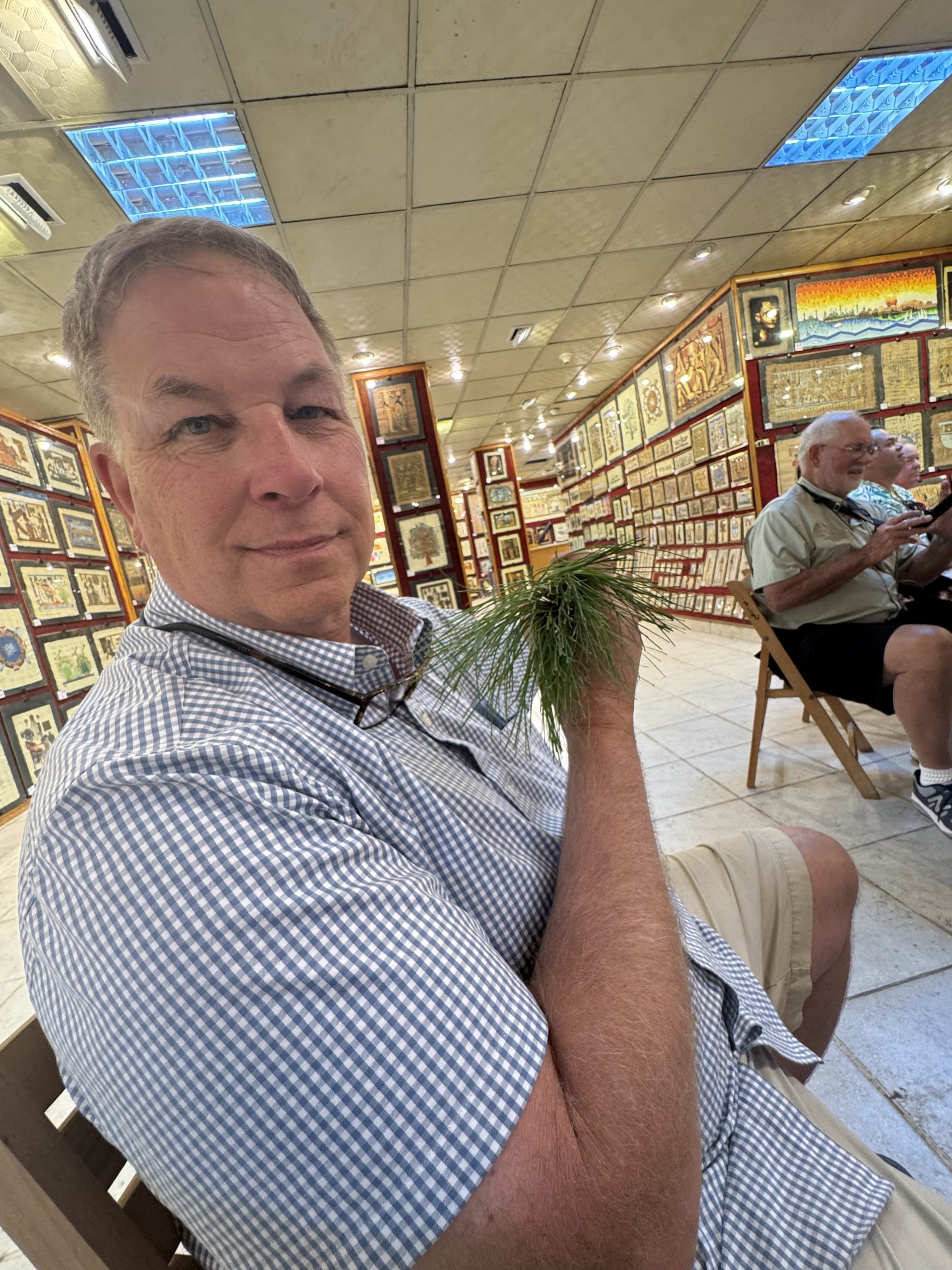
Marsh with papyrus plant.
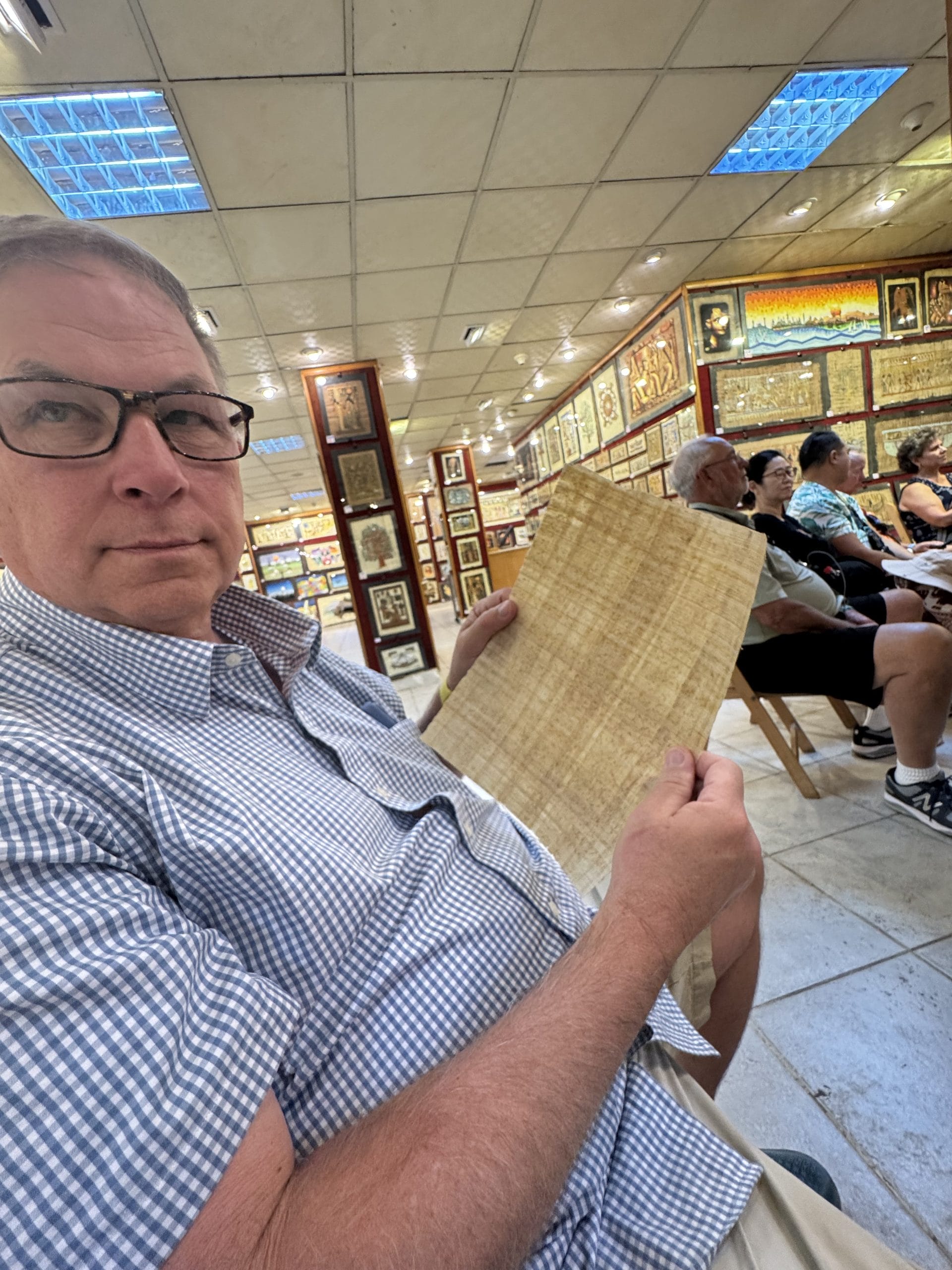
Papyrus paper is made from thin strips of papyrus, overlapping on each other.
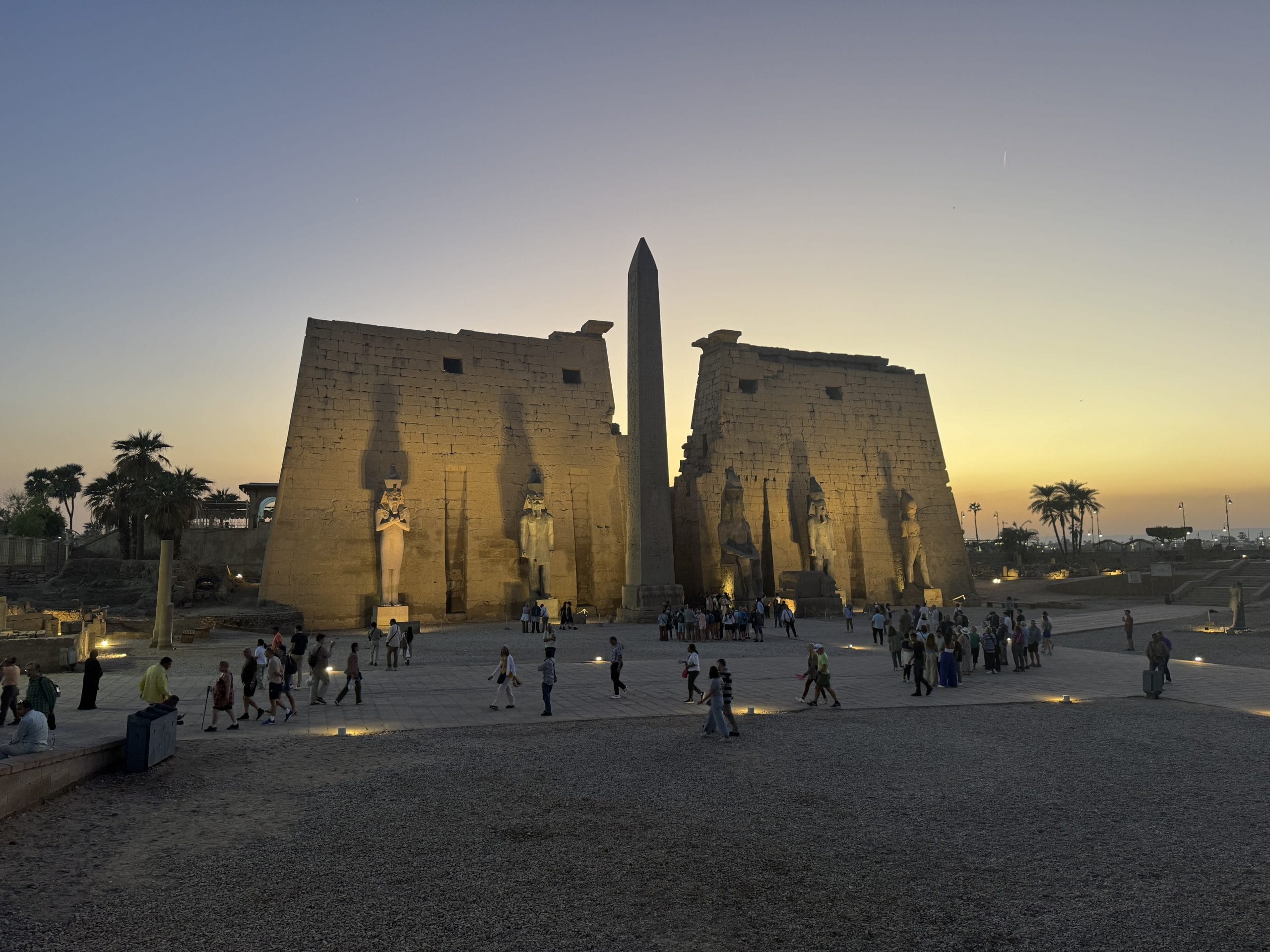
Luxor Temple
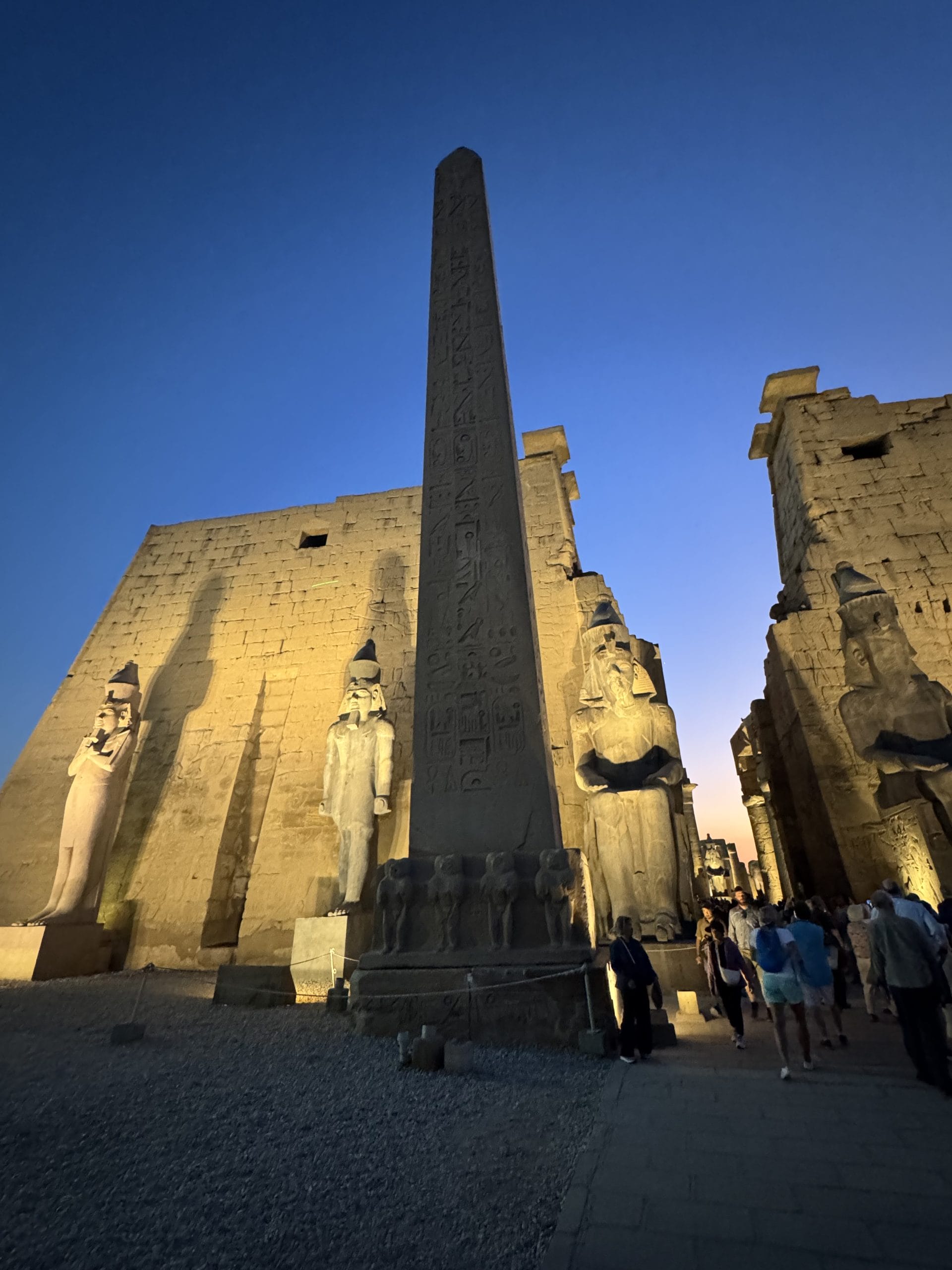
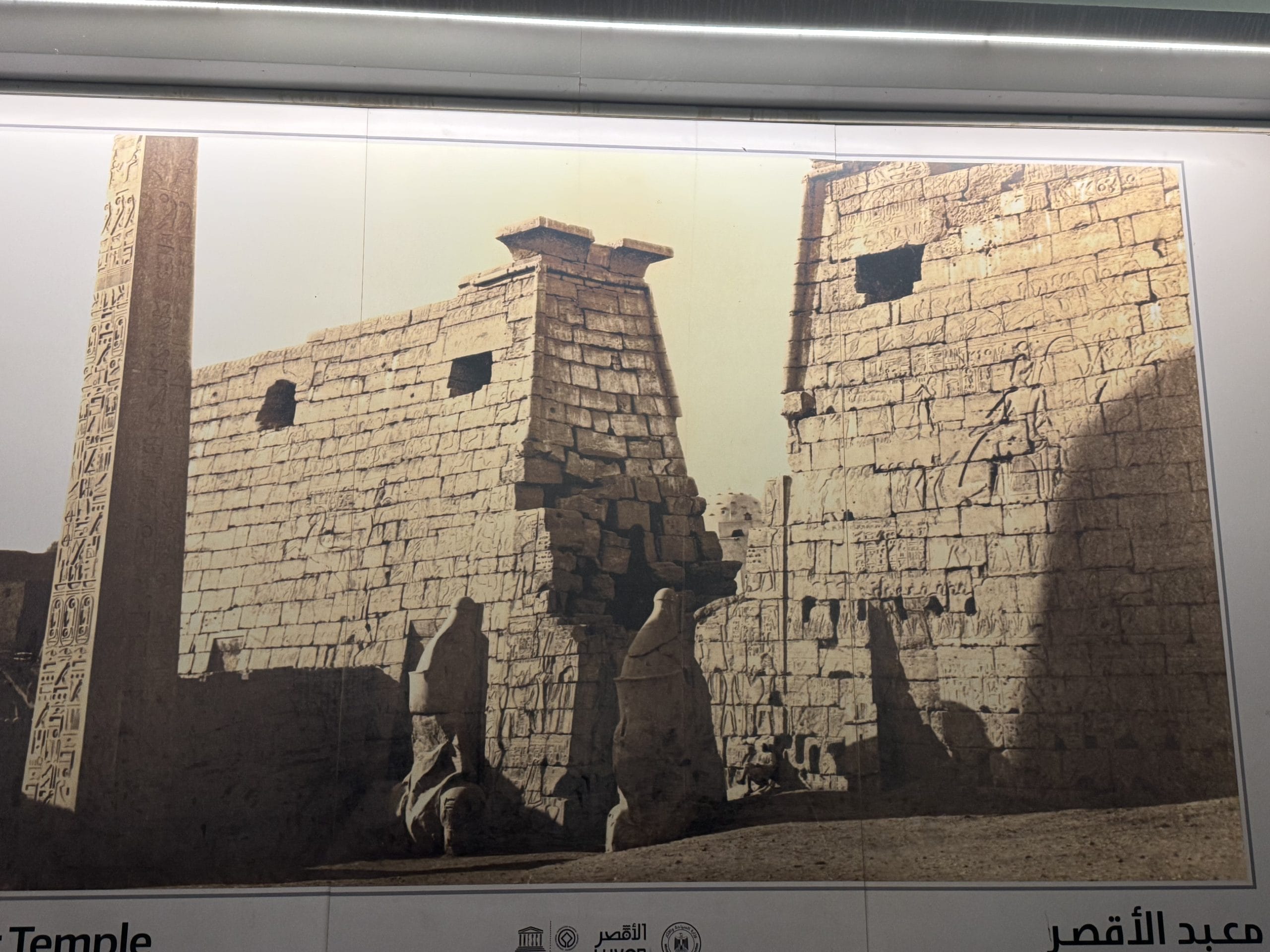
This photograph shows how high the sand came up…to the necks of the statues!
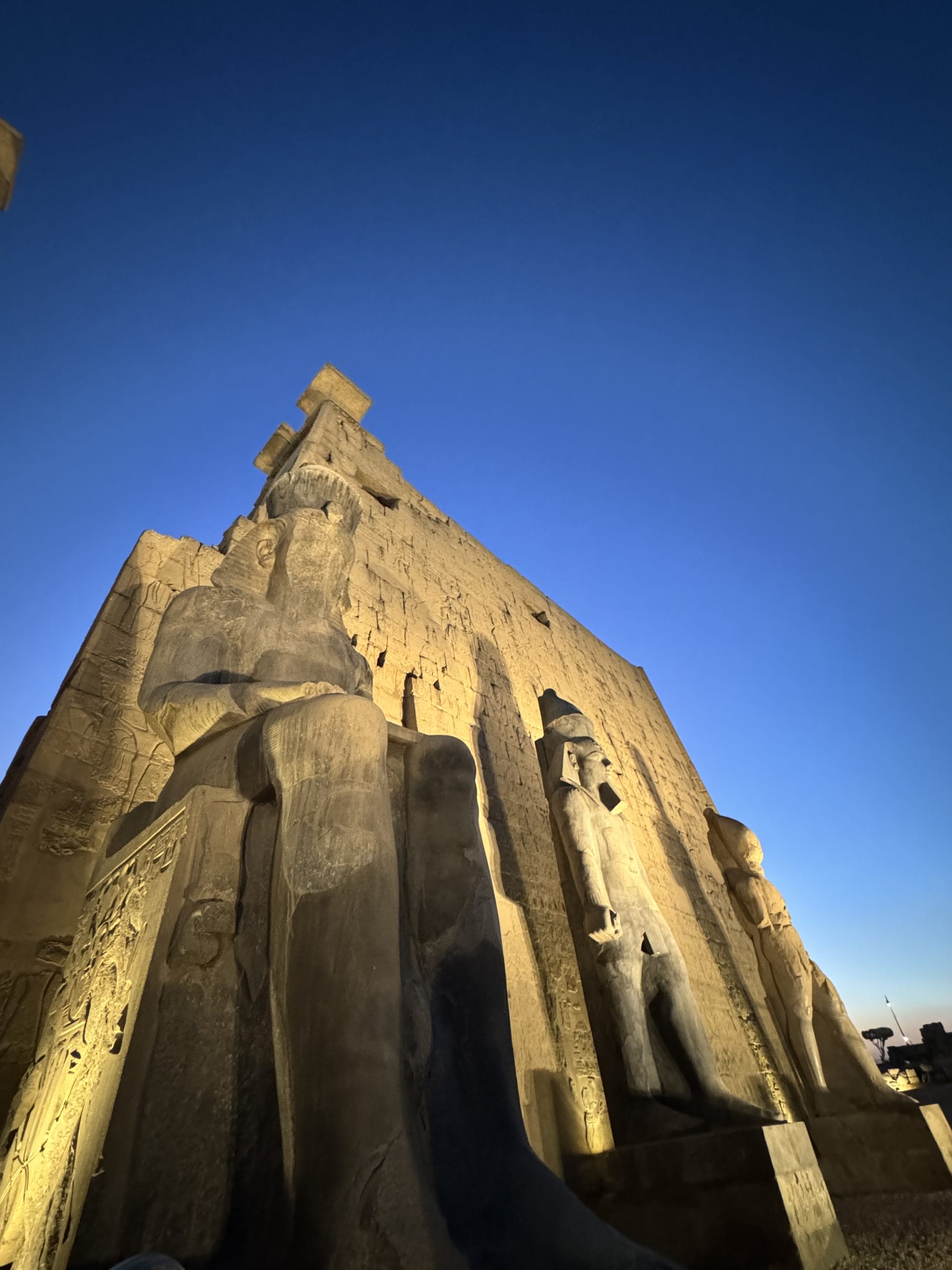
Luxor Temple
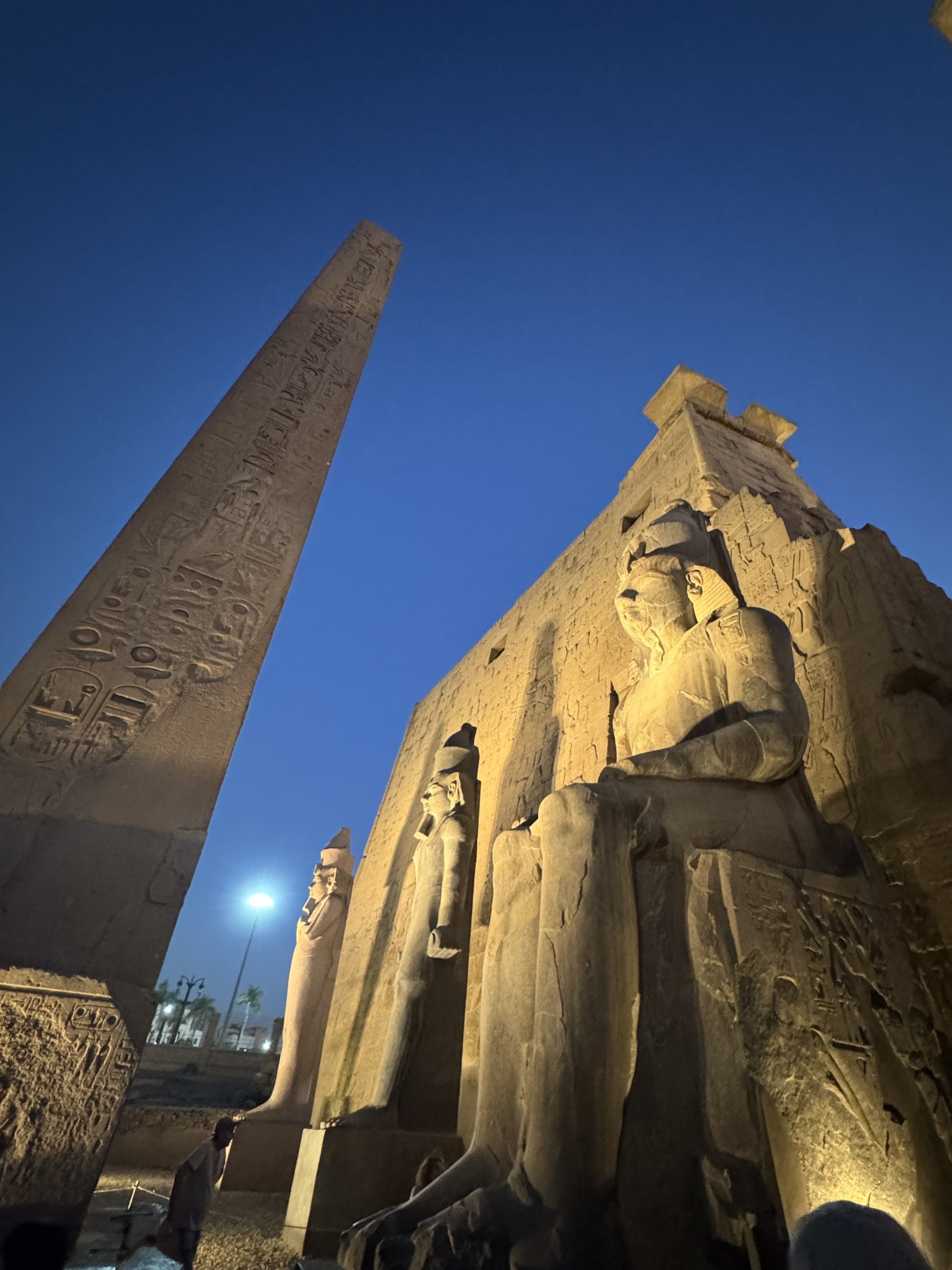
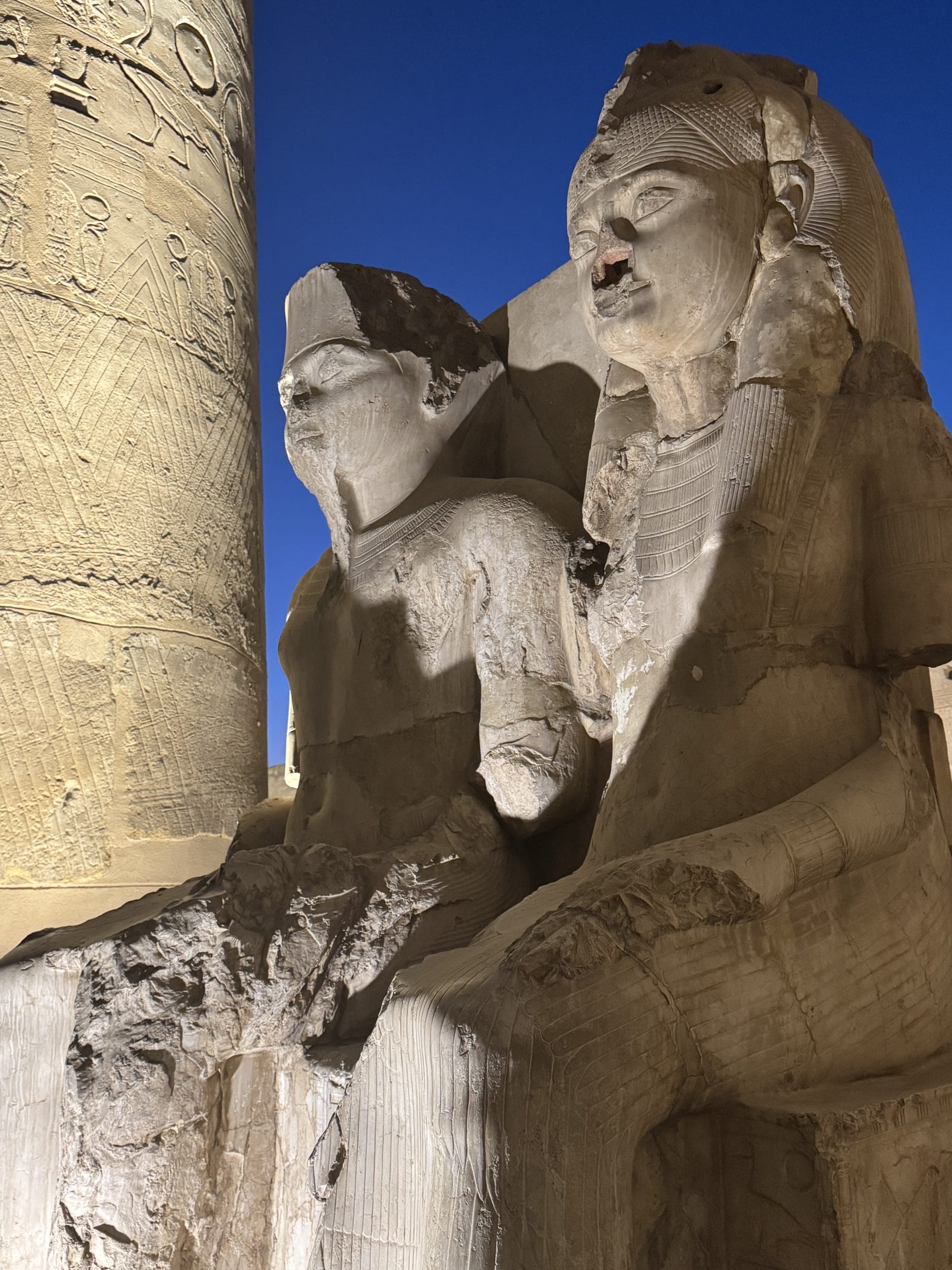
It is said that they always depicted affection between the king and queen.
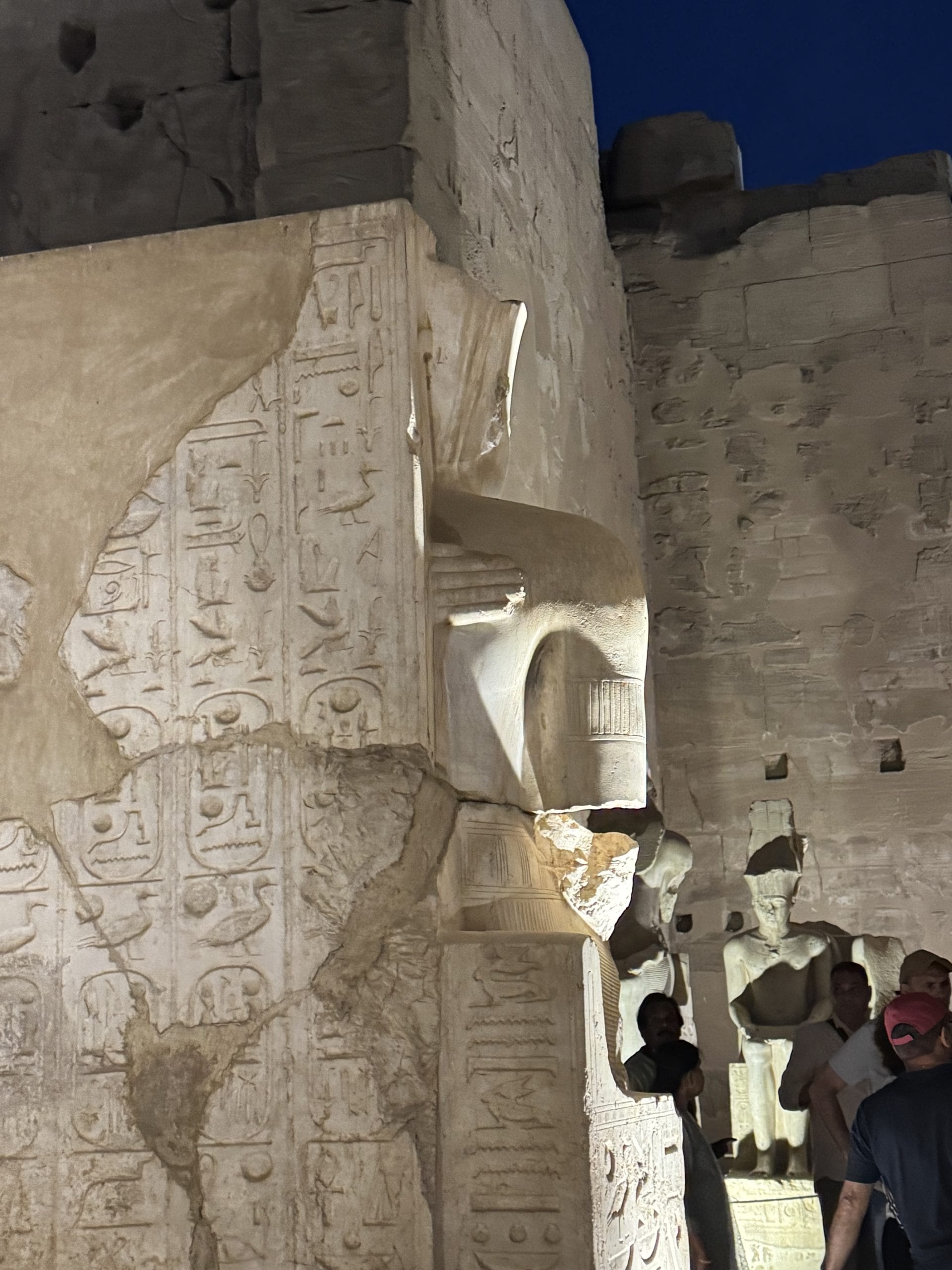
And at the back of the statue, here is proof. She is touching the king’s back, showing her support.
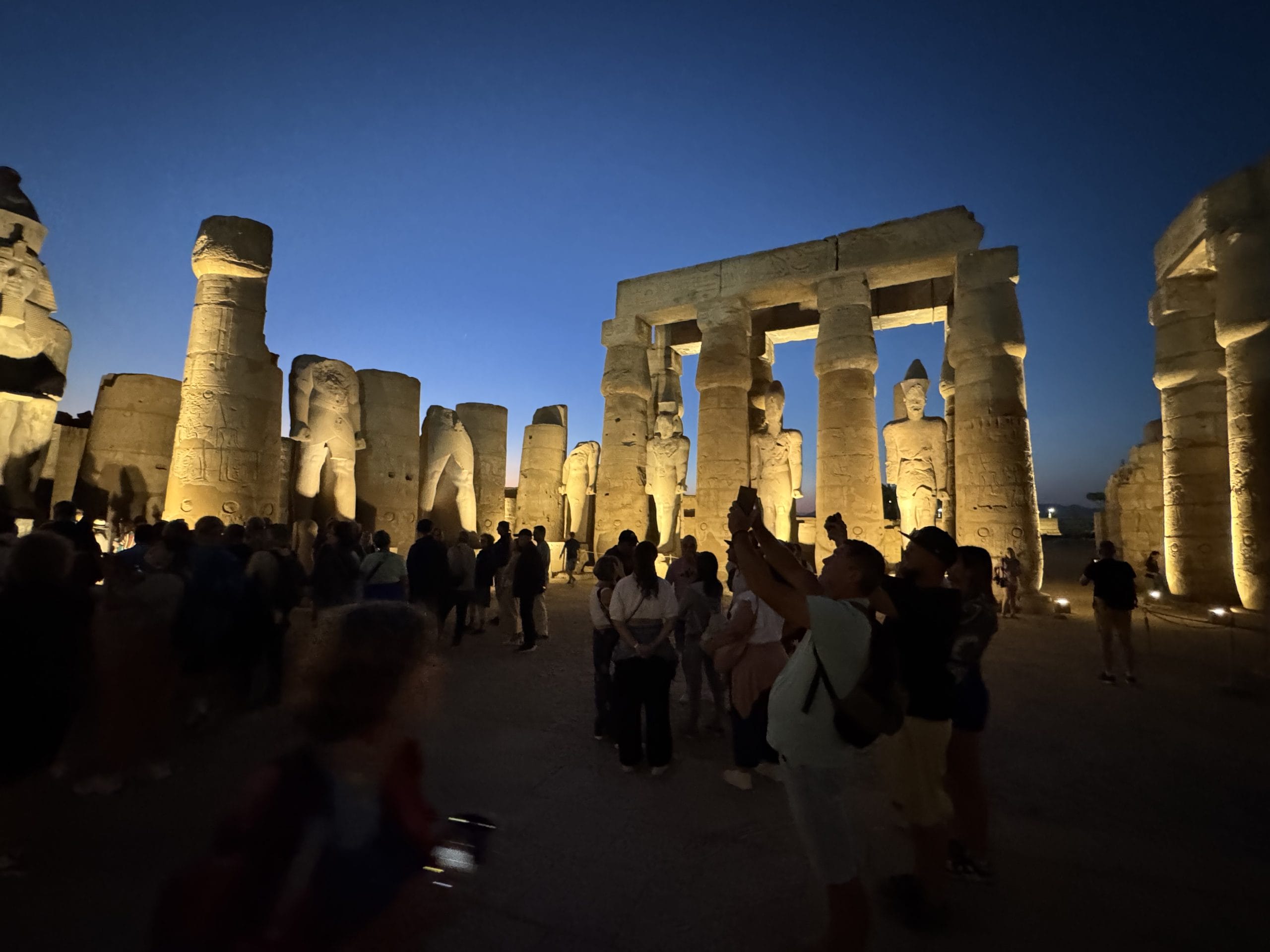
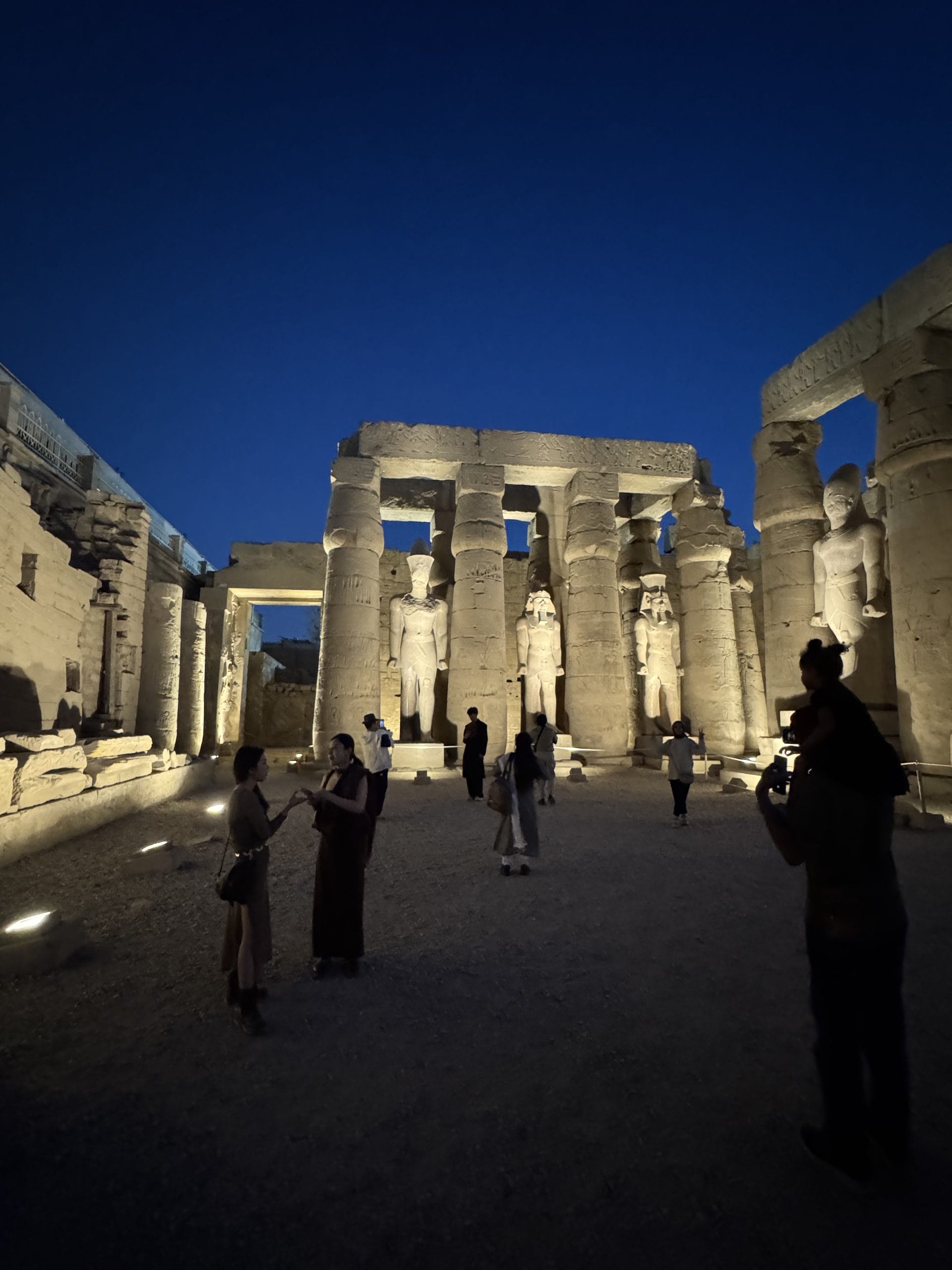
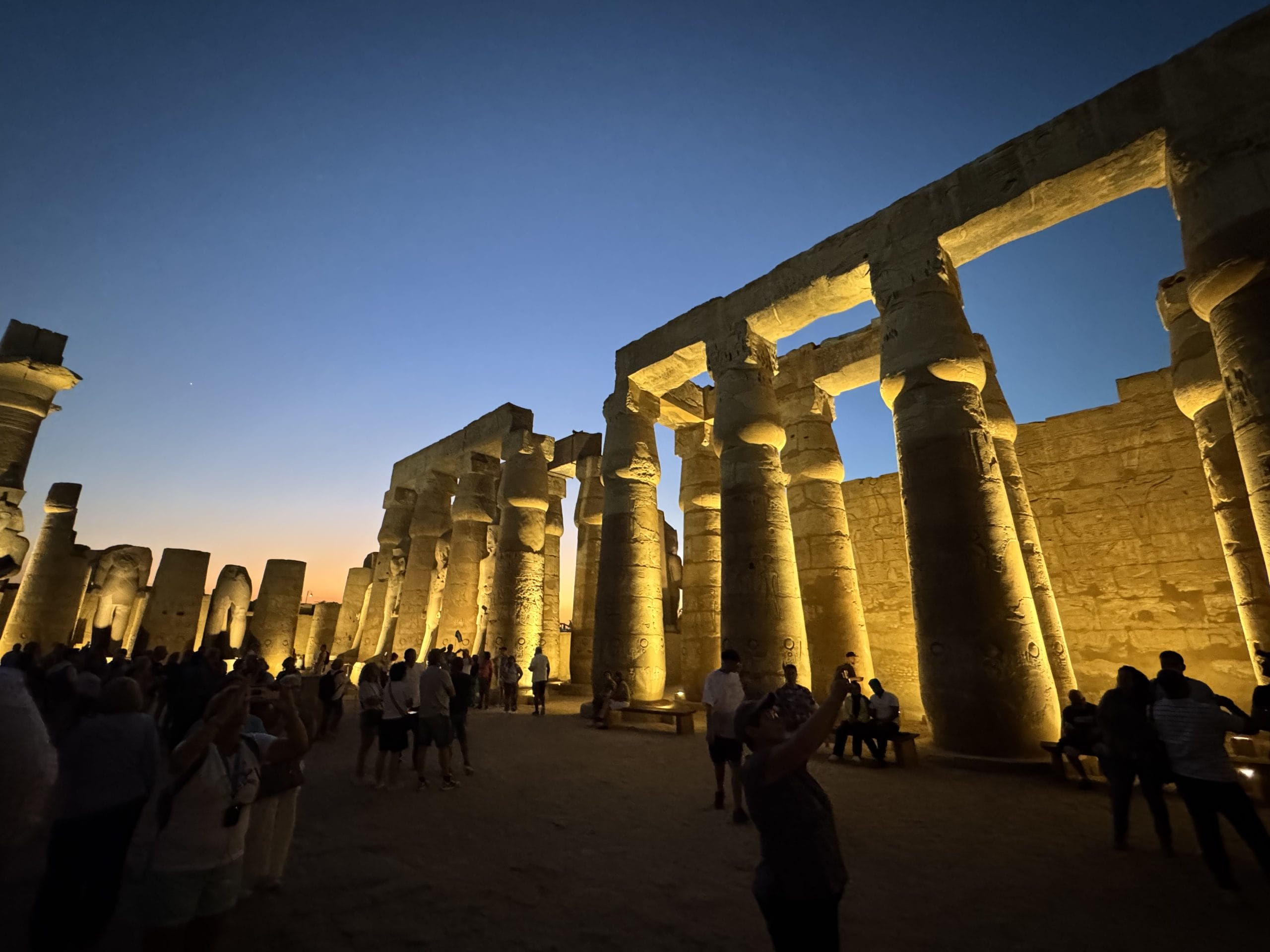
Luxor Temple
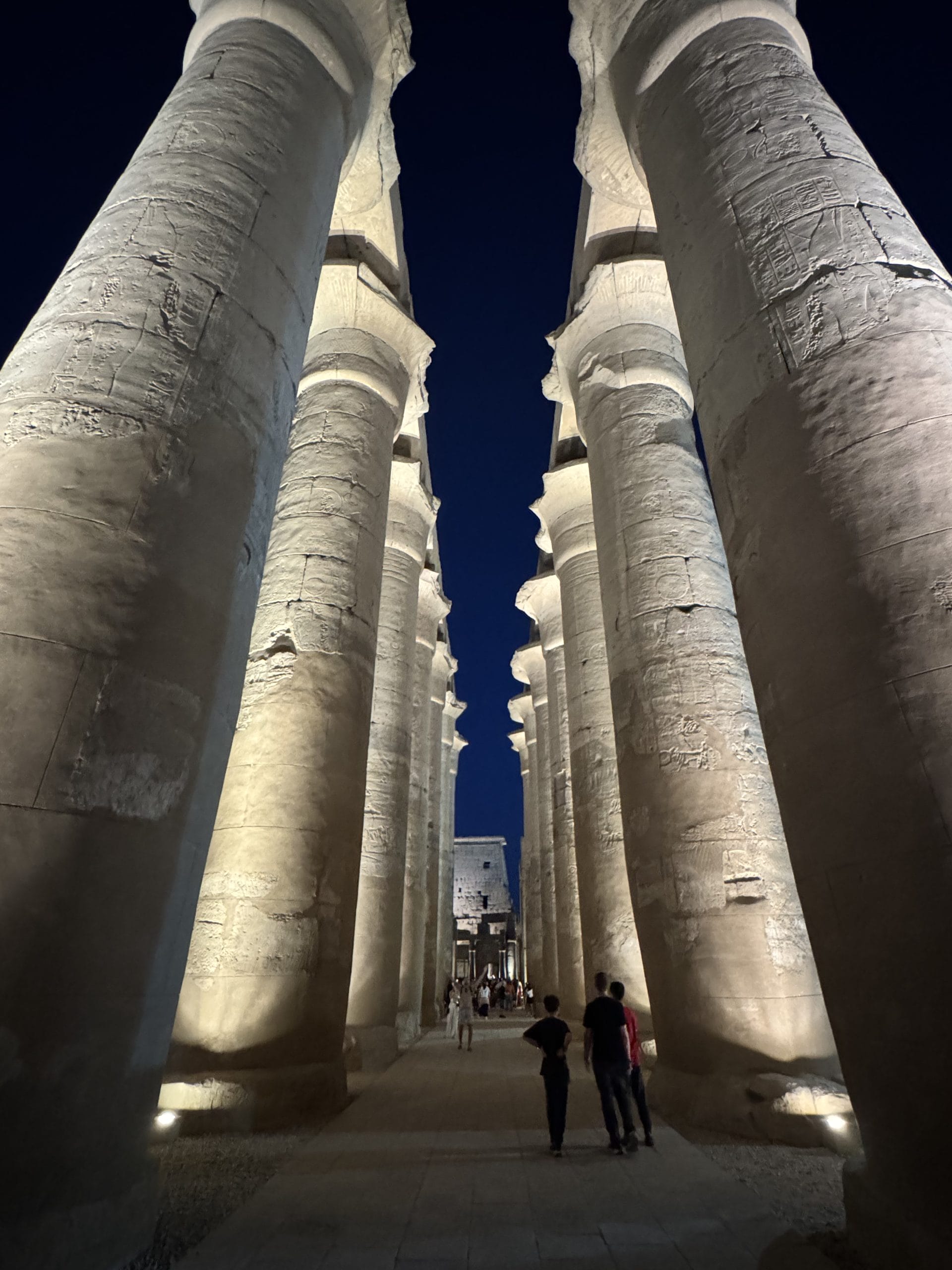
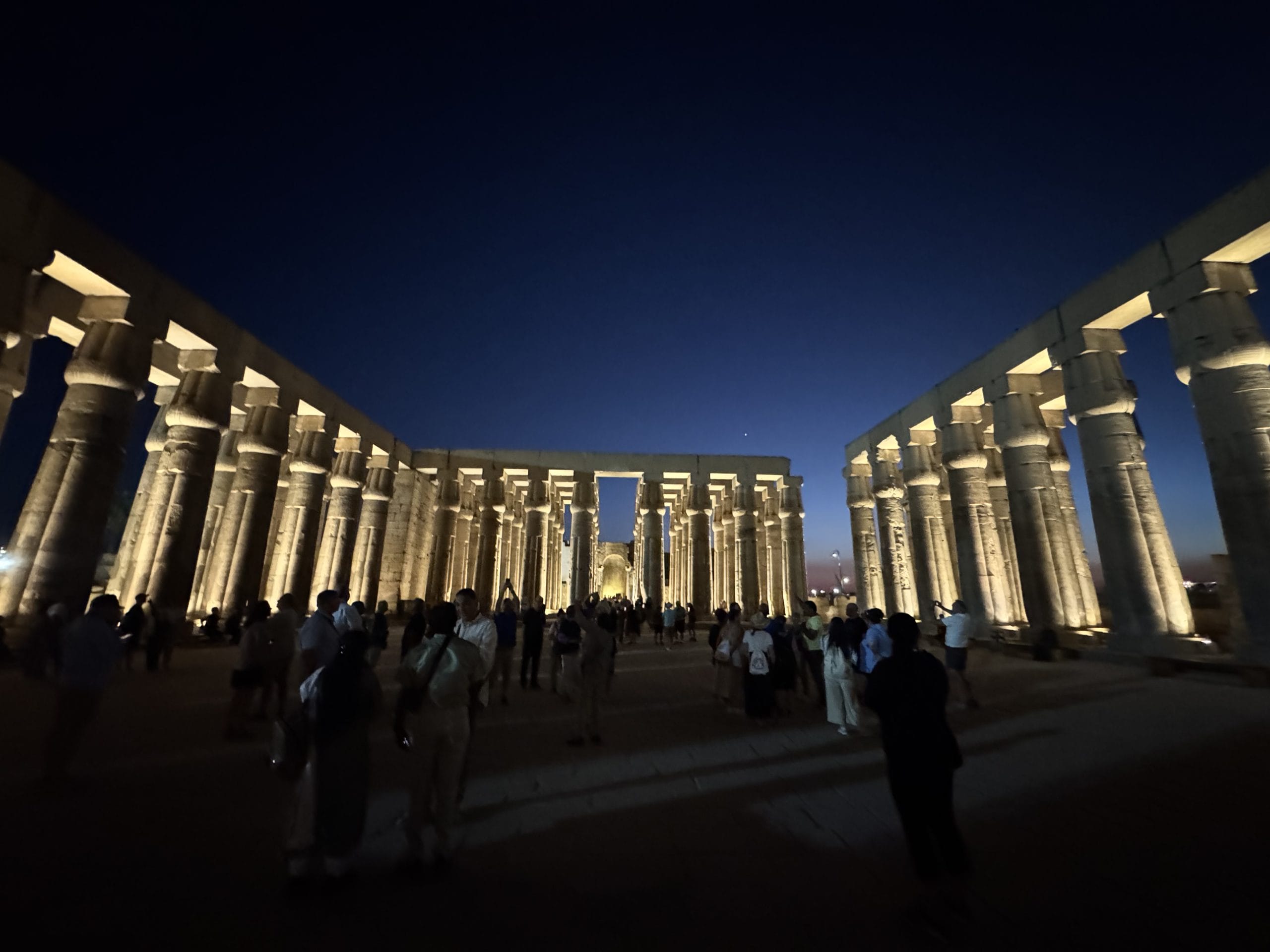
The open courtyard, Luxor Temple.
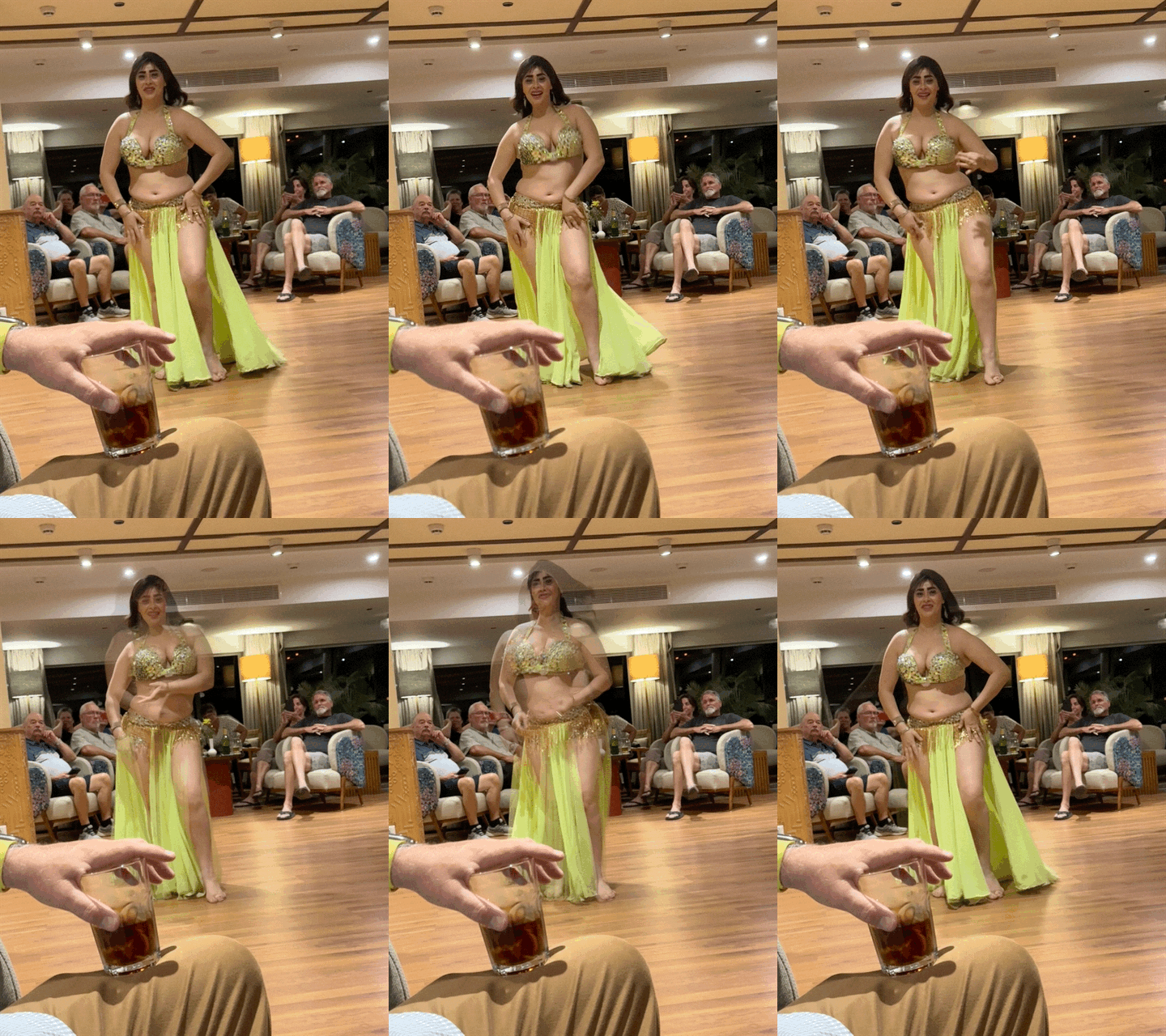
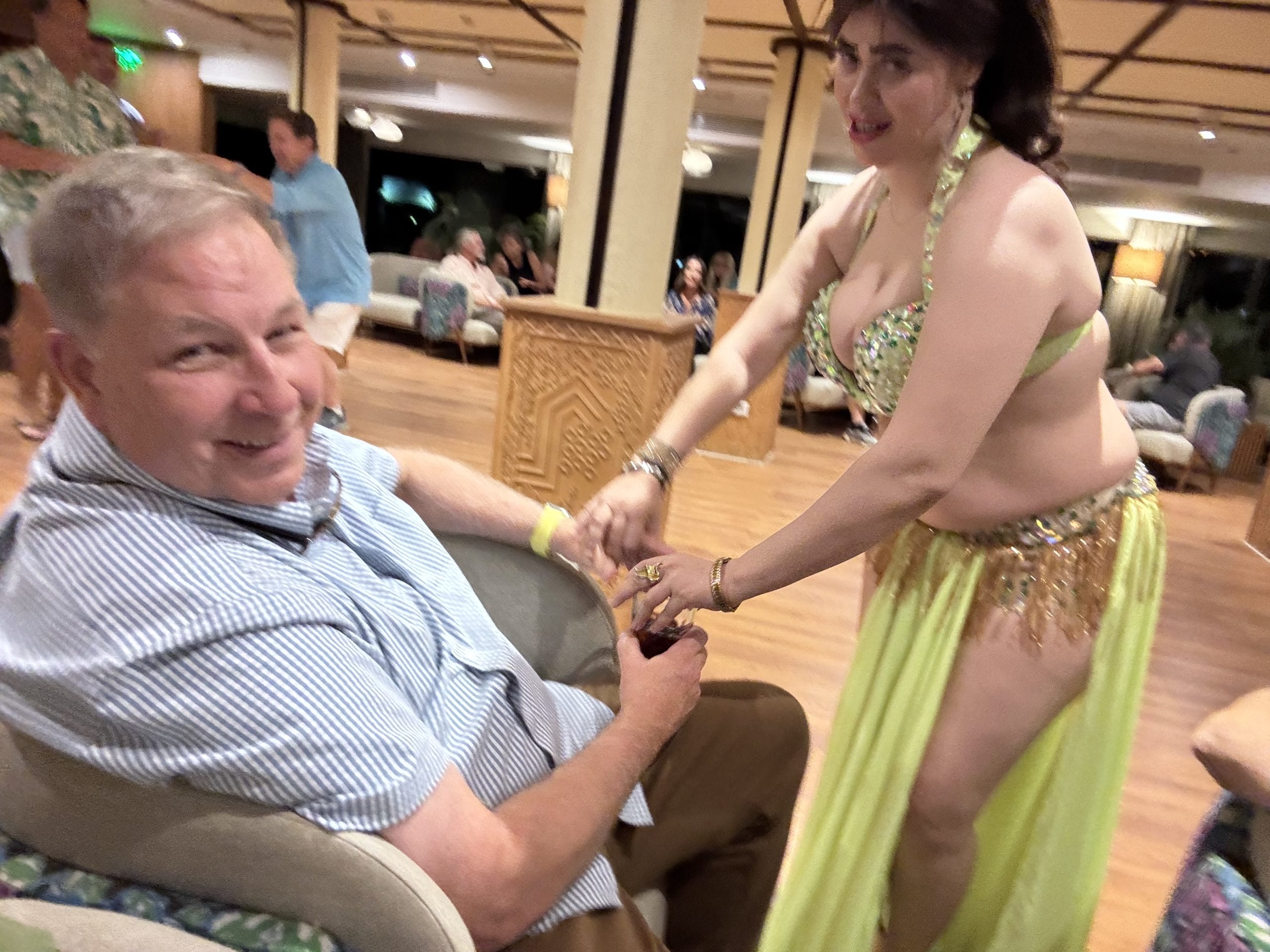
She finally succeeded to get him up but Sharon was laughing so hard she forgot to take photos.
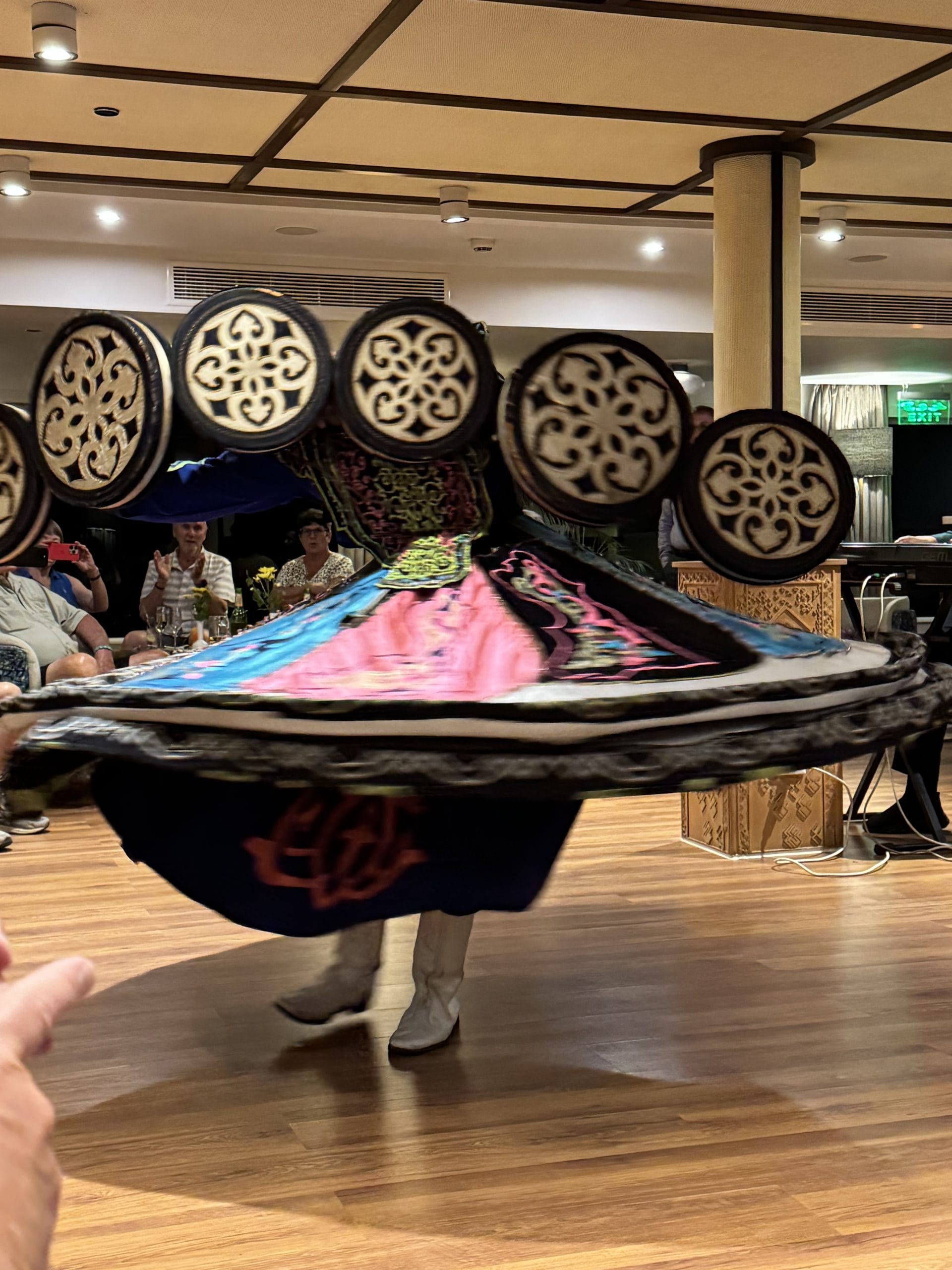
Whilrling Dervish
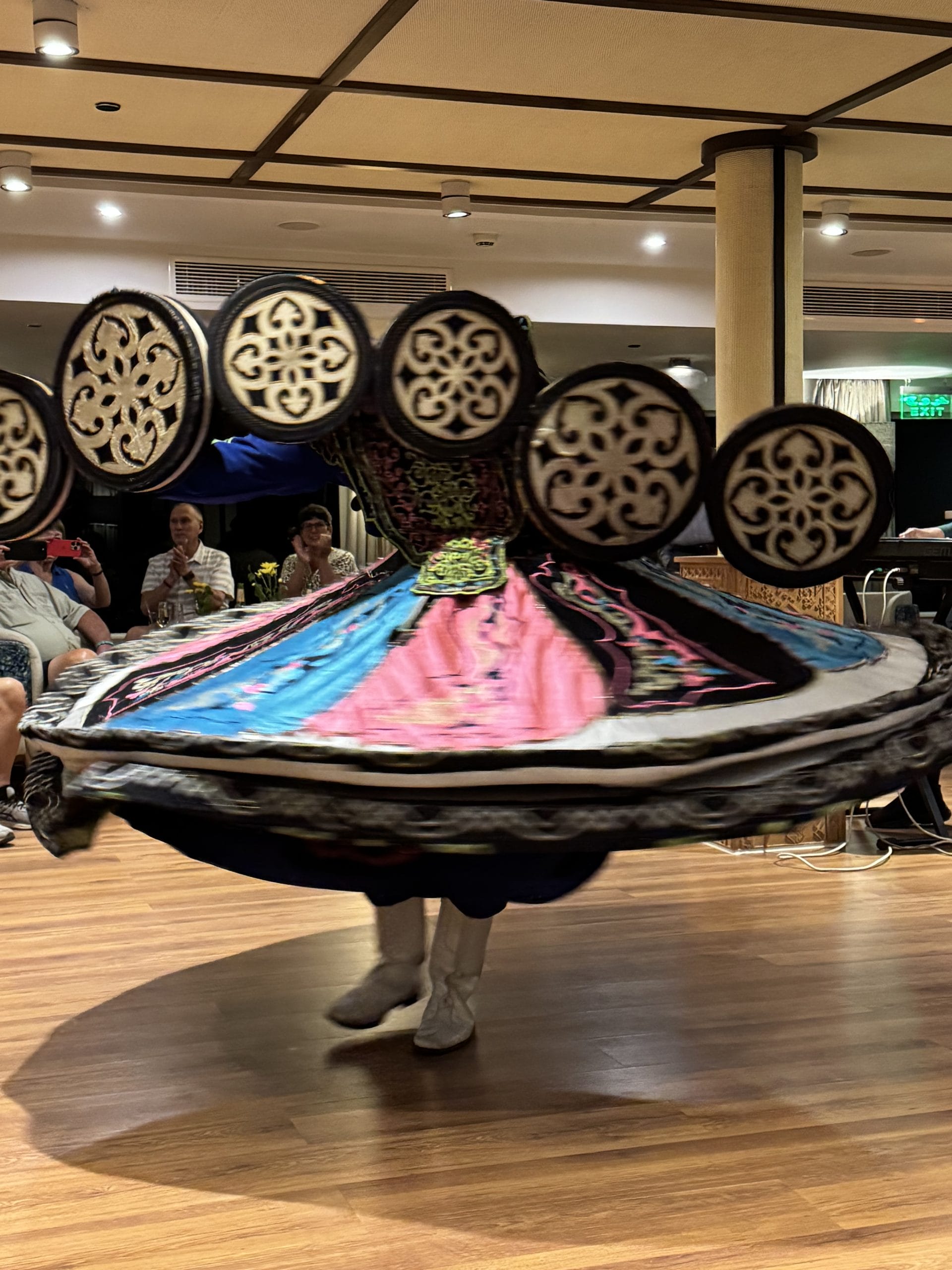
Remember, he's spinning but he's holding these 6 disks too!
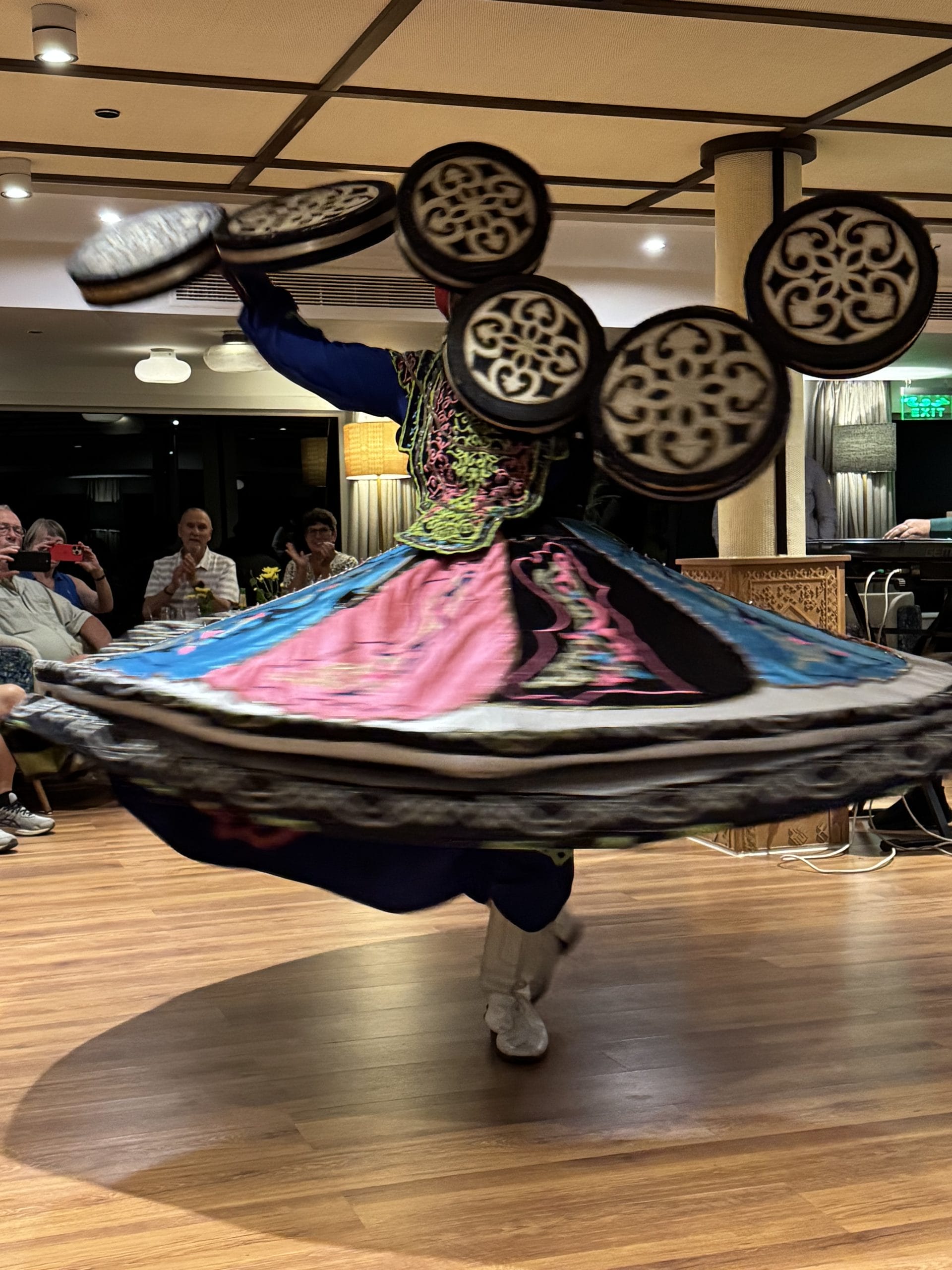
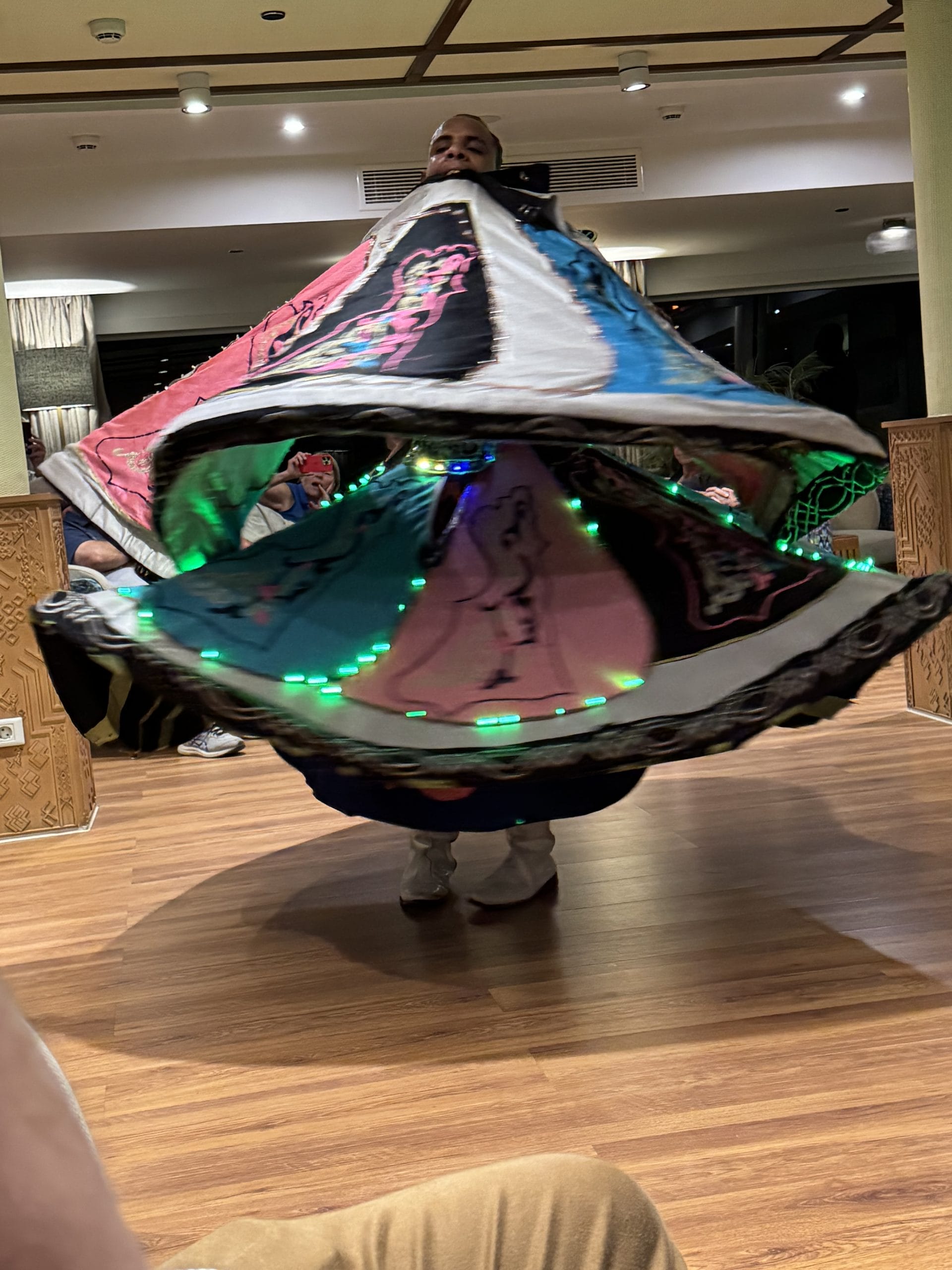
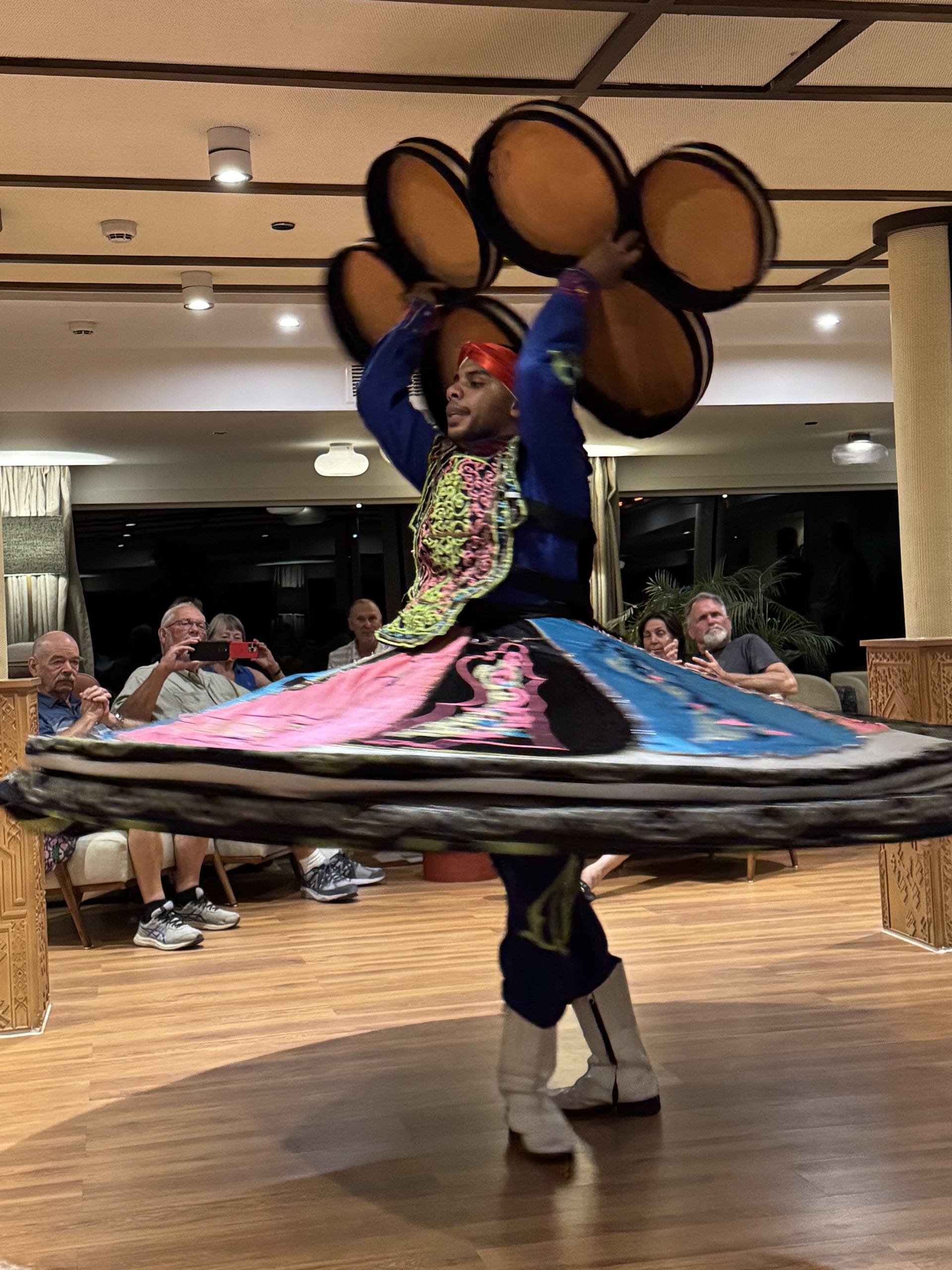
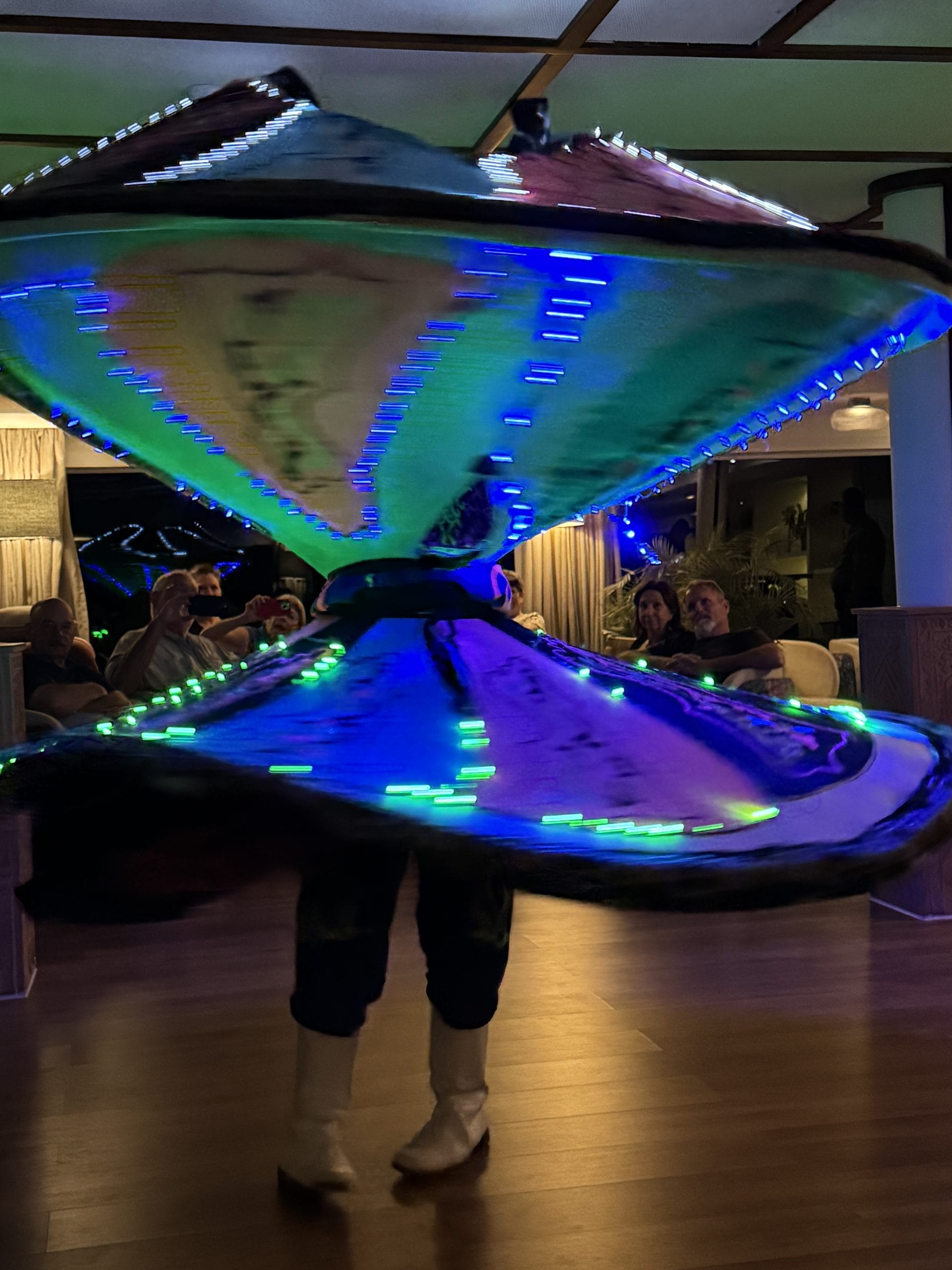
Whilrling with lights! It was mesmerizing!
0 Comments