
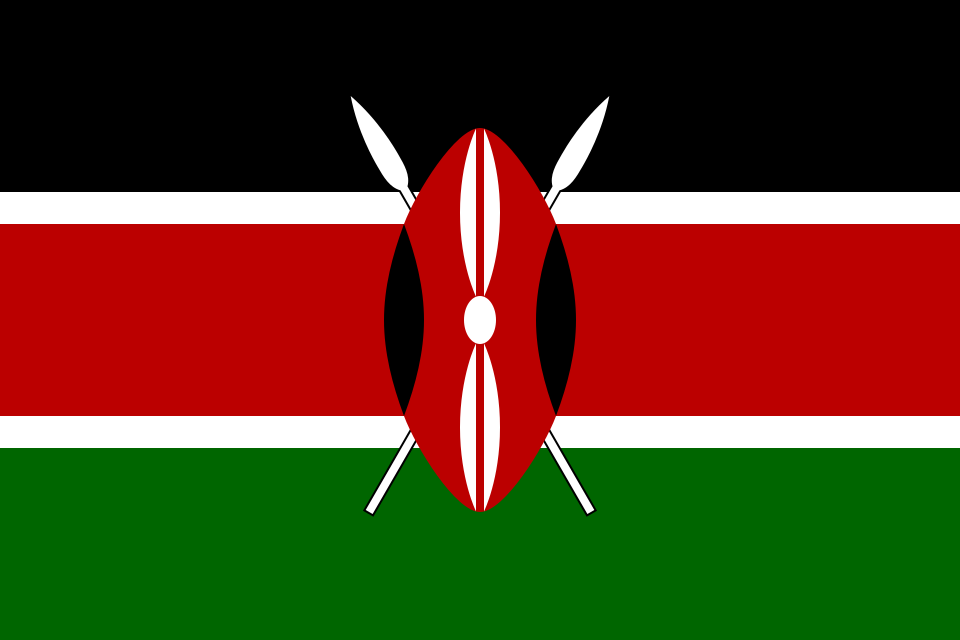
The Republic of Kenya

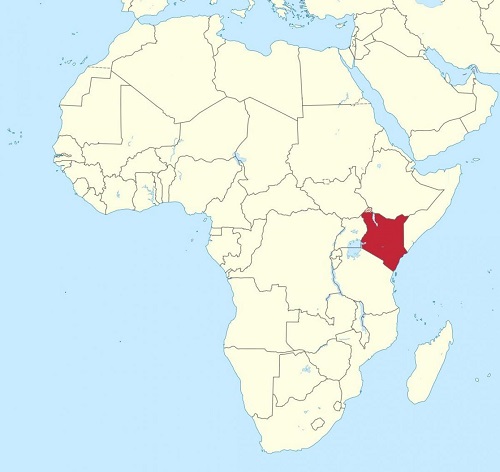
Officially the Republic of Kenya, this East African nation is home to more than 54.2 million people, making it the 27th most populous country in the world. Kenya is also believed to be part of the cradle of humankind — fossil evidence dating back 1.8 to 2.5 million years suggests some of the earliest members of the genus Homo evolved here. In terms of land size, Kenya sits comfortably between California and Texas, roughly on par with Ukraine.
Long before European contact, the land was home to tribes including the Maasai, Nandi, Kikuyu, Embu, and Meru, who contended with one another as well as waves of outside powers — Persia, Portugal, Oman, Germany, and eventually Britain. From October 1952 to December 1959, Kenya endured a state of emergency during the Mau Mau rebellion, an uprising against British colonial rule led largely by Kikuyu, Embu, and Meru fighters under the banner of the Kenya Land and Freedom Army. Independence finally came in 1964, when the Republic of Kenya was formally proclaimed.
Politics were rocky at first: 26 years of single-party rule under KANU brought repeated unrest and attempted coups before Kenya transitioned to a multiparty democracy in 1991. Today it functions as a presidential representative democratic republic, not unlike the U.S., governing a remarkably diverse population of 42 ethnic groups. Christianity is the majority faith (85%), followed by Islam (11%), with Hinduism and indigenous beliefs making up the rest.
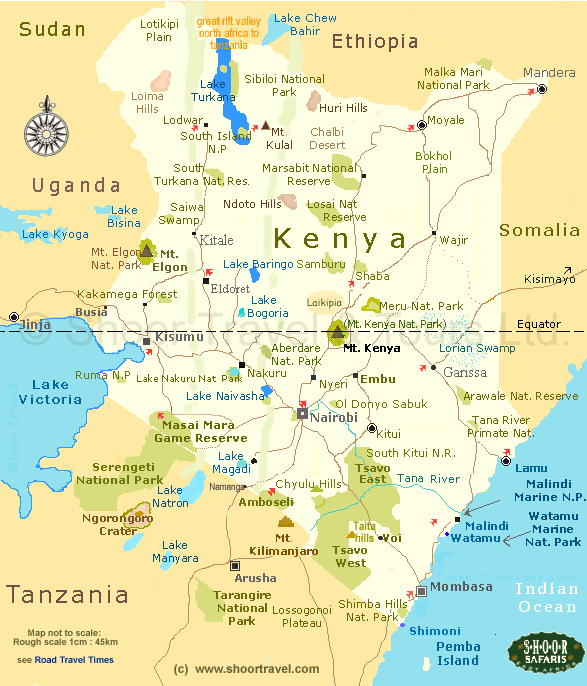
Kenya’s economy has kept pace with its growth, expanding around 5% in recent years. Three industries lead the way. Agriculture remains the backbone, employing the majority of the workforce and anchoring exports of tea, coffee, and cut flowers — Kenya is one of the world’s top tea exporters. Tourism is a major foreign-currency earner, drawing travelers to safari icons like the Maasai Mara and Amboseli, as well as the country’s coastline. And manufacturing has become an increasingly important growth driver, spanning everything from food processing to textiles, helped along by construction and a fast-expanding tech and financial-services sector centered in Nairobi.
Despite this growth, the standard of living for most Kenyans is very low. Kenya faces deep economic inequality, where the richest 125 individuals hold more wealth than 77% of the entire population. This vast gap splits the country into two economic realities: a highly affluent minority enjoying capital appreciation, and nearly half the population (46%) living in persistent extreme poverty. High inflation, heavy taxation on basic consumer goods, and a largely informal labor market heavily widen this divide.
Kenya’s public national debt crossed the KSh 13.0 trillion mark. This massive debt burden represents roughly 68.5% of the nation’s Gross Domestic Product (GDP), severely outpacing economic growth. The primary risk is not just the total balance, but the cost of paying it back; debt servicing consumes between 69% to 70% of Kenya’s entire collected ordinary revenue, leaving the country in a tight financial squeeze.
The government’s heavy obligation to prioritize creditors over public services has had a devastating “trade-off” impact on health, education, and social spending. Research indicates that for every 1% annual increase in Kenya’s public debt, public spending on vital social services drops proportionally by 3%. Funds meant for free primary education are routinely delayed by the National Treasury as it clears urgent, non-negotiable international loan interest payments first. Healthcare is often delayed, with devastating effects, as doctors and other healthcare professionals walkout and strike when they don’t receive their paychecks.
To handle the ballooning national debt crisis without triggering a complete default, the National Treasury is pursuing strict structural reforms. The state is leaning away from the IMF and is instead actively trying to unlock KSh 151.2 billion in structural loans from the World Bank. However, this aid requires stringent institutional changes, including tightening public financial rules and enforcing fiscal austerity—meaning taxpayers will likely continue to feel the pressure of deep spending cuts.
Post Gallery
0 Comments